Who were Britain’s tanner’s? What is an Animal Hide? – It’s a Power Symbol. And a Few Ideas For You To Get Back To The Wild
The word hide (hid – for ‘family’ -or hiwisc, in Old English) was used to denote a measure of land for a group or family, called so in the Hidage Assessments – this is record of entry of land survey; in the Doomsday book of 1086. The Anglo Saxon hid or what came to be known as hide represented about 120 acres of land. The word hide then came to mean secret, put out of sight, or to conceal, for shelter or protection, and thereafter used as an ultimate power symbol.
The ancient word evolved from the Greek keuthein (to hide) and the German haunt (skin) this is just a step away from the mystical power symbol an animal hide represents. Ancient man has always made use of this commodity, and in folklore it represents Shapeshifting, allowing the wearer to transform from human to animal, as in the Selkie, (A Scottish mythical creature) who we’ll discover later, she’s able to tame her own wilderness.
The UK’s history is full of wild, hidden places, and today we’re peeling back the mist to find them. Keep reading, because if this journey into the untamed wilderness leaves you feeling restless, I have the perfect escape for you waiting at the finale. It’s time to stop wondering and start doing – a farm stay for the soul, or maybe even a bucket-list challenge like sheep shearing! Stay in England, Scotland, Wales or Ireland for a truly wild adventure.
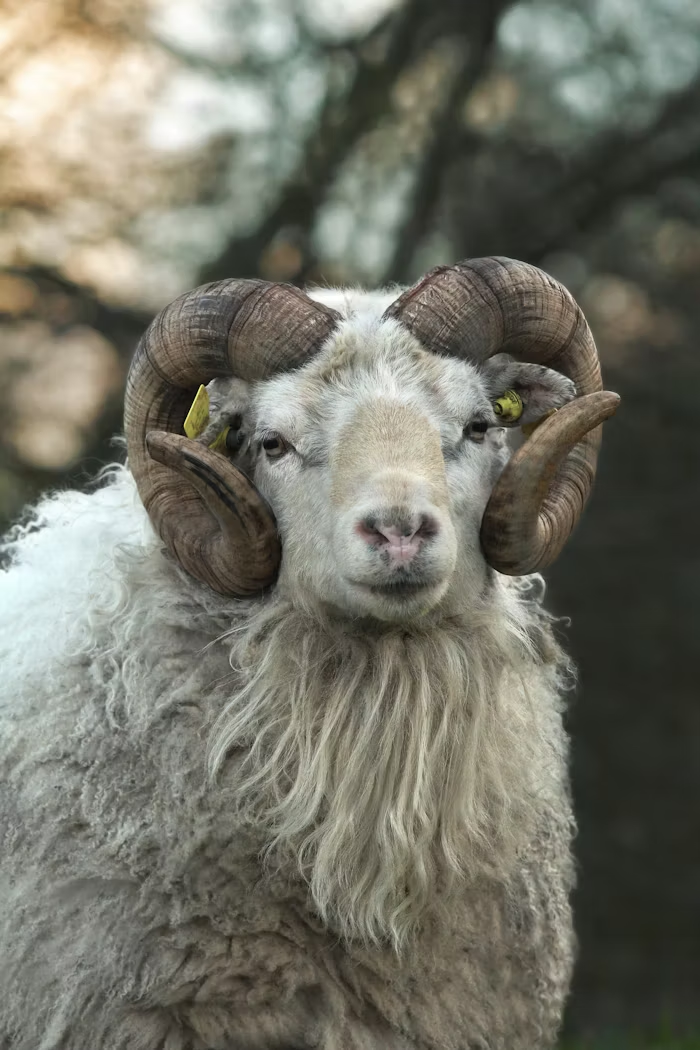
A hide or pelt can symbolise control, identity, and transformation – think of a combat uniform worn by a soldier; a modern camouflage, giving the wearer the advantage; a shift to a new protected reality, wearing now modern material over skins, antlers, belts, leather straps and beads perhaps for warfare.
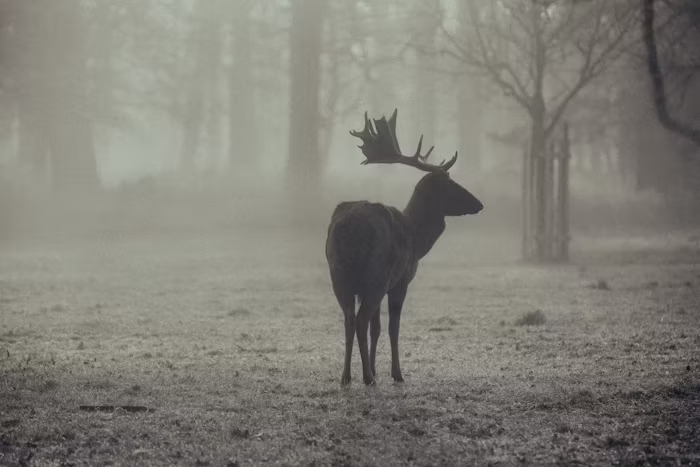
In ancient times it gave the wearer a natural protection in a hostile world, and beyond this, the wearing of powerful animal’s pelt like a bear, stag, or a wolf—was a way to conceal a person’s human vulnerability while symbolically adopting the strength and spirit of the beast. It was the ultimate ancient power tool. No wonder it was considered the sacred hide.
Today, it is valued in home decoration as a powerful symbol of luxury, texture, and warmth, embodying both mystery and raw, untamed authority. Sheepskin in particular is a popular covering, it plays a big part in the modern – rustic look and is highly regarded for its ability to make a bold statement as well as providing a cosy and tactile element to a room which you can not help but touch.

Animal hides, pelts, skins, they are all from a dead animal and include the skin and hair or fur or wool, from a cow, sheep (sometimes they can have wool or/and hair),moles, beavers, badgers, cats, foxes, rabbits, bears, goat, deer, fish, pig, the list goes on. Basically the hide is the skin of a larger animal like a cow that has been made into leather or treated somehow for human use, such as for shoes etc. And skins often refer to smaller animals, but they were all once animals whose skin once covered their bones, flesh and fat.
Here we will explore the history and mystery of the sacred hide and the darker side of the use of skins, and find tales of folklore and mystery of the wilderness of the UK.
This isn’t just a story about simple fur and leather; it’s a saga stretching back thousands of years, moving from a necessity for survival to a dark statement of high fashion. More than mere material, the pelt became a vessel for the animal’s captured essence, a symbol whispered about in folklore—did wearing it truly grant the wearer the creature’s power, cunning, or wild strength? We’ll explore stories like Herne the Hunter who in ancient folklore used his get-up to foretell tales of woe.

From the earliest domestic hides to the high-stakes intrigue of the international fur trade, the skin of the beast has always been at the heart of power and commerce. It remains a profound reminder of humanity’s primal drive for power, wrapped up in a material that once dictated fortunes and sparked global expansion.
Early History and the Middle Ages
The use of animal skins for clothing, tools, and shelter dates back to prehistory in Britain. The preparation of skins for leather (hides without the hair) was an essential and widespread craft from the Stone Age onwards. During the Middle Ages, fur became a prominent symbol of wealth and status. Furs were used to line and trim the garments of the wealthy and nobility, offering both warmth and prestige.
Domestically, furs from common animals like fox, badger, cat, rabbit (cony), and lambskin were used by the lower and middle classes. Imported luxury furs, such as ermine, sable, marten, and squirrel, were reserved almost exclusively for royalty and high-ranking nobility, often regulated by Sumptuary laws (laws controlling consumption based on social rank, and often used to prevent commoners imitating the appearance of an aristocrat!).
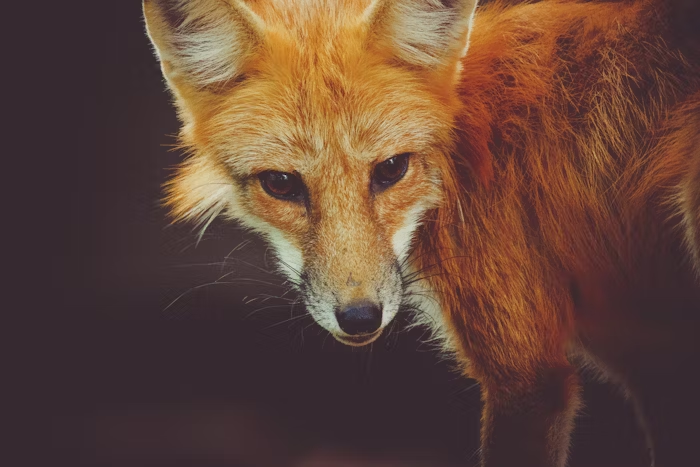
By the 13th century, the trade was highly organised. The Skinners’ Company of London, established its first charter in 1327, regulated the manufacture, quality, and sale of furs, highlighting the central importance of pelts to the London economy.
Due to centuries of hunting and deforestation, many of the prised native fur-bearing animals in Britain (like the beaver and the wildcat) became rare or locally extinct. This created a massive market for imported pelts, and the history of British pelts became inextricably linked to its colonial empire, particularly in North America.
Chartered by the British Crown in 1670, The Hudson Bay Company became a dominant force, exchanging manufactured goods for vast quantities of high-quality North American pelts, especially beavers. Beaver fur was crucial because of its superior felting qualities, which were necessary for making the fashionable, waterproof, high-crowned beaver felt hats popular across Britain and across Europe from the 17th to the mid-19th century. London was a central hub for the processing and sale of these pelts.
In the Victorian era, as Britain’s global reach expanded, the fashion industry in the UK began using a wider range of exotic pelts, including sealskin (from the maritime trade), leopard, and bear, often at significant ecological cost to the animal populations.
A brief but notable trend in the early 20th century, particularly in the UK, involved moleskin (the soft, dense fur of the European mole). Queen Alexandra’s patronage of a moleskin wrap helped turn the mole from an agricultural pest into a commercially valuable pelt, leading to a temporary boom in the trade.
The use of fur, particularly for clothing, began to decline in the late 20th and early 21st centuries, driven by the rise in synthetic materials and he development of cheap, warm, and durable synthetic fabrics. Growing ethical opposition to the fur trade led to anti-fur movements, and While the trade of fur for fashion has largely ceased or been significantly restricted, the processing of hides and skins for leather remains a historic and specialised industry in the UK (e.g., in areas like Northampton for footwear) though much of the raw material is now imported.
The UK’s history with pelts moved from a local, necessary craft to a symbol of medieval elite status, then to a massive driver of global colonial commerce, before settling into a heavily debated niche market today.
I think you either love or hate this stuff – but there’s no question about the importance the hide of an animal has played in the economy of the UK and its traditions, stories, and folklore – some will will explore here.
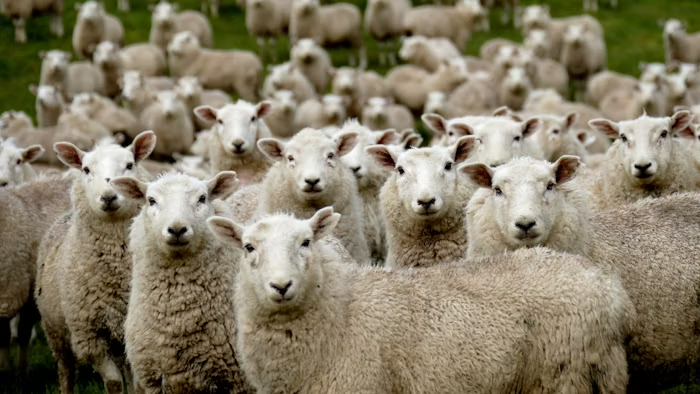
The Ancient Art of Tanning and Why Every Animal Hide Was a Precious Resource
Animal hides, can be trophies taken from a life that has ended. Animal farming for their pelts was banned in the UK in 2000 and in Scotland and Ireland in 2002)These range from the familiar coats of cattle and sheep to the dense furs of beavers, the sleek pelts of foxes, or the heavy hides of cows. Animals today for farmers are as important and valued as ever they were.
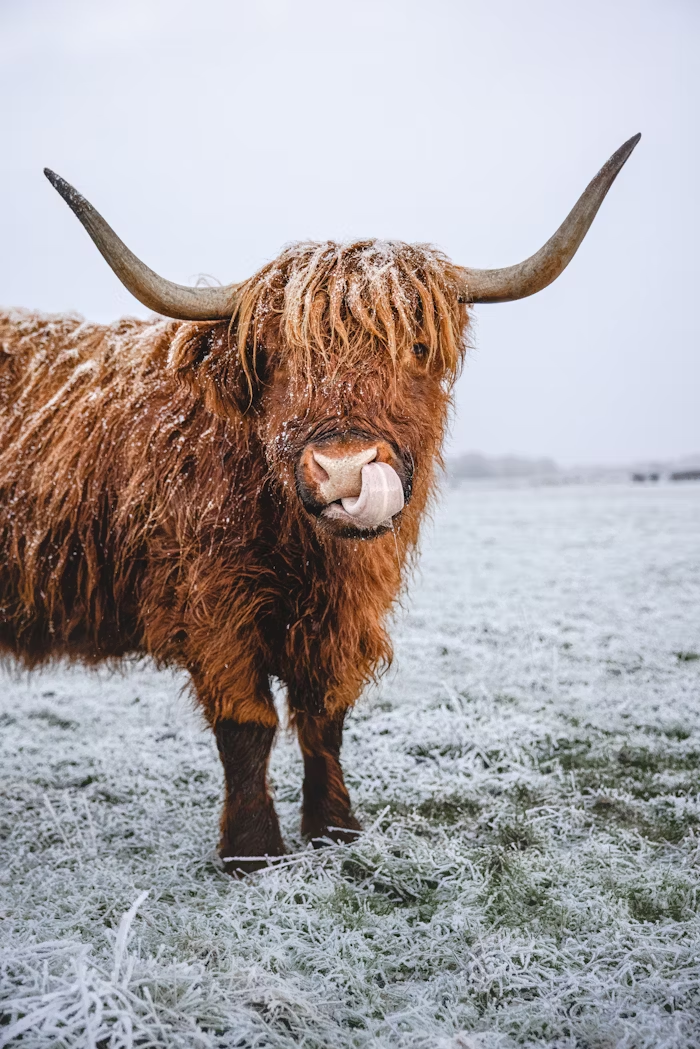
It’s a common misconception that the taking of a hide was a wasteful act. In reality, the harvesting of an animal for its pelt, whether from hunting or, farming, was traditionally a huge benefit.
Historically, as now, the animal was a precious commodity, and every part would have been utilised—the meat for sustenance, the bones for tools and implements, and the fat for rendering, (purified fats, lard, tallow for candles etc). The pelt, therefore, was merely one crucial element in a chain of resources. Preparing these coverings, transforming a raw skin into supple leather or luxurious fur, was, and remains, a highly artisan and labour-intensive craft. This deep respect for the resource stemmed from necessity – waste would have been an unaffordable luxury.
Going back in time – It is no stretch of the imagination that early man’s primal interactions with these wild beasts fuelled a profound desire. Observing the animal’s strength, cunning, and sheer power in the wild, the act of hunting and then wearing its skin became a means to capture and internalise those very qualities, truly a sacred hide.
SIDE NOTE – The practice of Animal Flow or Primeval Body Workouts are gaining popularity today and performed for their strength and flexibility benefits, moving in a way that feels natural and instinctive, like an animal. They say these primal moves (once you’ve mastered the ‘beast’ – on all fours,with your head pointing downwards) can be powerful and connecting. It is only a glance away from our ancient ancestors perhaps conjuring up a little tribal magic by donning an animal skin and getting into it psyche of it all with a dance around the fire.
By taking the animal’s covering, man wasn’t just gaining warmth or a practical advantage; he was symbolically seizing the animal’s essential power and knowledge, bringing a piece of the wild’s infinity under his own dominion and control.
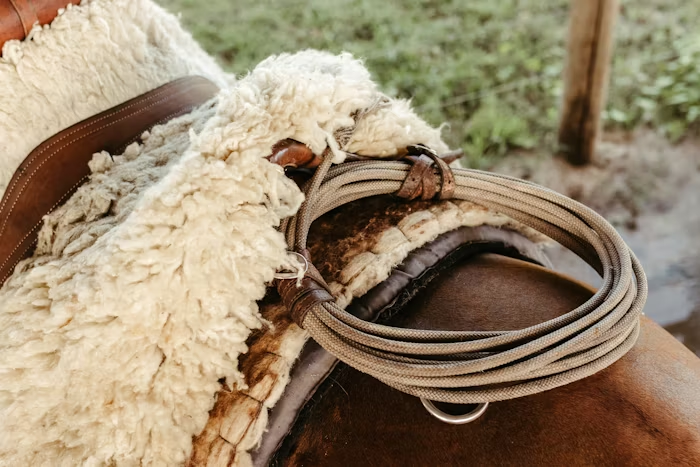
And it wont surprise you to learn man’s interactions with wild beasts in the past have given us a wealth of stories, and folklore that have passed down the centuries and still captivate us today.
Lets begin with one of my favourites. I can’t help myself, I am a frequent visitor to Windsor castle, no I haven’t got a day pass! With entry prices at about £30 per adult (writing 2025)my favourite haunt is the Great Windsor Park instead; walking in the Long Walk or the Deer Park is free. If you want to visit other attractions such as Savill Gardens or the kids adventure play area – you’ll have to pay for parking only. But Windsor Great Park is full of intrigue and every time I go I learn something more.
Herne the Hunter, the Wild Hunt, Shapeshifting and Mermaids
The park covers nearly 5000 acres and is full of landscape and gardens as well as some pretty hair-raising stories and folklore about the area. One chap in particular is always on my mind when strolling about the park and that is Herne The Hunter
The ancient woods of Windsor forest and Great Park is the primary location for the legends of Herne the Hunter and one of the earliest known written mentions of Herne comes from William Shakespeare’s play ‘The Mary wives of Windsor’ (1597). In the play he described Herne as a ghostly figure – a former Forest keeper of Windsor Forest .
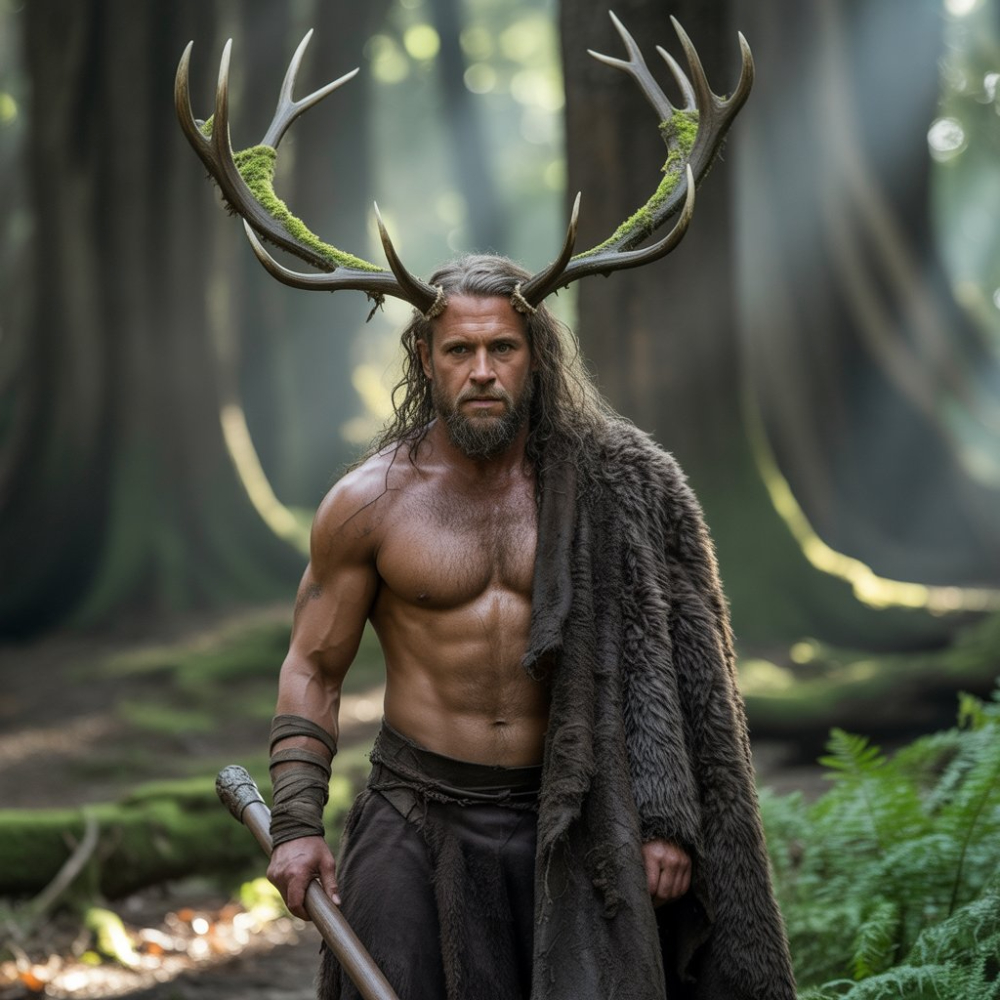
Herne haunted a specific oak tree known as Herne’s Oak (felled in 1793) throughout the winter and at midnight he could often be seen, (last reported sighting was from a young soldier in 1976) He is distinguished by his great ‘ragged horns’ and he’s known to make the ‘cattle yield of blood’ instead of milk (!) and shake a great chain in a ‘hideous and dreadful manner’ this all told by William Shakespear (and seen by the soldier).
No surprise the young soldier was supposed to have fainted at the sight of all this! Over the centuries the legends have been incorporated and elaborated upon in local folklore and literature with tales including his origin – often said to be the keeper (Herne)who fearing disgrace or having committed a great offence hanged himself on the oak tree he is often associated with.

He is often too connected with the Wild Hunt, (a pagan belief associated with Wodden or Woden – the God of the Dead, Hunters, Warriors and Wisdom). He rides a black horse with a spectral Hound, this ‘Hunting Party’ sweeps across the sky and foretells omens of plague, famine and war. Being an omen of ill fortune particularly for the royal family it is said Herne the Hunter can also foretell the death of monarch. This phantom hunt can also be conducted in the forest, so when walking in the Great Wood at Windsor I’ve always got my camera ready!
Herne could have Anglo Saxon origins – having his name taken maybe from Herian – a title used for Wodon (or Wodden,an Anglo Saxon God), as a leader of fallen warriors, In the Dark Ages (about 5th-10th century) Windsor Castle came under control of the Saxon English who worshipped their own Gods, and Woden would ride across the sky on his own wild hunt there and in other places in England, The Wild Hunt happens on the 6th February, (the Anglo -Saxon Chronicals – manuscripts written in King Alfred the Greats times 871-899) they describe packs of huntsmen with their horned headgear on black horses and black bucks running through the woods as far as Stamford (Lincolnshire), the hounds being pitch black with hideous staring eyes! Announcing a great misfortune!
Popular shapeshifters in history include Vampires and Werewolves, these creatures tell powerful stories of being able to hide until the advantage is theirs, and they can catch their prey.
Other creatures like the Selkie, known to Scotland is a mythological creature, much like a Mermaid. She or sometimes he can live in or out of water – the trick is to remove their skins giving them the ability to walk on land.
The Selkie can be seen all the time in the waters today of Northern Scotland as she looks just like a seal.
Selkie’s are known to be quite gentle creatures and often mistreated by humans. The Selkie’s gift of shapeshifting has not always worked to her advantage even though she is able to leave the wild of the sea behind and walk and live amongst humans – there are many stories about the Selkie but mostly, tragically, while on land lose their skins and are miserably trapped there.

We’ve explored the mist and mystery of the untamed UK, but if this post has awoken your own inner wild spirit, why stop at reading? Unleash it for real with options like a true working farm stay or a hands-on course in sheep shearing or perhaps a sheepskin rug to add some luxury to your home, is calling!
Ideas for You to Get Back to the Wild
Fancy turning your hand to some Sheep Shearing? – Courses in Scotland HERE
Beginners or two day courses HERE
What about a Farm Stay/work on a farm? – perfect for lone travellers, families and groups HERE
The whole experience in Ireland HERE
A 1 day experience in Wales? HERE
Or maybe you are looking for a more laid back, gentle affair – whilst adding a bit of wild to your bedroom or guest room to create a cosy focal point HERE

Until next time dear friends x Sharing is fun ……………