The Black Shuck: How an Ancient Chronicle Documented Britain’s Most Terrifying Spectral Hound
Forget your typical run-of-the-mill ghost tours, folks. If you’re truly looking for a bit of Britain’s history and venture into its mysterious, darker side, you need to set your GPS for the area surrounding Huntingdon, and the unrest of East Anglia! But if it’s ghost tours you’re after; here in Huntingdon, there are some of the best.
This corner of the UK isn’t just “old”; it’s ancient, and it’s absolutely drenched in regional folklore that stretches back for centuries. To explore Huntingdonshire—nestled deep within the historic bounds of East Anglia—is to step into a land where the legends don’t just whisper, they lie huge.
And when we talk about colossal legends, there’s one that dominates the landscape: the terrifying Black Shuck.

This isn’t some friendly, oversized pup. Black Shuck is a monstrous, spectral hound—an enormous, shaggy black dog with glowing red eyes the size of saucers. It’s a terrifying harbinger of death, and its presence is a common thread woven through the regional tapestry.
But here’s where the history gets seriously interesting. While many ghostly dog stories exist, the tale of the Black Shuck can be traced back to an astonishingly specific date – 1127.
The 1127 Chronicles of the Black Shuck refers to a specific, and arguably the earliest, written account of a spectral black dog in English folklore. This chilling report is actually found within the venerable Peterborough Chronicle (a version of the Anglo-Saxon Chronicle). Chronicles were often kept by monasteries, courts, or governmental bodies to maintain a factual, sequential record of important political, religious, and sometimes natural events (like wars, successions, plagues, or severe weather).
So, the next time you find yourself wandering through Huntingdonshire’s ancient landscape, remember you’re not just walking on grass— you’re walking right where 900-year-old documented terror stalks the night. Sleep tight!
I say, “night, night” because I have found for you some nice places to stay in the area, so whether you’re a lone traveller, group or family lot, there’s something for everyone, and some nice places to eat.
Beyond the Ghost Stories: Unearthing the Dark Heart of Huntingdonshire
As a former major coaching town, Huntingdon’s historic pubs and Inns provide a cosy atmosphere to immerse yourself in history—and maybe meet an ancient resident!
The George Hotel: Famed for its intact 17th-century yard, this historic coaching Inn is a prime location for historical appreciation and likely a source of numerous ghost stories from centuries of travellers passing through. The George is haunted by a Woman in White and seen by staff, she has also been heard crying and is said to have been seen in guests rooms as well as the hallway. The George is quite near the Market place (Market Hill) and it was here where people were trialled in the Market Hall and hung in the square outside the church, could these angry ghosts still be making there presence felt!?
Ghosts and memories of heartache –
There is another George Hotel, in not far away Buckden, (about 6 miles) which is also said to be haunted, more haunted than the George in Huntingdon.
Some guests have reported moving bed covers and being woken up to what felt like having their legs pinched in the night. Are you ready for this sort of thing?
Heavy, unexplained phantom footsteps are frequently heard wandering the building, often when no one is there. Locked doors have been known to mysteriously unlock themselves of their own accord. One of the creepiest stories involves a guest who was woken by her young daughter speaking in a disturbing, deep male voice. (The guest reportedly left quickly the next morning!, without sleeping that night of course).
This George stands near the old Buckden Palace (or Buckden Towers, as the locals call it), here in 1589 Queen Katherine of Aragon was held prisoner. Henry Vlll wanted a divorce and she wasn’t best pleased so he locked her here then kept her prisoner until she died at Kimbolton Castle (about 12 miles away) It is said after her post- mortem (reportedly done by someone unqualified, like maybe the )they found Katherine’s heart to be black; even after washing it 3 times, the blackness could not be removed, then when cutting it through, still could not remove the blackness steeped in. Could this have been cancer? or were the rumours true?, had Anne Boleyn been sending envoys in to slowly poison Katherine so she could marry Henry sooner?
Katherine was only 50 at the time but was said to have been deeply unhappy, she loved Henry and was filled with utter misery and suffering. Could this have turned her heart black?

The Falcon Inn, in Huntingdon and on the old Market Square was used by Cromwell as his headquarters for raising his regiment, its age and military history make it a perfect spot to imagine and seek out residual energy from the tumultuous English Civil War era while you have a beer, there is no accommodation here, but it is known for it hospitality and good ale and food, a lovely 16th century coaching Inn with lots of original features.

Forget everything you thought you knew about sleepy English market towns. Huntingdon is an historic gem in Cambridgeshire, and is a goldmine for anyone looking to blend centuries of deep history with genuinely chilling paranormal lore. Ready to uncover its secrets?
The Legend of the Vengeful Nun at Hinchingbrooke House
Hinchingbrooke House, a former 11th-century Benedictine nunnery, is the epicenter of Huntingdon’s most famous ghost story.

The house’s spooky reputation is rooted in the legend of a nun who had a secret love affair with a monk, resulting in a pregnancy and their subsequent execution. The chilling part is that this isn’t just a story. During 19th-century renovations, the legend was given shocking, physical credence, turning a centuries-old tale into a modern-day riddle.
During 19th-century renovations to the house uncovered some real evidence. Underneath a staircase, workers discovered two stone coffins containing the skeletons of a man and a woman. Forensic evidence suggested one of the skeletons showed signs of pregnancy, an unnerving confirmation of the terrible fate of the star-crossed, religious lovers who haunt the spot to this day. Real bodies, real history, discovered right beneath the floorboards. This is the kind of verified horror that makes a house truly unforgettable.
Apparitions of the nun and a dark monk are frequently reported on the Grand Staircase and in other parts of Hinchingbrooke house.
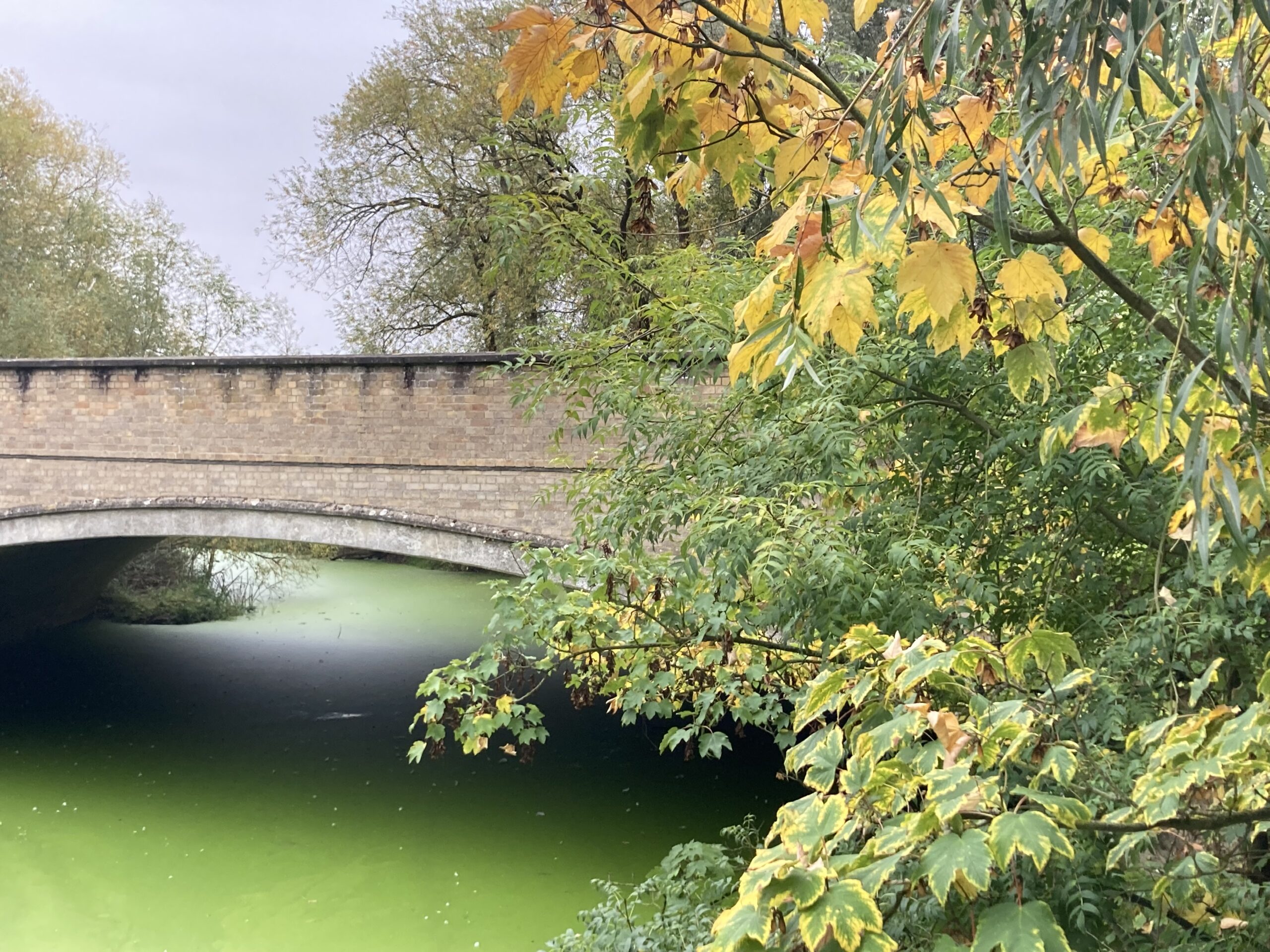
And just outside the house on the B1514, accessible only by bike or on foot is Nun’s Bridge, where the nun’s vengeful spirit is said to step out in front of oncoming cars, a terrifying local legend. One that I had to go and see for myself, getting there early in the morning so it was still quiet from people and traffic and to give me the best chance of not scaring the nun(!) I walked up to the apex of the bridge many times but truly felt too uncomfortable to cross right over it. What could this be? I did not see a ghost but felt a presence of some sort; it felt creepy somehow, a beautiful place but eerie. If you keep walking though, it will take you right round to Hinchingbrooke House, which is now a school.

This once Benedictine Nunnery then Stately Home owned by the Cromwell family, (Richard Cromwell – the nephew of Thomas Cromwell, Lord Protector 1653-1658) then passing into the hands of the Earls of Sandwich Hinchingbrooke House having suffered a fire in the 1830’s and in 1970 became part of Hinchingbrooke school. And still holding Scare Attractions during Halloween season HERE
You can also step directly into the town’s spooky past by joining a dedicated ghost walk,HERE– led by local historians and paranormal experts, this is a tour not to be missed. There is also a wonderful drama team here and such topic’s as The Witchfinder General are played out to audiences in the fabulous Huntingdon Town Hall. HERE
Ghost Walk Tours often detail the ghosts, spirits, and spectres that dwell within the streets of Huntingdon, drawing on decades of local paranormal research.
You’ll be led through historic locations like the High Street and past that famous coaching Inns The George Hotel, or The Bridge Hotel, where the talks sometimes start – these tales are steeped in centuries of history and their own ghostly accounts.
These tours provide a unique chance to hear stories and historical context directly from people who have dedicated their lives to documenting the area’s paranormal activity.
Of course the town is forever linked to one of Britain’s most complex and controversial historical figures – Oliver Cromwell (MP for Huntingdon in 1626) While here you might visit the Cromwell museum which is in the former Huntingdon Grammar School where Cromwell was educated. This site is a treasure trove of Civil War history.
The Cromwell Museum’s calendar often includes special events, such as Halloween Town Tours that explore the nearby Haunted Town Hall by candlelight, allowing you to investigate the historical atmosphere of one of the town’s most important civic buildings at its spookiest.
The original courthouse was demolished in the 18th century to make way for the great neoclassical style building. Here, a picture of the church of All Saints, Huntingdon, which stands in the Market place. Famously just for 1 night the body of Mary Queen of Scots rested here on the chancel steps on the 6th of October in 1612, on her way from Peterborough Cathedral to Westminster Abbey to be buried there on the orders of her son the now King James l. The simple font inside was used to baptise Oliver Cromwell!

You can also follow a self-guided Treasure Hunt Trail (great for kids too) that ties into the legend that Cromwell hid his school books, letters, and diary for safe-keeping just outside Huntingdon somewhere. The famous diarist Samuel Pepys also has ties to the area, his ancestors lived in Hinchingbrooke House at the same time he too had a house in the area, just up the street near Brampton – you can visit this still today – more info below.
The area surrounding Huntingdon is rich with centuries-old regional folklore and these ancient lands where once stood a motte-and- bailey Castle and an Augustinian Priory – benefactors to the priory included Henry l and his wife Matilida of Scotland (also known as Edith or Good Queen Maud) She acted as regent at times when Henry was away and we’ll do that in another post. But Matilda’s brother David 1st of Scotland (1124-1153) was also a benefactor to the Priory (which once stood on the site of St Mary’s church in the high street) and was also the Earl Of Huntingdon, so with all this money coming in you can just imagine all this wealth!
But it seems the black death as well as moral decline did for the Priory. And after the 14th century it’s decline and subsequent selling off lands that eventually passed to The 1st Earl of Sandwich, Edward Montagu after he inherited it, Hinchingbrooke house, and estates of a nicely amount of £2000 per year. He then began improving it and adding a new kitchen, 2 stories, and a new staircase in about 1661.

Hiding things or secreting them away was a bit of a thing back in the day, and like Cromwell after him, Samuel Pepys had a bit of a problem in about 1667 – he was staying at his family home, just up the road from Hinchingbrooke House (Robert- who may have been employed by the Montague’s as an estate bailiff) in nearby Brampton (between Huntingdon and Buckden) as an attack on some royal navel ships was sweeping through the Medway, (2nd Anglo-Dutch war 1665-67)and thought it might be an idea to hide his treasure (well, possessions really)of a huge bag of coins in Uncle Robert’s garden. When he returned to find them later in the year, he was distressed as he had forgotten the exact location – we know this as it is entered into his diary as a note- he frantically dug up the garden in the middle of the night and as luck would have it, found the coins and headed off back to London the next day, with them safely tucked under his carriage seat!
Side Note – One of the biggest coin finds which had been buried likely for safe keeping was found by a local detectorist in 2018 in Huntingdon on private land. A huge amount of about 10,000 Roman coins were unearthed and now known as The Muddy Hoard.
I’ve put together 5 places for you to stay or eat – whether you are travelling solo or with a group or romantic couple, or even doing a bit of metal detecting,there is something for everyone here. This place is also filled with history and mystery! So lets start there first.
1. Some Nice Grub at Kimbolton
This newly refurbished pub, The New Sun in Kimbolton is a lovely little place to have some real tasty food, it was served with every courtesy you could ask for. The new owners were most friendly and when asking “do you have a ghost?” they were happy to fill us full of tales. “we haven’t seen him ourselves yet, but plenty of customers have before us” The menu is great and the place soon began to fill up as Sunday lunch got started. We left before the live music but if that’s something your looking for – it’s the place to be. HERE just across the road from Kimbolton Castle (which you’ll need to book for as limited opening) and now serves as a school HERE There certainly are ghosts at Kimbolton Castle and even whispers of Katherine herself still being spotted, the mystery of the mistress who either jumped or was pushed into the courtyard from a great height just days after having a baby, is chilling!
2. Sunday Lunch at The Brampton Mill
What a little cracker! HERE With a modern, clean, fresh feel inside which is a complete contrast to the outside of the building, which is olde- worlde, an historic ancient mill dating back to the doomsday book.A more modern ever-turning mill can still be seen today. Here you can relax and unwind for dinner, lunch or drinks, child friendly and dog friendly with a riverside patio.And next to walking routes which take you past Godmanchester (a small once Celtic inhabited town which currently has more than 100 privately owned listed buildings) or do the Huntingdon circular HERE

3. The George at Buckden, Stay and Eat
Relax and enjoy the ambiance of this lovely pub, the staff are very helpful and the meals are huge. It always seems nice and quiet but busy at the same time, so I guess they have got the balance right. It feels luxurious right down to the individual hand towels in the bathroom and going there feels a treat. Watch out though for those bed sheets in the night! HERE
4. An Historic Inn With Modern Style Rooms And A Ghost
The old Ferry Boat Inn in Holywell (about 8 miles from Huntingdon) is set on the great river Ouse, it is a well-known haunted pub which has been serving people for more than 500 years; claiming to be one of the oldest pubs still going in England. It is spooked by the While Lady who was young Juliet Tewsley. Juliet died from heartbreak and drowned herself in the river Ouse – she has a flagstone to mark her passing in the pub lounge and every March 17th she is said to be seen walking along near the river by the pub! Being a Greene King Inn, it offers a classic British fare. With check in from 2pm and check out at 11am, what’s not to like? HERE
5. No Work Here Just Bed And Breakfast Treats At The Mill!
At the Eagle Mill B&B you are sure to spoil yourself here. This old 18th century Mill Workers cottage has been updated and turned into an exquisite place to stay. Tucked away between some ancient, lovely villages like the Hemingfords and Abbots Ripton, The Eagle Mill offers lovely countryside views. Set in 3 acres of pretty grounds to walk in it is a perfect location to either relax or do a bit of local ghost hunting. It feels like the owners put their heart and soul into giving their guests a real treat when staying here in one of their luxury rooms. Find them HERE
3 Secret Treasures For You
- Majestically standing on the River Ouse in Godmanchester, a mile from Huntingdon centre is Island Hall – home to a 10th generation family who invite you inside to see their beautiful magical home restored to it’s former Georgian grandeur – step inside one of their Candlelight Tours, Christmas Tours or more HERE for a gem of a visit.
- The Manor at Hemingford Grey – As one of the oldest continuously inhabited houses in Britain, it still has virtually all of its original features! The beautiful garden backs onto the footpath along the towpath beside the river Great Ouse, and it is a delight. There are events here where you can sit and listen to ghost stories in the dark (with just a lit candle for warmth and a smidgen of light) in the Music Room at this medieval house, I have been many times and the atmosphere is splendid. For your visit HERE and a way like no other to connect to the past.
- Last but not least, and something extra for you – why visit Buckden Towers? It is a great location and full of history. This is a working Missionary Centre but there is accommodation HERE. However if staying isn’t your thing there is a wonderful tearoom in the Queen Katherine Garden (not open during 2025, but worth checking) You can still walk around the garden itself, and the The Great Tower, see the Lady Chapel and Main house and visit St Hugh’s church. All set in 15 acres of peaceful grounds – a place to contemplate and say a prayer if you wanted to.
I’m going to try again to get over the bridge now, wish me luck!
Until next time dear friends x