Scotland’s most ambivalent spirit and Where to Find Her
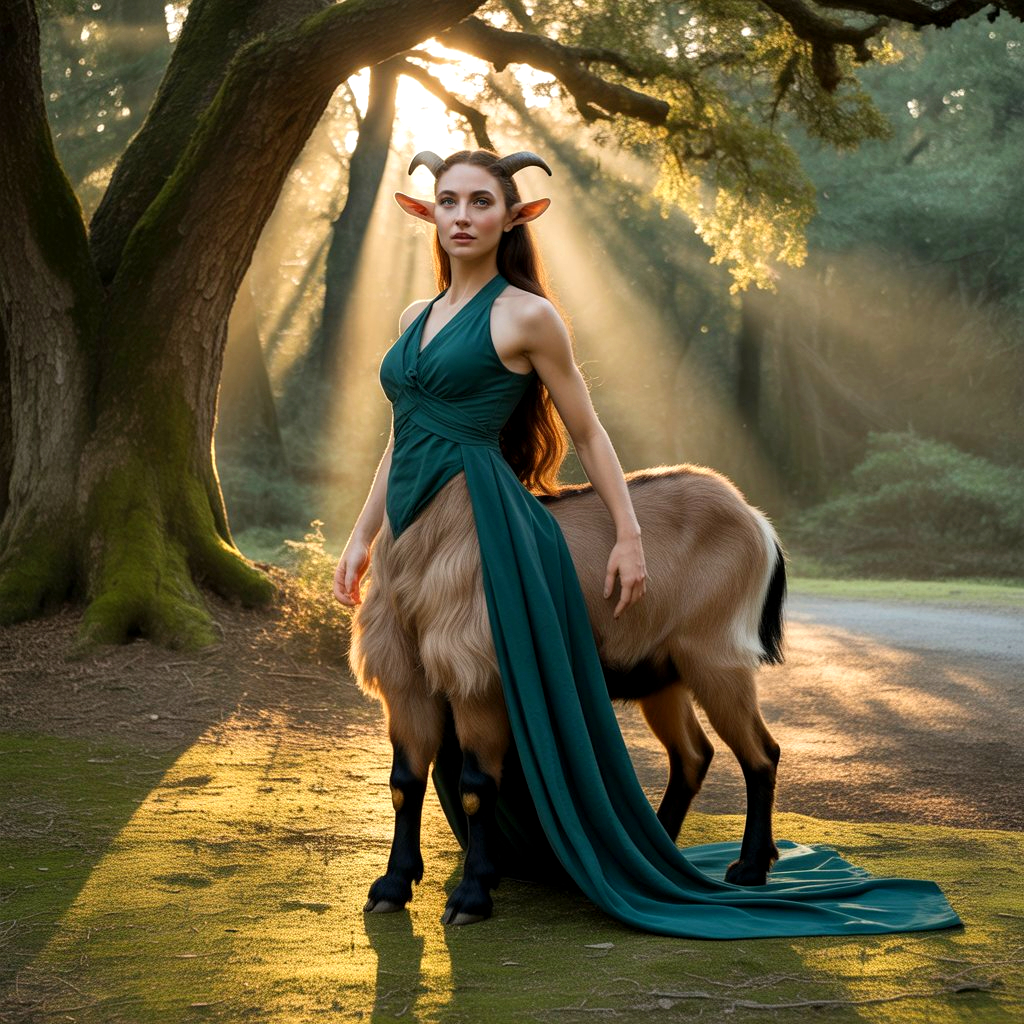
The Glaistig is a type of supernatural being, generally classified as a ghost or a fuath (a kind of water spirit) from the Scottish Highlands. Her nature is notoriously ambivalent, meaning she can be a protective spirit in some tales and a terrifying menace in others. She is often linked to the colour green, and wears a long, flowing green robe or dress, which is typical of the Daoine Sìth (fairy folk) and gives her the nickname of “Green Lady.” Don’t forget though, she is a shapeshifter and can appear in several ways!
The most traditional description is a beautiful woman from the waist up, but with the lower half of a goat (cloven hooves), which her long dress is said to hide. She can also appear as a stunning woman of beauty or, conversely, as a hideous hag or monster. She may take the shape of a goat, deer, dog, mare, or sheep.
She is often described as having pale or grey skin (her name glaistig may derive from the Gaelic glas meaning ‘grey’ or ‘pale-green’) and long, yellow/golden hair that may reach her heels.
Glaistigs are traditionally associated with lonely lochs, rivers, waterfalls, and caves in the Highlands. And a common legend tells of her protecting cattle in exchange for a ‘ritual pouring of milk’ into a hollowed-out stone. Her protective services were revoked in one story after a mischievous youth poured boiling milk into the stone, burning her.
The Green Lady
The “Green Lady” myth has merged with the Glaistig and is tied to several castles and old houses across Scotland, including Fyvie Castle, Dunollie Castle, and Muchalls Castle, where she is a sorrowful or protective ghost. Deep within the moss-covered glens and mist-shrouded lochs of the Scottish Highlands lurks a creature known as the Glaistig—or simply, the chilling Green Lady.
She is a figure of terrifying duality, a beautiful woman whose flowing green gown hides the cloven hooves of a goat, and whose kindness is as legendary as her thirst. Is she the benevolent protector of cattle, leaving milk and safety for honest herders, or a vampiric siren who lures lonely travellers to their bloody end? Prepare to meet the ultimate ambiguous spirit in UK folklore, a ghost, a vampire, and a fairy all rolled into one beautiful, deadly mystery. Because the Glaistig is a supernatural being, traditional methods of protection often relied on metal, faith, and understanding her nature. Like many creatures of the Daoine Sìth (the fairy folk), the Glaistig is believed to be repelled by cold iron or steel.

A common tactic in many Scottish legends is to carry a small piece of iron, such as a needle or a horseshoe, especially when travelling near known Glaistig haunts (lochs, waterfalls, or certain ruins).
Iron was sometimes placed under the door threshold of a cow shed or cottage to prevent the spirit from entering and harming the family or the livestock.
The Glaistig’s most vulnerable point—both physically and symbolically—is the fact that she has cloven hooves hidden beneath her beautiful gown. If a mortal could somehow force her to reveal her goat legs, it was believed to break her enchantment and often cause her to flee or lose her power, as her disguise was ruined.
Some traditions hold that because she is a type of water-spirit (fuath), she can be temporarily disabled or weakened if forced to step out of her watery territory and onto consecrated ground or if she cannot hide near running water. And if she was acting in her benign role (protecting cattle or a household), she could be kept happy if offered milk!
Milk is the most famous appeasement method, she requires a regular offering of milk—not spilled, but poured carefully into a hollowed stone (often called a clach ghlain) near the water or a prominent feature on the land she has protected. Failing to provide this could turn her into a destructive force!
If she adopted the role of a ‘Brownie’, which is a Scottish version of a household spirit or goblin, leaving out small amounts of food (especially cakes or porridge) in a bowl near the hearth will ensure her continued service, but she should never be thanked or given new clothing, as this is said to offend Brownies and cause them to leave forever.

The belief in the power of a creature’s true name is prevalent in Gaelic folklore and in some tales, if a person manages to get the Glaistig to reveal her true name, they could gain power over her, allowing them to bind her or force her to leave. there is a story that suggests a permanent end to a malevolent Glaistig which involves a group of men overpowering her and burying her deep in the earth beneath a large, heavy stone to prevent her return.
The “Green Lady” myth has often merged with the Glaistig across Scotland, making her a spectral inhabitant of many historic places.
1. The Green Lady of Fyvie Castle (Aberdeenshire)
This is one of the most famous “Green Lady” legends and shows the tragic, ghost-like side of the Glaistig tradition.
The ghost of Lilias Drummond, who was married to Sir Alexander Seton in the early 17th century, is said to haunt Fyvie Castle. Alexander Seton is said to have allowed Lilias to starve to death so he could marry her cousin, Dame Grizel Leslie. And on the night of the second marriage, Lilias’s last name, “L. Drummond,” was mysteriously carved onto the stone window ledge of the marital bedroom. To this day, the carving cannot be removed, and it is said that whenever the window is opened, the smell of roses fills the room.
To this day Lilias is seen roaming the castle in a green dress. She is an omen, appearing only when a death is imminent among the castle’s family or occupants.
2. The Glaistig of Glen Loy (Lochaber)
For generations, the herders of Glen Loy maintained a traditional pact with a local Glaistig. They would leave her a bowl of cream or milk every morning in a specific hollowed-out stone, and in return, she would act as the guardian of their cattle, ensuring they were safe from rustlers and harsh weather, and even helping the herders find stray animals.
According to the legend, the pact was broken when a doubting or lazy tenant had stopped leaving the offering. The Glaistig, enraged by the disrespect, drove the entire herd to a distant, dangerous corrie, proving her power and forcing the tenant to reinstate the offering.
3. The Vampire of the Waterfalls
This terrifying legend, often associated with remote pools and waterfalls, is where the Glaistig’s monstrous side is fully revealed.
She appears as a stunningly beautiful woman near a secluded pool, often singing or weeping, and feigning distress. When a man approaches, drawn by her beauty or desire to help, she embraces him tightly. Her long fingernails—sometimes described as sharp claws—would pierce his neck or side, and she would then drink his blood, discarding the lifeless body into the water. This is the origin of her designation as a vampiric fairy or fuath.
From the eerie grandeur of Fyvie castle to the remote streams of Glen Loy, the Glasistig stands as one of Scotland’s most complex and chilling figures. She is not merely a ghost; she is a ethical riddle encased in a green gown – a guardian of the ancient land one minute and a beautiful vampire hiding her cloven hooves the next!
Her story reminds me that in the deepest parts of UK folklore, the line between helpful spirits and hungry monsters is dangerously thin. So the next time you wonder through a quiet loch and see a woman in green; maybe ask yourself “Is she waiting to offer you safe passage or drain you of your blood!?.
Until next time dear friends x I’ll look out for you in Scotland! ………………………..