The Green Man and Where to Find Him
Delving into one of the most recognisable, yet maybe least understood figures carved into the very fabric of the British Isles is something I’ve been looking into; the Green Man.
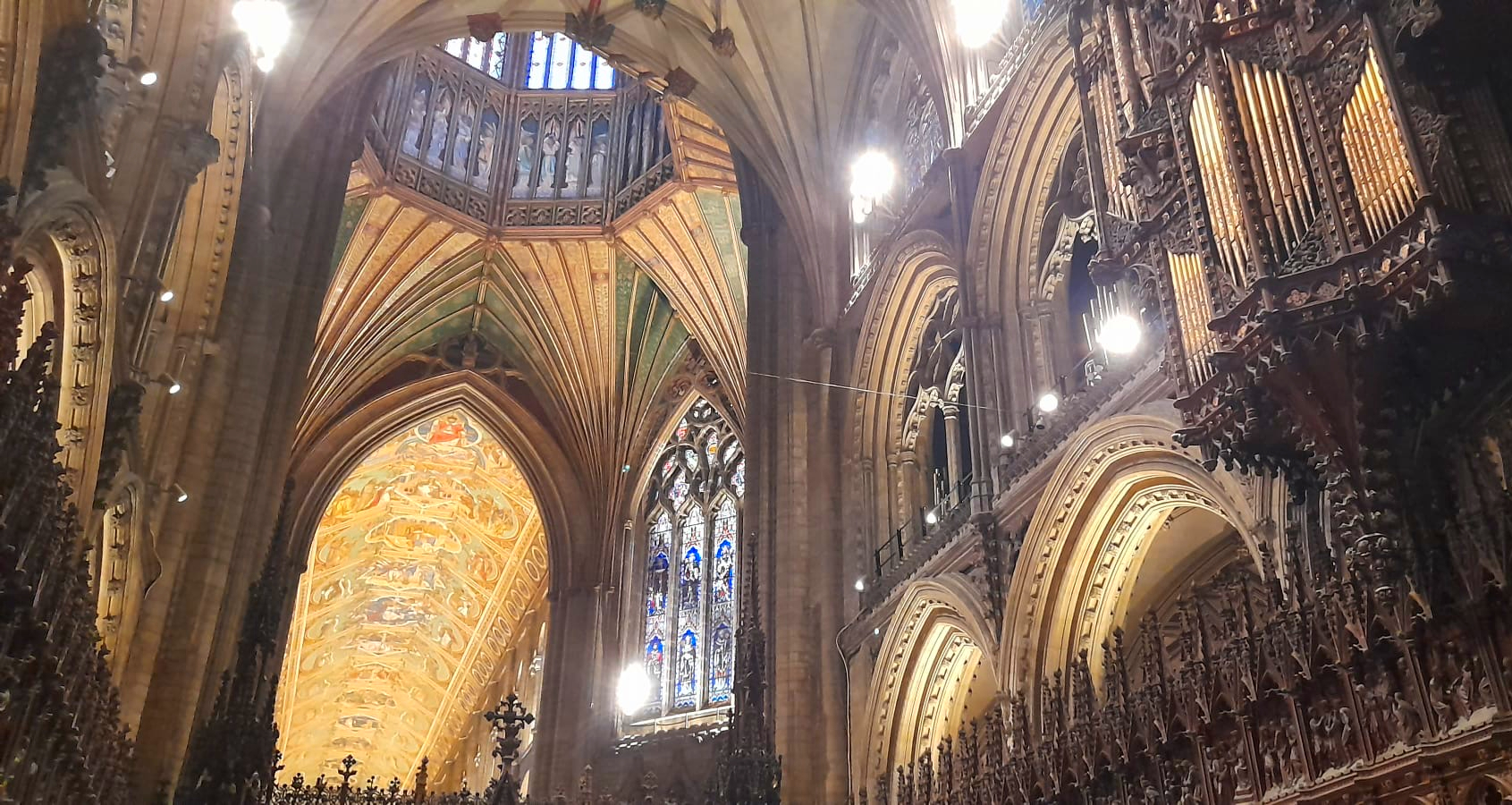
I’ll share with you some great places to visit to see him in some of our great ecclesiastical architecture, from the 11th and 12th centuries onwards. Although his roots are far older than that, and are tangled in pagan worship of pre-Christian Europe.

Far more than decoration (you see them all over the garden centre’s, pottery type ones are very popular) this leafy faced, human head is usually found peering out from a mask of leaves and vines – it’s a powerful symbol of nature’s relentless cycle, a whisper from the stones of some of our oldest buildings. He is a guardian of the wild, standing eternally at the gateways between the human world and the deep forests.
The very best way to appreciate the Green Man’s enduring power is to seek him out! Although he often is found in shadowy corners, you can find him looking down from ornamental knots (bosses – like those on churches or cathedrals) or chancel arches.
The Green Man’s prominence reflects a deep, pre-Christian need to make a pact (for the sake of your safety) with the powerful natural world – a need that shaped many British traditions that survived long into the Christian era.
He is often linked to earlier deities embodying fertility, vegetative growth, and the cycle of life, death and rebirth. He represents the wild, untamed essence of the natural world encroaching on the civilised, spiritual space of the church.
Why would such a clearly pagan image be so prevalent in Christian churches? Well, I guess the most acceptable story is absorption. The church often incorporated existing pagan symbols to ease the transition for new converts, allowing the Green Man to stand as a reminder that the divine is found in all creation, including the raw, dangerous and beautiful power of the wilderness.
He remains the unseen mediator, the Green Man has endured and survives up until today because he is an unbroken powerful symbol and contractor with the land, he is the silent reminder that the wildwood is never far away, and it is in this enduring, mysterious connection to the ancient rhythm of the British Isles that his legend will surely continue to blossom and bring warmth and light to our lives.

The Green Man is a bit of a boundary breaker, he is not hidden, he is carved in plain sight, and by placing his face at the entrance of archways and joints of sacred buildings, the church acknowledged the powerful forces of the natural world – the source of life- and it should be honoured. The Green Man became a mediator, ensuring the wildness outside was in harmony with the faith inside.
A Shared Ancestry with the Wreath and the Sun
The Green Man is not the ‘father’ of the green winter wreath, but you could say they were cousins; sharing a common ancestor, the Veneration of Evergreens. Just as the Green Man is the personification of life that guarantees spring’s return, the evergreen wreath is the symbol of life’s endurance, bought indoors at Yule (Winter Solstice) as a powerful charm to ensure the Sun and the growing seasons would return.

The green wreath like the Green Man is made of evergreens and holds a profound importance that bridges ancient pagan rituals, the fear of the dark seasons, and the promise of life’s renewal. The importance of the winter wreath rests upon two core symbolic elements – the evergreen foliage, and it’s shape – the circle – they form a powerful message of endurance, hope, and protection during the darkest part of the year.
The green winter wreath, is a potent blend of ancient pagan reverence and enduring folk magic. The Green Man is the actual King of the wildwood, the force itself and the green wreath is made of the King’s materials, used by us to show our loyalty and ensure the King’s power (life) does not fail.


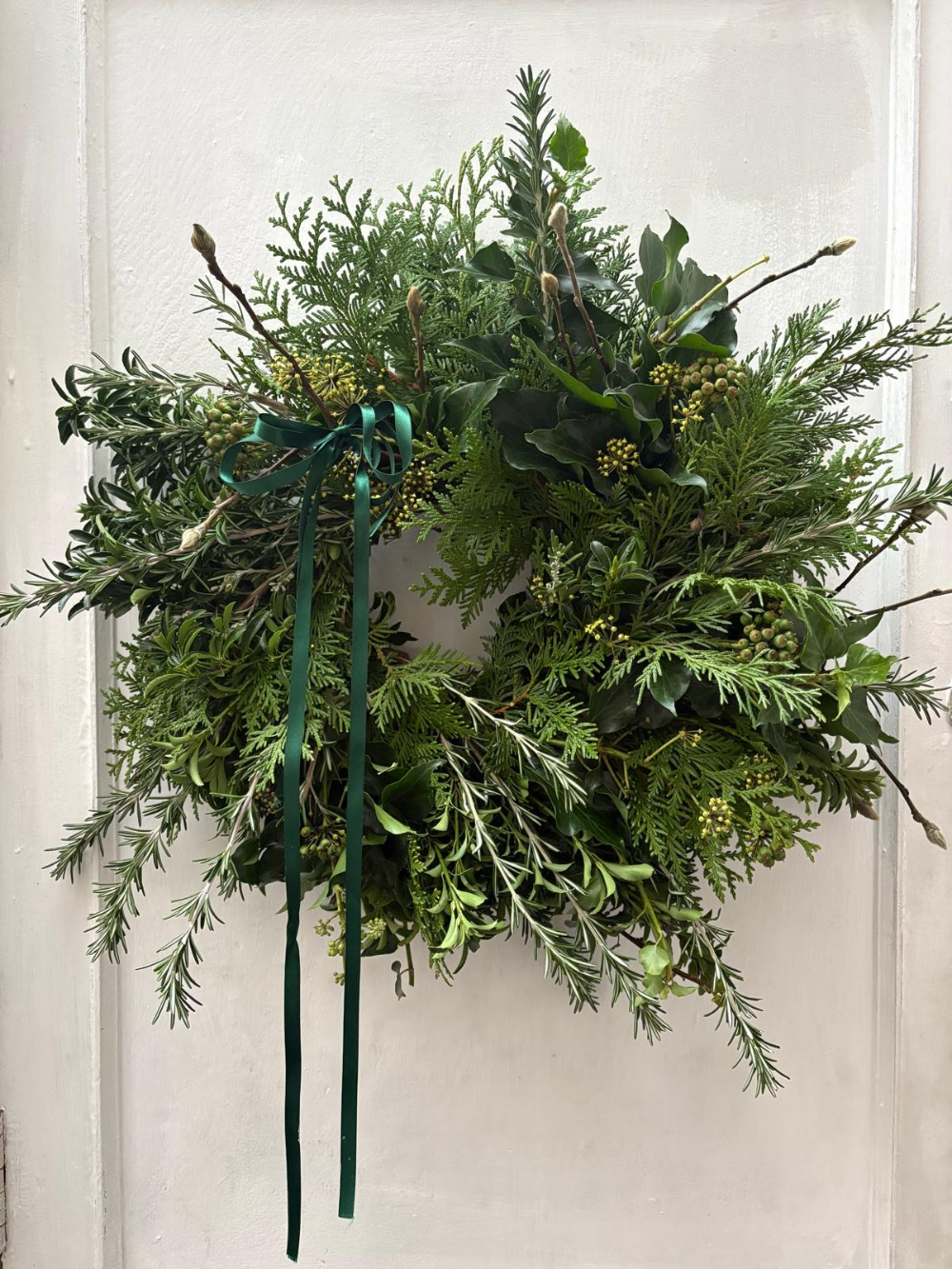
Just finished our HQ wreath and have to say it’s looking lovely
Until next time dear friends x