Why Visit Norwich?
Whether it’s the gargoyles watching from the Cathedral spires or the “hidden” street beneath the Castle Mall, the city invites you to get lost in its mysteries. In this guide to the city’s folklore, legends and landmarks we will come for the architecture, but stay for the tales whispered in the corners of ancient flint-walled taverns.
Norwich is a city where the veil between the past and the present feels remarkably thin even in its bustling streets. Often described as a place that “has a church for every Sunday and a pub for every Monday,” its winding medieval streets—the Lanes—offer the visitor a dense atmosphere of history, shadow, and local legend.
Where to shop/eat/drink in Norwich
You’ll find these Lanes near St Giles and Upper Giles Street. Foodies, art lover, lovers of Indie, gift shops, lifestyle and vintage shops, as well as coffee, pastries, and tonnes of places to eat and drink – some of the best shopping, walking, learning and chatting can be had in this UK hot spot.
If you start at Upper Giles street walking past all the beautiful Georgian buildings and filling your senses with smells, sounds and even touching a building that has stood centuries old, your journey can continue onto Lower Goat lane where even more ‘colour’ meets the eye.
Past the Guildhall to the bottom of Lower Goat lane and grab a bite to eat at any one of the tasty treats on offer in these quirky little shops.

Norwich – A Layered Past
Founded by the Anglo-Saxons, Norwich grew into a bustling Viking hub before the Normans stamped their authority on the landscape with a towering flint castle and a magnificent cathedral. For centuries, it was England’s second city, isolated by the Norfolk Broads and looking more toward Europe than London.
Perhaps it was this isolation that made them fiercely independent and created a unique culture of storytelling.
For much of its history, travelling to Norwich by land from the rest of England was a nightmare. The city was hemmed in by the Norfolk Broads—a vast, treacherous expanse of waterlogged Fenlands, marshes, and dense forests. Before modern drainage and roads, one wrong step meant sinking into the mud.
It is said that the land route to London was so difficult that right into the 18th century – it was often faster and easier for the residents of Norwich to get on a boat and sail across the North Sea to Amsterdam than it was to travel south to London by horse or coach.
This geographic separation forced the city to look inward. Because people rarely left their immediate communities and outsiders rarely visited, traditions stayed intact for centuries, unbothered by outside trends.
Travelling at night must have been terrifying. To pass the long winter evenings and warn children away from dangerous areas, locals relied heavily on oral storytelling. And before streetlights, medieval Norwich was a tightly packed maze of overhanging timber buildings and pitch-black alleys. Outside the city walls was a silent, dark marshland.
If a traveller disappeared into the wetlands, it wasn’t just attributed to a muddy bog; and was blamed on the Lantern Men—little light-glowing evil spirits said to dance across the marshes and lure victims to their deaths.
Folklore and Shadows
The city’s atmosphere is thick with the supernatural. Wandering through Elm Hill, perhaps the most complete medieval street in the country, you are walking over the ghosts of the Black Death and the echoes of religious turmoil.
- The Black Shuck: Perhaps Norfolk’s most famous legend, this spectral black dog with glowing red eyes is said to haunt the churchyards and dark lanes of the city, a portent of doom for those who cross its path.
An historical landmark – Elm Hill is a public, cobbled stoned street that remains open at all times, though its true character emerges at dusk. It is widely considered the most haunted street in the city.
- Home to the ghost of Father Ignatius, a Victorian preacher who supposedly cursed the street and its inhabitants. He wasn’t keen on the good residents of Norwich not taking notice of his strict monastic practices and cursed all those who turned from him with eternal damnation and an unholy downfall. So if you are walking where once stood his monastery and see a hooded, figure clutching a bible looking a bit ghostly, you never know you might have just caught a glimpse of the good father still about his business.
- Accessibility: You can walk the street freely; local businesses like the Britons Arms and Elm Hill Craft Shop offer a chance to step inside these historic structures.
The Lollards’ Pit Public house – Just outside the city walls lies a site of execution where martyrs were burned at the stake; locals still report a heavy, somber energy clinging to the earth there. Lollard’s Pit Pub is built directly upon the site where religious dissidents (Lollards) were burned at the stake during the 15th and 16th centuries.
The pub’s cellar was used to hold prisoners before their execution; today, it is a popular spot for ghost hunters.
- Visiting: The pub is open Tuesday through Sunday, typically from late afternoon on weekdays and midday on weekends.

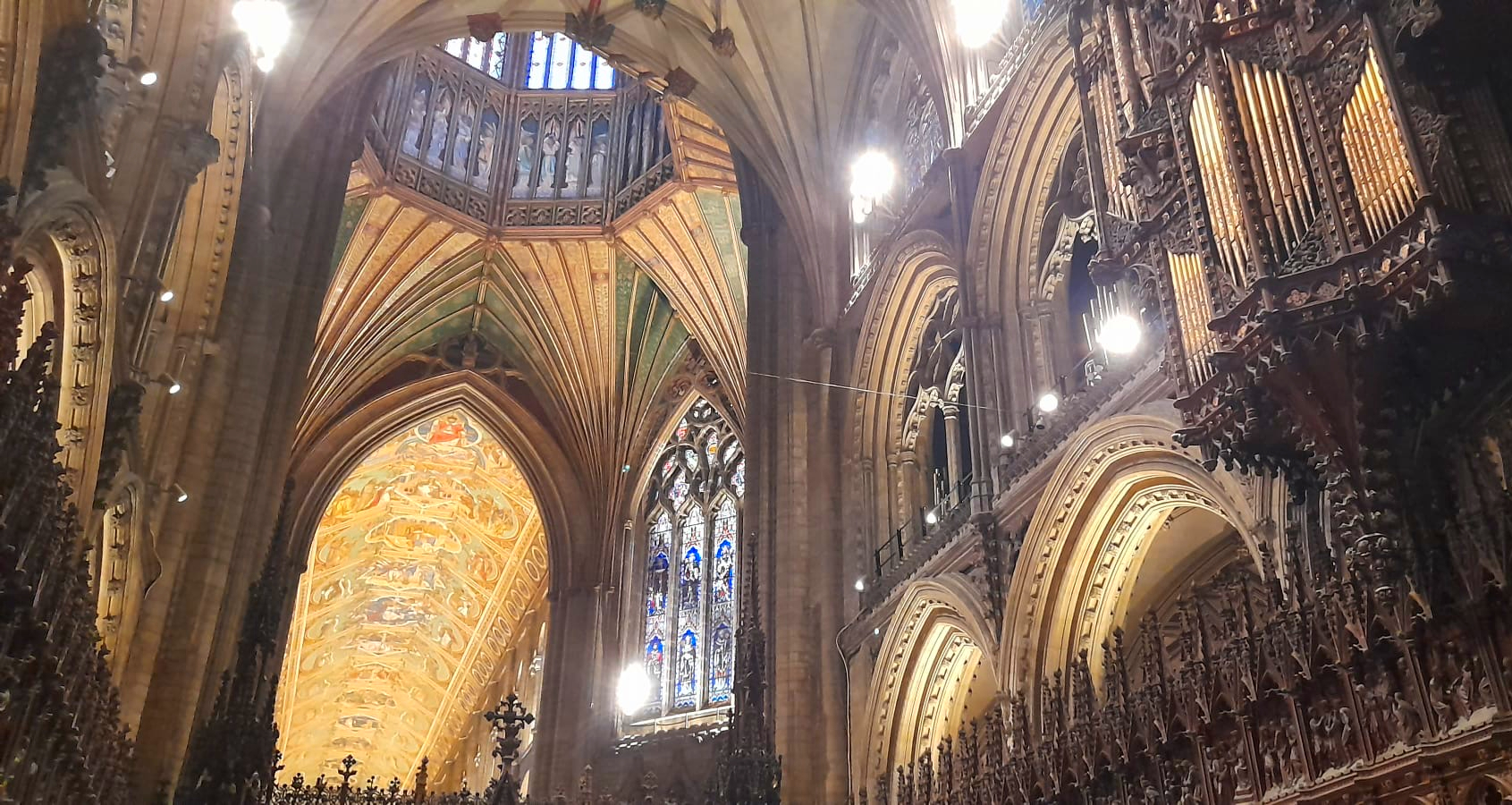
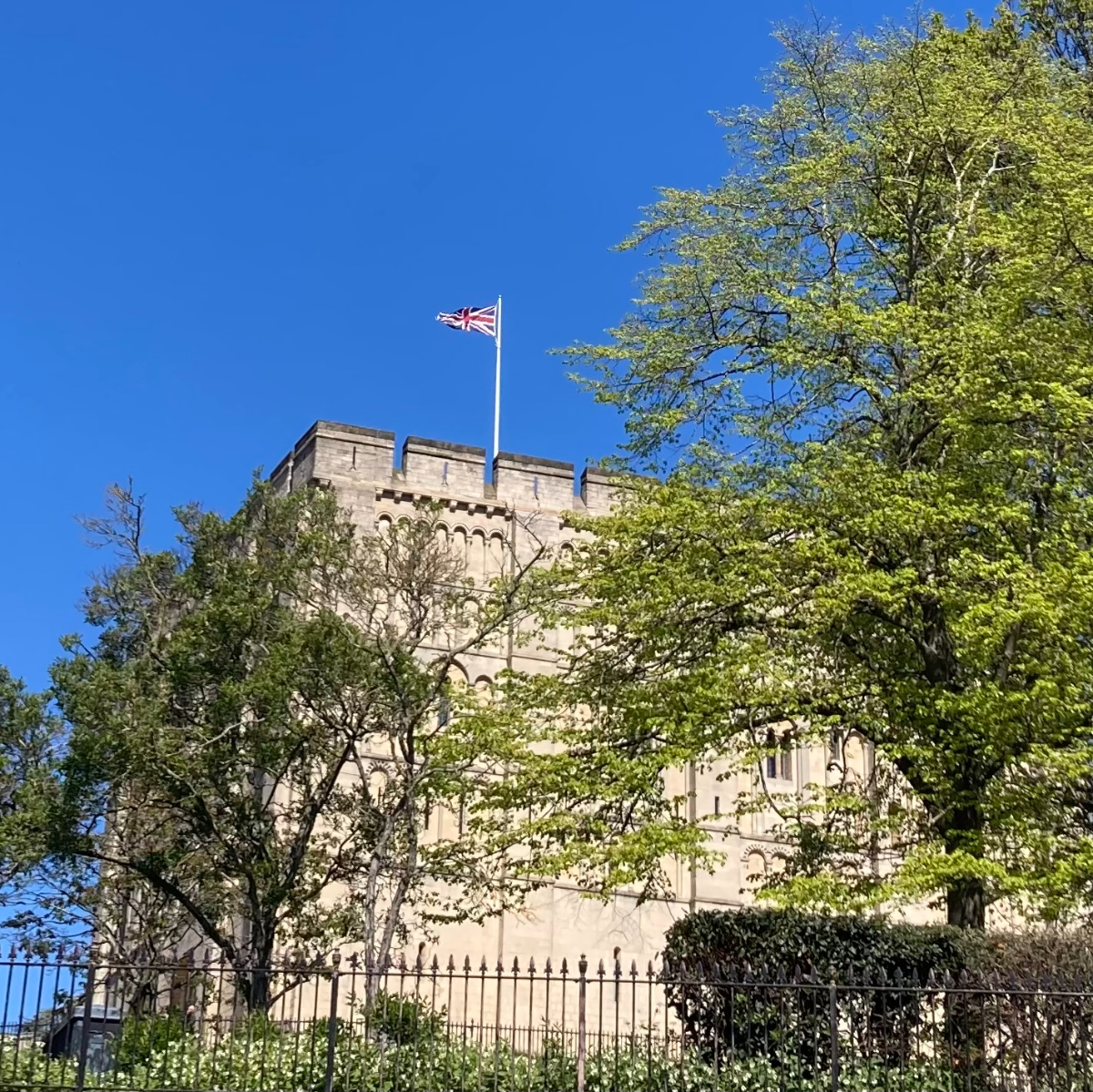
Norwich Cathedral and Norwich Castle
Both Norwich Cathedral and Norwich Castle serve as twin pillars of the city’s history, each with its own spectral inhabitants. The Castle is good value at about £15 an adult – booking on-line gives you a discount.
The Cathedral is said to be haunted by a “Bishop’s Ghost,” while the Castle’s keep—once a grim prison—is rumored to be home to the spirits of former inmates.
- Visiting: The Cathedral is open daily (7:30 AM – 6:30 PM) with free entry. The Castle operates as a museum and is open daily from 10:00 AM to 5:00 PM. (writing in 2026)

Norwich – A Melting Pot of Outsiders (The “Strangers”)
Paradoxically, the same waters that isolated Norwich from London connected it to the dark currents of continental Europe. In the 16th century, thousands of Dutch and Flemish refugees fled persecution and slipped into the city along its rivers. Remembered in local lore simply as “The Strangers,” they brought with them foreign beliefs and esoteric traditions that would forever deepen the city’s culture of mystery.
And to celebrate the strangers In Norwich today – there isn’t just one location named after “The Strangers”—the city’s historic 16th-century refugees—but rather a few distinct spots that celebrate this specific piece of local history. There’s ……………………
The Strangers Tavern – Located on Charing Cross in the Norwich Lanes, this venue operates as an independent pub and craft beer bar.
The Strangers Club – which is a private members’ club rather than an open public house. Situated on Elm Hill—numbers 22-24 is situated in one of Norwich’s oldest and most famously haunted medieval streets—this exclusive club was founded in 1927.
The club was established with the specific, ironic intention of bringing together “strangers” working in the city with native residents. It is housed inside a stunning Grade II* listed building dating back to before 1545, which was once the home of Augustine Steward, a former Mayor of Norwich. But today because it is a private club a vetting process is required in order to join the club and getting to see the inside can be rather difficult. However……………….
- Heritage Open Days: The club frequently participates in England’s annual Heritage Open Days festival (usually held every September). During this event, they throw open their doors to the public for free, allowing you to explore the incredible oak-beamed Augustine Hall and their hidden courtyard garden.
At one point, these immigrants made up a third of the city’s population. They brought their own beliefs, traditions, and even their pet canaries (which is why the Norwich City football team is called “The Canaries” today).
This blending of Anglo-Saxon roots, Viking history (from earlier invasions), and continental folklore created a rich tapestry of stories found nowhere else in England.
When a city is left to its own devices in a foggy, marshy corner of the world, storytelling isn’t just a pastime—it becomes the way the community defines its borders, records its history, and explains the shadows in the dark.
This combination of misty marshes, isolated villages, and a defiant culture gave birth to some of England’s most terrifying and enduring folklore
- Black Shuck – The legendary, glowing-eyed phantom hound said to stalk the dark, lonely coastlines and muddy lanes of East Anglia.
- Hikey Sprites – Unpredictable, fairy-like creatures blamed by locals when farm equipment failed, cows fell ill, or children wandered too close to the woods.
- King Gurgunt – A mythical king rumoured to be sleeping fully armed under the hill of Norwich Castle, waiting to rise if the city is ever in dire need.
Norwich Market
Wander through the historic rows to find local crafts, vintage clothes, and fresh regional produce like Norfolk cheeses. Sample an incredible variety of international street food stalls, making it the perfect spot to stop for a unique lunch.
Located in the vibrant heart of the city, this iconic landmark has been a bustling center of local life since the Norman conquest. Instantly recognisable by its canopy of brightly coloured, striped roofs, it stands as one of the largest and oldest open-air markets in all of Europe. It offers a sensory bridge between the city’s merchant past and its creative present, serving up everything from traditional Norfolk goods to artisan street food.
Open – All year round, open at 9am

Accommodation in Norwich
1. Th Revado Hotel – Norwich city centre
If you want history on a budget, this hotel offers a great balance without having to resort to a completely modern, characterless chain.
Housed in a striking, red-brick Victorian-era townhouse property, it retains a lot of its traditional exterior charm while offering simple, clean, and functional rooms inside.
It’s located close to the city centre, its Victorian heritage naturally conjures images of 19th-century Norwich, a time when the city was still plagued by thick sea fogs and gas-lit alleys. It serves as an affordable, historic base camp to rest after a long evening ghost walk.
- Price: Around £58 per night.
2. THE GEORGE HOTEL (SWAFFHAM ROAD/ CLEY-NEXT-THE-SEA ROUTE)
For a quintessentially Norfolk experience that perfectly balances comfort with deep history, look to the region’s historic coaching Inns, and you have a car – or it is easy for you to get around.
In a charming 17th-century coaching inn property, this hotel features relaxed rooms, with select rooms even boasting traditional four-poster beds to heighten the historic atmosphere.
As a former coaching inn, these walls have seen centuries of weary travellers, highwaymen, and merchants passing through the misty Norfolk countryside. The old timbers and creaking floorboards provide just the right amount of historic mystique without sacrificing a comfortable night’s sleep.
- Price: Around £132 per night.

3. THE MAIDS HEAD – CITY CENTRE
Claiming to be the oldest hotel in the UK, this is the ultimate luxury destination for lovers of history and ghost stories.
Dating back to the 13th century, this stunning 4-star property sits right in the historic Tombland area, directly opposite Norwich Cathedral. It seamlessly blends luxurious modern amenities with spectacular medieval architecture, ancient wood panels, and historic charm.
With over 800 years of history, it is famously known as one of the most haunted places in Norwich. Guests and staff have reported encounters with the ghost of a “Lady in Grey” (believed to be a former maid) who leaves the scent of lavender in her wake, as well as the spirit of an old city mayor who paces the ancient courtyard.
- Price: Around £207 per night.
Getting Around
We spent a whole weekend here, which went pretty fast and as always left too many things unseen (forgive the pun). Finding Norwich not only a little spooky at night, which is understandable given its history and wonderful old buildings, but getting around was made quite easy and nicely simplified by lots of information dotted about.
The park and ride system with the bus terminal located right in the city was a breeze More information here
If you want to park your car in the city More Here for Norwich car parking places – there’s plenty of spaces but a bit more expensive More information here for parking you car in Norwich
And if you have time and are staying the night/weekend/week – why not do a ghost tour? Nightly walks/Private walks/Group walks …………………..
Take a journey through the haunted city
Until next time dear friends x