What is a Herb?
Just imagine a world where the plants under your feet held haunted secrets from history, spells, and even saved lives. For centuries in Britain, these weren’t just weeds – they were powerful tools for survival.
Content
- What is a Herb?
- Herbs and Their Culinary Uses Throughout History
- Native and Naturalised British Herbs
- Ancient Healing
- Herbs Throughout History
- 5 Herbs We Can’t do Without
- Practical Applications for Daily Life
- Foraging in the UK: Key Legislation
- Commonly Grown Culinary Herbs of the UK and Their Uses
- 5 Great Stays near Herb Gardens in the UK
We will look at what herbs are, their use in cooking and medicine through the ages, and why we still use them. I will give you a list of 5 great places to stay near to where you can visit herbs aplenty.
In this post we will look into the mystery of herbs and how they have become an integral part of British culture since time immemorial. And give you some amazing places to visit in the UK, where you can see, smell and touch them (well, not all especially if they are deadly poisonous, which some are) There is a terrifying garden open to the public in Northumberland you may want to visit?!.
Want to know more? HERE
Herbs are wonderfully smelly (aromatic!) useful plants that grow everywhere – along roadsides, in woods, fields, meadows and even creep through your paving stones.

Herbs were used by hunter-gathers, used for crafting spells, used for food, used for medication, and have always been given as a heartfelt gift by children on the way home from the park picking a few daisies or wild violets to bring back to mum.

Years ago I trained and practised as an Aromatherapist, I can tell you it was not a job – being able to surround yourself all day with the most wonderful smells from the essence of flowers and herbs, and the natural benefits of just breathing the oils in had an uplifting and almost mystical feel on the day. I remember once going into the bank at the end of the day, and the cashier saying how lovely it was to serve me each week as my money smelt so nice!
Herbs and their Culinary Uses Throughout History
In early times, wild herbs were indistinguishable from vegetables, and formed a crucial part of the daily diet, especially for the poor. They were gathered from the wild, to flavour simple pottages (a type of stew) over centuries. Herbs like parsley, rosemary, chives, sage, and thyme have been fundamental in British cooking, enhancing the flavour of staple dishes, particularly with potatoes and root vegetables, which could otherwise be very bland.
While historically more basic herbs were common, the spice trade and European influences introduced a wider variety, including Basil, Oregano, and Tarragon, enriching British cuisine. Today, British chefs and home cooks utilise a vast array of fresh, dried, and frozen herbs, both native and imported.
Travellers and settlers from foreign lands would have brought their own customs and recipes with them and their own herbs would have slowly been integrated as part of trade and knowledge sharing.
Today a lot of the native herbs and plants are not utilised at all and many old customs and recipes have been lost in favour of these more robust and hardy plants (which are easy to cultivate) over plants that have grown in the wild in the UK for centuries.

Native & Naturalised British Herbs
A list of native UK plants below are easily found in the hedgerows and fields all around, some will be familiar to you but others less so.
Why not try to spot a few in your own garden (while weeding!)or out on a walk. There are many good guides with lovely illustrations making it easy to identify these guys, if only for fun, you don’t have to actually eat them.
- Yarrow (Achillea millefolium)
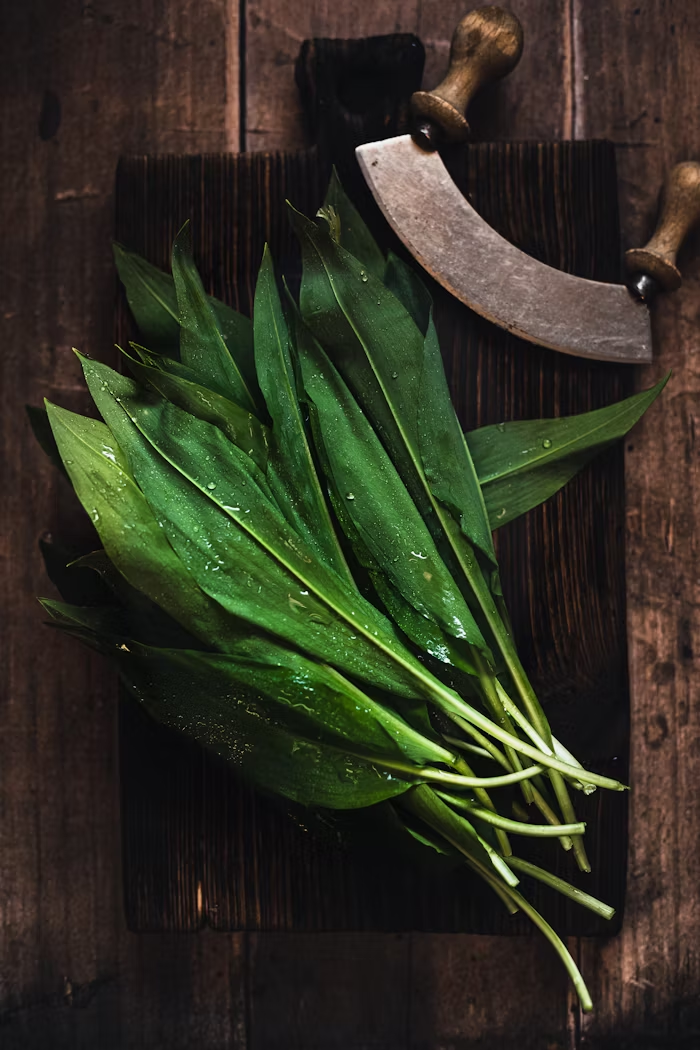
- Wild Garlic/Ramsons (Allium ursinum)
- Wild Onion/Crow Garlic (Allium vineale)
- Marsh Mallow (Althaea officinalis)
- Angelica (Angelica archangelica)
- Wild Celery/Celery Leaf (Apium graveolens)
- Horseradish (Armoracia rusticana)
- Lesser Calamint (Calamintha nepeta)
- Cornflower (Centaurea cyanus)
- Chicory/Succory (Cichorium intybus)
- Wild Basil (Clinopodium vulgare)
- Sea Kale (Crambe maritima)
- Rock Samphire/Sea Fennel (Crithmum maritimum)
- Meadowsweet (Filipendula ulmaria)
- Wild Strawberry (Fragaria vesca)
- Sweet Woodruff (Galium odoratum)
- Hops (Humulus lupulus)
- St John’s Wort (Hypericum perforatum)
- Elecampane (Inula helenium)
- Common Mallow (Malva sylvestris)
- Water Mint (Mentha aquatica)
- Pennyroyal (Mentha pulegium)
- Sweet Cicely (Myrrhis odorata)
- Parsley (Naturalized in some areas – Petroselinum crispum)
- Primrose (Primula vulgaris)
- Selfheal (Prunella vulgaris)
- Sorrel (Rumex acetosa, Rumex acetosella)
- Burnet (Sanguisorba minor, Sanguisorba officinalis)
- Wild Thyme (Thymus polytrichus)
- Nettle (Urtica dioica)

It is still popular however to make use of these wonderful plants and herbalists, tea makers, people looking for natural cures or benefits of plants find them both useful and fascinating.These herbs are filled with antioxidants and minerals. You should however know what you are doing and there are courses all over the UK to show you how to use herbs in your cooking.
Want to Know More? Fancy Some Herb Identification of Your Own? HERE
Want to know more? Fancy some Wild Foraging? Why not take a course? HERE
Ancient Healing
Herbs and healing have been used by Apothecaries (a kind of medieval pharmacist) and everyday folk playing a vital role in providing remedies for all kinds of things – wounds, coughs and colds, poultices, tinctures and salves.

From prehistoric times, plants have been used for medicinal purposes. Archaeological evidence suggests humans have used medicinal herbs as far back as the Paleolithic era (The Old Stone Age – around 2.5 million years – 10,000 BC) Then during the Middle Ages, monks cultivated and used herbs for medicinal treatments within monasteries.
Herbal knowledge was traditionally passed down through generations, with local experts providing plant-based cures accessible to the wider population. During both World Wars, Britain was heavily dependent on homegrown herbs for essential medicines after supply lines for conventional drugs were disrupted.
These shortages (at the time most of the plants being used for medicine were being imported from the continent) of plant-derived drugs became a problem.
And
Action was needed! The Vegetable Drugs Committee – The VDC, was established in about 1941 during World War ll
The committee advised an expert in plants at Kew (Gardens in London) he then Dr Ronald Melville, drew up a list of plants necessary and encouraged the people of Britain to find them!
They were looking for plants such as –
- Foxglove
- Elder
- Dandelion
- Broom
- Burdock
- Comfrey
- Sweet Chestnut
- Yarrow
- Wild Thyme
- Coltsfoot
Want to know more? HERE
Can you believe this? So – The National Federation of Women’s Institute, The Scottish Women’s Institute, Royal Institute of Royal Services and even the School children of the UK, Scouts and Guides, were on the lookout for herbs to help the War Effort! (Coordinated Mobilisation of Society’s Resources)
Cigarette Cards (popular from 1800’s) were commonly traded between individuals, they were practical for stiffening the packets and a great way to provide information and advertising – Anyway they were used as a form of identification so herbs could be easily recognised by the kids, and groups, gathering herbs in the wild; pamphlets too were made by The Boy scouts.

- Fun (well not so fun) Fact – On medieval battlefields St John’s Wort was used extensively to heal wounds and was commonly known as Wound Wort.

While modern medicine has advanced, many contemporary pharmaceuticals have origins in plant-based compounds.
Just think of the Poppy, it has been well known that the Alkaloids (Opium alkaloids) in the unripe seeds help with pain relief.

In the Fen in East Anglia the people were known for collecting the seeds to use in a tea concoction to aid aches and pains and therefore ease the harshness of living in a savage environment.
The knowledge of these phytochemicals (natural chemicals that are found in plants) have been explored and identified to give us safe medicine today but the interest in herbal medicine or ‘natural medicine’ persists.
We are a curious lot and there is nothing more satisfying than growing, foraging, pickling, drying or cooking with herbs, it’s in our DNA.
Herbs throughout History
Throughout history, various herbs have been associated with specific beliefs and rituals. For instance, rosemary was linked to memory and some herbs were used to ward off disease. We all remember those strange beaked masks used in times of The Plague – they were stuffed with herbs so as to keep the wearer safe.

Dried and fresh herbs were also used for strewing on floors to repel insects and mask odours (like hyssop in Tudor times) and in perfumes and disinfectants. Figures like Nicholas Culpeper in the 17th century (I still have this, my first ever herbal book, it’s a bit tattered now and filled with dried pressed herbs but I couldn’t be without it) and Maud Grieve who in the early 20th century championed the use of herbs for health; empowering ordinary people with the knowledge of herbal remedies.

The “language of flowers” also imbued certain herbs with symbolic meanings, such as Hawthorn representing hope, and Dandelion flowers symbolising resilience. We all know the language of the Rose, one of the most powerful symbols of love.


In essence, herbs have been deeply interwoven into the fabric of British life for their practical uses in cooking and healing, as well as for their cultural meanings and symbolic associations, shaping traditions and everyday practices since the earliest times.
5 Herbs We Can’t Do Without
Here are 5 herbs with a strong heritage and tradition in the UK, valued for their culinary, medicinal, and cultural significance over time. These herbs you will recognise in your cupboard in little jars and are a must for everyday cooking.
- Rosemary (Salvia rosmarinus) Introduced by the Romans, rosemary has been used for centuries in Britain for its culinary applications, particularly with lamb and other meats. It was also associated with memory and remembrance and used in various rituals. Use steeped in hot water for a great tea to clear nasal passages when you have a cold. The extract is used world wide in loads of shampoos and cleaning products today.
- Thyme (Thymus vulgaris): Another Roman introduction, thyme has been a staple in British cooking, adding its distinct flavour to savoury dishes. Historically, it was also valued medicinally and believed to impart courage. Today the essence is used in major food flavourings.
- Sage (Salvia officinalis): Native to the Mediterranean but long naturalised and cultivated in the UK, sage has been prized both in the kitchen, especially with poultry and stuffings, and for its medicinal properties. It was once thought to promote longevity. Sage today is used all over the world in ‘smudging ceremonies’ where burning dried sage can repel or cleanse a place of evil spirits or bring forth good luck.
- Parsley (Petroselinum crispum): A familiar herb in British cuisine, parsley has been used since medieval times. It’s a versatile culinary herb and also recognised for its nutritional benefits. Chew raw to stop bad breath. Still used in vast quantities in the medical industry.
- Mint (Mentha spp.): Various types of mint, including native water mint (Mentha aquatica), have a long history of use in the UK, both for flavouring dishes like new potatoes and peas and for their refreshing and medicinal qualities such as indigestion, use dried or fresh leaves in a tea. And just think about the massive amount of mint tea the Middle East, Africa and France drink!
These herbs represent just a fraction of the plant life that has been important in shaping British culture and traditions over the centuries. Many other native and naturalised herbs hold fascinating histories and continue to be valued today.
Yarrow (Achillea millefolium): This native wild herb has a long tradition of medicinal use in Britain, particularly for staunching bleeding and treating colds and flu. Its Anglo-Saxon name was “gearwe,” indicating its ancient recognition.
Since medieval days Yarrow has been highly regarded and its magical powers acknowledged – incantations have been made by girls wishing to find their true-love throughout time. They would gather the Yarrow flowers and sew them into their skirts and stuff them under their pillows at night and say ……
“Good evening, good evening Mr. Yarrow” ……….”I hope to see you tonight…..and” trust I will see you at a *meeting tomorrow”………
*usually church! – The cultivated version of Yarrow (Achillea) is nowadays widely used in floristry and makes the most gorgeous bunch of long lasting arrangements you could want.

Native herbs have been indispensable in the UK and for centuries due to practical necessity, an appreciation for nature and its gifts, and evolving cultural understanding.
Before extensive trade and globalised agriculture, people relied heavily on the plants that grew naturally in their immediate surroundings. Native herbs were the most accessible resource for flavouring food, treating ailments, having fun with, (as above!), and other domestic purposes, such as room purifiers and insect repellents; such as Pennyroyal which was highly fragrant too.
Generations developed intricate knowledge of their local flora, identifying edible, medicinal, and otherwise useful plants in the fields, woodlands, and hedgerows. Foraging was a vital skill for survival and well-being.
Practical Applications for Daily Life
Native herbs provided essential flavour and variety to the often limited diets. Think of the wild garlic that would have seasoned early meals or the use of Meadowsweet to flavour drinks before sugar became widely available.

In the absence of modern pharmaceuticals, native plants formed the basis of traditional medicine. Knowledge of their healing properties, passed down through folklore and early herbals, which were crucial for treating injuries and illnesses. Consider the long use of buttercups for cough syrup or mint tea for tummy aches.
Beyond food and medicine, native herbs served other practical purposes. Some were used for dyeing fabrics (like woad or Mullein), or even in simple crafts, like hops stuffed in pillows to aid sleep.

Deeply Rooted Cultural Significance
Over time, specific native herbs became intertwined with local folklore, beliefs, and superstitions. Certain plants were associated with protection, luck, or specific spirits, influencing their use in rituals and everyday practices.
The gathering and use of native herbs were often tied to the changing seasons, reflecting a close relationship with the natural world and its cycles.
In different regions of the UK, certain native herbs might have held particular importance, contributing to local traditions and identities. For example peoples or whole families would travel to Kent seasonally to pick the Hops for brewing, this was an important part of trade and relations grew from this symbiotic way of life.

My family were traditionally pub keepers and my mothers tells of some of her happiest days seasonal hop picking with her family. It was a time when kids got involved – they likely didn’t do a lot of work but their mother’s could keep an eye on them while they did the graft.
Gradual Development of Herbal Knowledge
Over centuries, people learned through observation and trial and error which native plants possessed beneficial properties. This accumulated wisdom formed the basis of herbal medicine.This knowledge was passed down through families, local healers, and eventually through written herbals, ensuring the continuity of their use.
Native herbs were not just a convenient resource; they were deeply embedded in the daily lives, health practices, and cultural fabric of the people living in the UK for centuries, reflecting a profound connection with the natural environment.

So as generations passed knowledge on each group of people knew what, when, and how to pick or gather herbs. Today we have lost a lot of that understanding as the production and cost of food and medicine have made our need for herbs less.
But if you are interested there are plenty of day or on-line courses you can take and maybe get the bug for a bit of safe foraging, so you can get home and make your own patch of garlic pesto.
Foraging in the UK is generally permitted for personal consumption, but it’s crucial to understand the laws and restrictions to avoid legal issues. Here’s a breakdown-
Key Legislation
- Theft Act 1968: This act states that picking wild mushrooms, flowers, fruit, or foliage for personal use is not considered theft, even if you are not the landowner. However, collecting these for commercial purposes without the landowner’s permission is considered theft.
- Wildlife and Countryside Act 1981: This act protects all wild plants, making it illegal to uproot any wild plant without the landowner’s permission. Additionally, Schedule 8 of this act lists specific rare or endangered plants that are further protected, making it an offence to intentionally pick, uproot, or destroy them. It’s also illegal to sell these protected plants.
The “Four Fs” Rule-
A common understanding among foragers is the “Four F’s” rule, which suggests you can freely forage for:
- Fruits (e.g., blackberries, raspberries)
- Flowers (e.g., elderflower)
- Fungi (e.g., mushrooms)
- Foliage (e.g., wild garlic leaves, nettles)
…as long as they are growing wild and are for personal consumption only. However, it’s important to remember that you cannot uproot any plant, even if it falls under the “Four F’s,” without the landowner’s consent due to the Wildlife and Countryside Act.
Restrictions and Considerations
- Landowner Permission – Always seek permission before foraging on private land. Trespassing is a civil offense, and while you might not be prosecuted for theft if you’re foraging for personal use, the landowner can ask you to leave.
- Protected Sites: Foraging is often restricted or completely prohibited in protected areas such as-
- Sites of Special Scientific Interest (SSSIs)
- National Nature Reserves
- National Trust properties (always check local guidelines)
- Royal Parks (e.g., Richmond Park, Windsor Great Park) often have bylaws prohibiting interference with plants or fungi.
- Local Bylaws – Local councils and authorities may have their own bylaws regarding foraging in parks and other public green spaces. Check for signage or consult the relevant local authority’s website.
- Uprooting – It is illegal to uproot any wild plant without the landowner’s permission, even common ones like dandelions or burdock (a great drink can be made from these two!) if you want their roots.
- Commercial Foraging – Foraging for commercial purposes (selling what you collect) requires explicit permission from the landowner.
- Rare and Endangered Species –It is illegal to pick, uproot, or destroy any plant listed on Schedule 8 of the Wildlife and Countryside Act.
- Sustainable Foraging – Even where foraging is permitted, it’s crucial to do so sustainably:
- Only take what you need.
- Leave plenty for wildlife and for the plants to regenerate.
- Avoid damaging the environment.
- Never collect rare species.
- Identification: Only forage and consume plants and fungi you are 100% certain of identifying as safe. Many poisonous species can look similar to edible ones.
In Scotland
The Land Reform (Scotland) Act 2003 provides more general rights of access to land for recreational purposes, including foraging, with some restrictions (e.g., not near buildings or cultivated land). However, the Wildlife and Countryside Act 1981 still applies regarding the uprooting and protection of specific species.
In summary, while foraging for personal consumption is generally allowed for the above-ground parts of wild plants (the “Four F’s”) on publicly accessible land, it’s essential to be aware of the restrictions related to uprooting, protected sites and species, commercial use, and local byelaws.
The laws surrounding foraging in the UK are not defined by a single, recent piece of legislation. Instead, they have evolved over centuries through a combination of common law principles and specific Acts of Parliament. Here’s a breakdown by region and the key historical context:
England and Wales
- Early Foundations (Common Law) The idea that picking wild plants for personal consumption was not theft has roots in common law, potentially dating back to the Charter of the Forest in 1217. This charter established certain rights for common people regarding the royal forests. The principle was that things growing naturally and freely were not owned by anyone until picked.
- Theft Act 1968 This Act formally codified the principle that picking wild mushrooms, flowers, fruit, or foliage for personal use does not constitute theft. The crucial distinction here is “for reward or for sale or other commercial purpose,” which does make it theft. This law aimed to clarify what constituted property and theft in a modern context. It affected anyone who foraged, distinguishing between personal use and commercial activities.
- Wildlife and Countryside Act 1981 This Act introduced significant restrictions based on conservation. It made it illegal to uproot any wild plant without the landowner’s permission, regardless of whether it’s for personal or commercial use. It also specifically protects rare and endangered plants listed on Schedule 8, making it an offence to pick, uproot, or destroy them. This law was enacted to protect wild flora and their habitats from over-collection and destruction, affecting anyone interacting with wild plants.
Scotland
- Land Reform (Scotland) Act 2003 This Act enshrined the “Right to Roam,” giving the public rights of access to most land for recreational purposes, including foraging. This built upon a long-standing tradition of universal access. However, this right is contingent on responsible exercise and respecting the rights of landowners. This law significantly affected public access to land and the ability to forage for personal use on a wider range of land.
- Theft Act (as it applies to the UK) Similar to England and Wales, taking wild plants for commercial purposes without permission is considered theft under UK-wide theft legislation.
- Wildlife and Countryside Act 1981 (as amended by the Nature Conservation (Scotland) Act 2004) This Act also applies in Scotland, making it illegal to uproot any wild plant without permission and providing specific protection to listed species. It also makes it illegal to collect wild plants or fungi on National Nature Reserves or Sites of Special Scientific Interest without express permission.
Northern Ireland
- Legislation in Northern Ireland largely mirrors the Wildlife (Northern Ireland) Order 1985, which protects certain wild plants and prohibits their uprooting without permission. Theft laws would also apply to commercial harvesting without consent.
Republic of Ireland
- Foraging in the Republic of Ireland is generally permitted on public land, but similar to the UK, respecting landowners’ rights on private land is crucial. There are also laws protecting specific plant species under the Wildlife Act 1976 and subsequent amendments.
Why were these laws made?
The laws surrounding foraging developed for several reasons-
The Theft Act aimed to clarify what could be considered theft in a modern society, specifically addressing the long-standing tradition of personal foraging.
The Wildlife and Countryside Act (and its equivalents) were crucial for protecting wild plant populations, especially rare and endangered species, from over-collection and habitat destruction as awareness of environmental issues grew.
The Land Reform (Scotland) Act aimed to formalise and broaden public access to land for recreation, including foraging, while balancing these rights with the interests of landowners.
Restrictions on commercial foraging without permission aim to protect landowners’ rights and prevent the unsustainable exploitation of wild resources for profit.

The laws around foraging in the UK and Ireland are a patchwork of common law principles and statutory legislation enacted over time to balance traditional practices with modern concerns about property rights and environmental protection. They affect anyone who interacts with wild plants, from casual foragers to commercial harvesters and landowners. That said, we shouldn’t let all this law terrify us into not taking an interest in the natural world around us, something we are increasingly getting out of tune with.

You may be surprised just how many herbs there are and how few we use nowadays, this list below is not exhaustive and there are still many other wild and cultivated herbs in the UK.
Commonly Grown Culinary Herbs in the UK (Native & Introduced) and Their Uses
- Basil (Ocimum basilicum)
- Bay Laurel (Laurus nobilis)
- Borage (Borago officinalis)
- Caraway (Carum carvi)
- Chervil (Anthriscus cerefolium)
- Chives (Allium schoenoprasum)
- Coriander/Cilantro (Coriandrum sativum)
- Dill (Anethum graveolens)
- Fennel (Foeniculum vulgare)
- Lavender (Lavandula angustifolia, Lavandula x intermedia, etc.)
- Lemon Balm (Melissa officinalis)
- Lovage (Levisticum officinale)
- Marjoram (Origanum majorana)
- Mint (Various species like Mentha spicata, Mentha piperita, etc.)
- Oregano (Origanum vulgare)
- Parsley (Petroselinum crispum)
- Rosemary (Salvia rosmarinus)
- Sage (Salvia officinalis)
- Summer Savory (Satureja hortensis)
- Tarragon (Artemisia dracunculus)
- Thyme (Thymus vulgaris, Thymus citriodorus, Thymus serpyllum, etc.)
Food and Nutrition –
Herbs were absolutely vital in prehistory for a multitude of reasons, directly impacting survival and the development of early human societies. We mostly think of our ancient ancestors chasing a wooly mammoth or munching a big bone of some sort but the ease of gathering and the importance of plants were vital for their survival.
- Prehistoric diets were often based on hunted animals and gathered plants. Herbs, including leaves, roots, seeds, and fruits of various herbaceous plants, provided essential vitamins, minerals, and fiber that might have been lacking in other food sources.
- Even simple cooking methods would have benefited from the addition of herbs to make food more palatable. While we might not think of “flavour” as a primary survival need, more appealing food could encourage better consumption and overall health.
- Some herbs possess natural antimicrobial properties. While prehistoric people wouldn’t have understood the science, they may have empirically observed that food stored with certain plants lasted longer.
Medicine and Healing –
- Before the advent of modern medicine, the natural world was the sole source of remedies. Herbs contained a wide array of bioactive compounds that could alleviate pain, reduce inflammation, treat infections, and aid in wound healing.
- Over generations, prehistoric communities accumulated knowledge about the medicinal properties of local plants. This knowledge was likely passed down orally and through practical demonstration, forming the basis of early healthcare.
- In many prehistoric cultures, healing practices were intertwined with spiritual beliefs. Certain herbs may have been used in rituals associated with health, well-being, and communication with the spirit world. It’s well known if you can get a bit ‘trippy’ on certain mushrooms or herbs this can allow the ‘veil between the worlds’ to thin a little.
Other Practical Uses-
- Many plants, including herbaceous ones, contain natural pigments that could be used to colour textiles, animal hides, and even for body paint. This had practical applications for camouflage, decoration, and potentially social signalling. Just think of Braveheart and his fancy blue face paint – although this was inaccurate as Braveheart, or William Wallace as he (Mel Gibson) was playing in the film (1995) was about 1000 years later than where the idea of blue dye would have come from. The Picts,(called so by the Romans for wearing this face and body paint after the word ‘Picti’ in Latin meaning ‘painted one’) a tribe of people living in Scotland and famously fighting the Romans to keep hold of their land; would have worn a swirling type of tattoo design made from the plant Woad, which gives a lovely blue colour.

- While trees and larger plants were primary sources of building materials, some robust herbaceous plants could have been used for weaving, thatching, or other basic building needs.
We have discovered herbs have provided essential nutrients, the earliest forms of medicine, and practical materials that contributed to the health, well-being, and cultural practices of early human societies. The intimate knowledge of the plant world was a crucial adaptation that allowed our ancestors to thrive in diverse environments. This foundational relationship with herbs laid the groundwork for their continued importance throughout history and a good reason to see, use and explore more about them today.
5 Great Stays near Herb Gardens in the UK –
If you visit The National Herb Garden in Warwickshire – a visit with a view, plenty of walks and a nice place to have a bite to eat or visit the garden centre, learn more about herbs, you couldn’t go too wrong visiting this lovely centre in Warmington, near Banbury.
Want to know More? HERE
If you are looking to stay, why not try the Castle Inn at Edge Hill – This ‘Castle’ was built in about 1740 by the owner at the time wanting to commemorate the centenary of The Battle of Edgehill which was fought nearby in 1642 at the start of the English Civil War. Its very own tower which is said to have been inspired by nearby Warwick Castle.
Want to stay? HERE
Are you anywhere near or visiting Ballymena, Co Antrim, Northern Ireland this year? If so, a glorious visit awaits you – with its Herb Garden, Kitchen Garden and amazing flower gardens and tea-rooms this place is well worth a visit. A lot of care in its formation is evident and a joy to see.
Want to know more? and about opening times? HERE
Need somewhere to stay? How about something for the grown-ups? Ballygally Castle Hotel is a little pricey but well worth the visit – if you don’t mind strange knockings at night! Overlooking Ballygally Bay with its uninterrupted views over the Irish sea it is said back in the day when the Lord was displeased when his wife had had another girl, he locked her in a room and took her child away. Trying to escape and get to her baby she fell onto the rocks from a great height losing her life, presumably it is her knocking your door in hope of finding her little one at long last?
Want to Stay? HERE
I happened to stumble on this place while visiting Scotland – It must be a little challenging growing Herbs in the Scottish weather but they do it wonderfully here, 7 acres of farmland in the Pentland Hills await you. There are lovely seasonal dishes here made from Herbs grown in the Secret Garden. At the time of writing this I think the garden was up for sale, however I’m pretty sure new owners will do their best to keep the uniqueness of this place.
Want to know more? HERE
And if you’re looking for some accommodation why not try Edinburgh – there are plenty of hotels here to choose from and one of my favourites is a cheeky little number tucked out the way The Ivy – Braveheart Guest House, there are lots of stairs to negotiate and no lift but owners very accommodating.
Want to Stay? HERE
Now a Herb experience with a difference, Alnwick Gardens caters to those of you who are looking for something different – here you can explore the poison garden and even book in for a tour where you will discover a world of scary plants.
Want to know more? HERE
Where to stay I hear you say! Well Northumbria is a vast county and there is absolutely a haunt here for everyone. If you are looking to kick back and enjoy a peaceful, not particularly child friendly hotel that is particularly quirky then Alnwick Lodge West Cawledge is the place for you.
Want to stay? HERE
Want something for the family? Well if you’re visiting Wales and near Welshpool I found the place for you. It’s at Twelveacres, Powys. Camp, help out, over up advice, or pitch a tent and stay the weekend. Plenty of clean, fresh Welsh air to be had here as well as discovering the wonderful world of herbs.
Want to know more? And book a stay? HERE
Until our next Blog chat – see you soon x
Are you interested in Ley Lines? read our chronicles here – What are Ley Lines