To truly feel the power of the Calanais Stones, (around 3000 BC) you must first undertake the pilgrimage to them.
It is a journey to the very edge of the world, to the rugged, windswept Isle of Lewis in the Outer Hebrides. You could walk there bare footed but there are other options when taking a ‘pilgrimage’ to the Calanais stones on the Isle of Lewis.
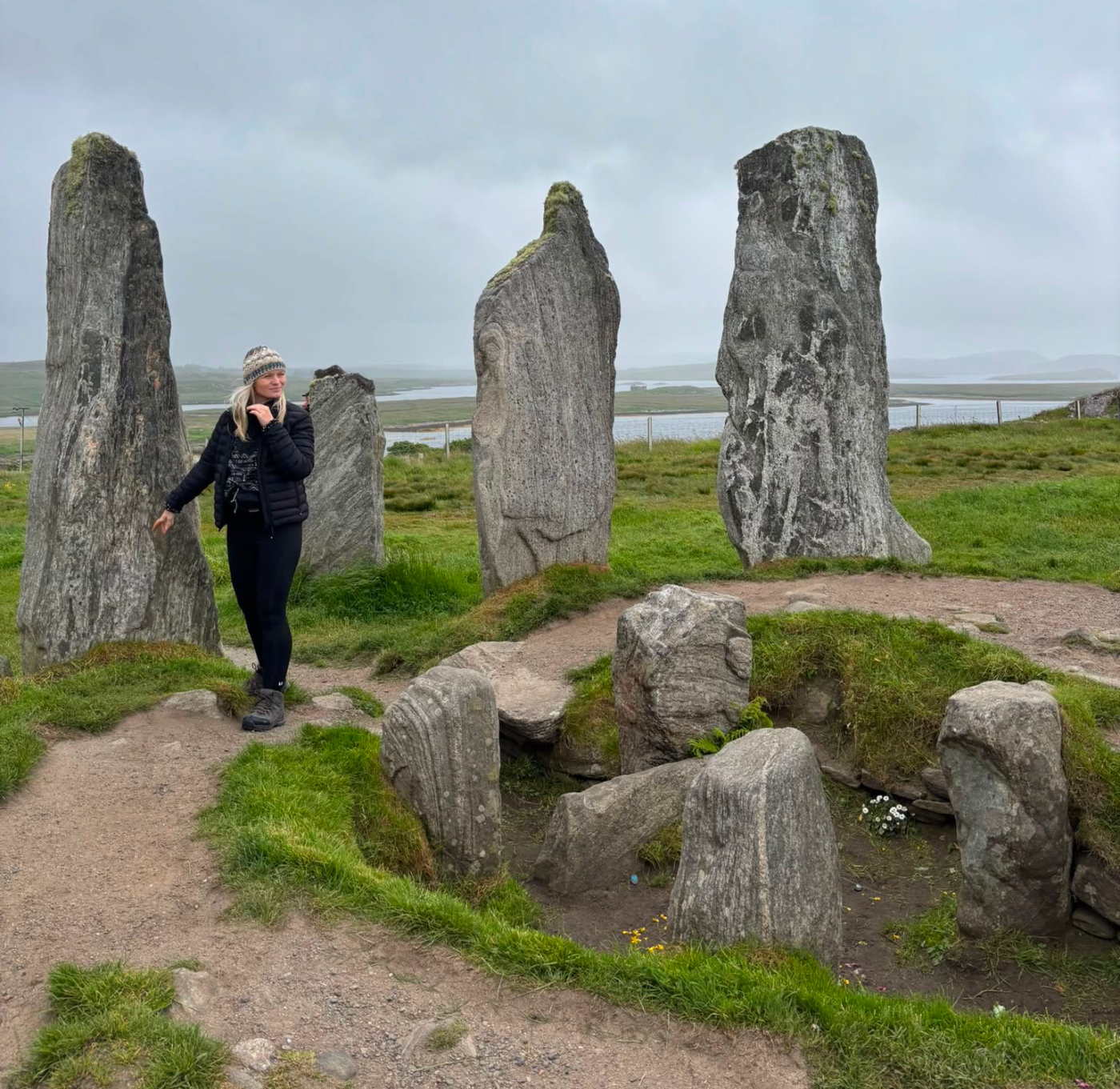
The island itself feels like a place time forgotten, a landscape of vast moors, freshwater lochs, and a raw, elemental beauty that takes your breath away. You drive along single-track roads, the air thick with the scent of peat and salt, until the stones emerge on a low ridge overlooking the dark waters of Loch Roag. They stand in a silent, powerful formation, a stark silhouette against the always shifting Hebridean sky.

Unlike the manicured plains of Stonehenge, Calanais is a place of raw, untamed energy. There are no barriers, no queues, no gift shops at the immediate foot of the monument. You are free to walk among the stones, to touch their rough, lichen-covered surfaces, and to feel the full force of the wind whipping across the moor. This sense of intimacy is what makes Calanais so profoundly haunting. You are not a spectator here; you are a participant in a story that began more than 5,000 years ago, a story written not in words but in stone and starlight.
The ancient calendar of the Calanais stones
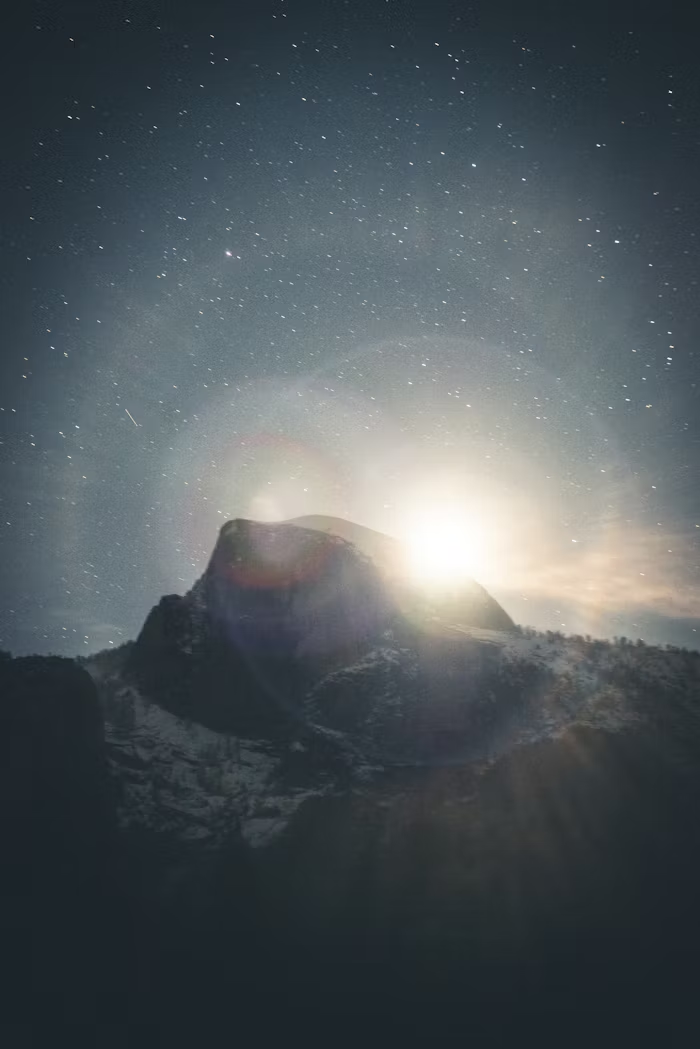
The stones are arranged in a unique cruciform pattern, (Christian cross shape)a central circle with avenues of stones radiating outwards to the north, south, east, and west. At the heart of the circle, a single, imposing monolith stands, its presence commanding the entire site. The arrangement is not random; it is a sophisticated, ancient calendar. The key to its mystery lies not just in its shape, but in its profound connection to the heavens. While many stone circles align with the sun, Calanais is a monument to the moon.
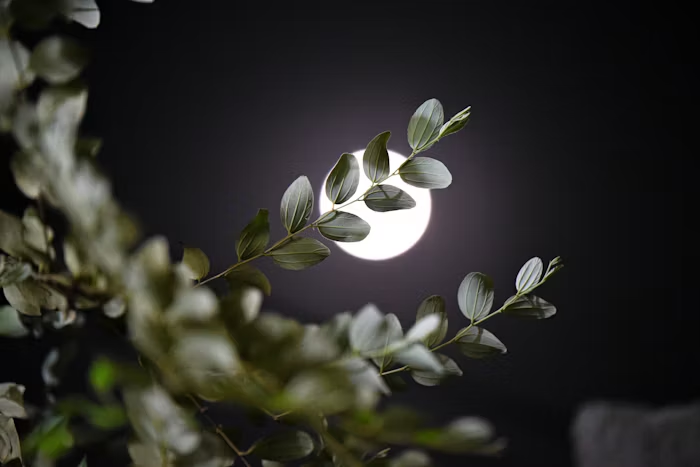
The most famous alignment, and the one that has captivated archaeologists and astronomers for decades, is with the “sleeping beauty” of the moon. During a specific point in the 18.6-year lunar cycle, the moon appears to rise and “walk” or ‘dance’ along the horizon, just above the distant hills, before settling into a recumbent position.
From the central stone, this spectacle would have been a breathtaking celestial dance, a ritual of extraordinary significance. To the ancient people who built this monument, the moon was not a distant orb but a powerful, living deity, and Calanais was their temple, a place to honour its rhythm and predictable movements. The feeling of standing at the centre of this massive clock, surrounded by the stones that charted the heavens, is one of humbling awe. It is a powerful reminder that our ancestors were not primitive but deeply observant and intimately connected to the cosmos.
Fairy Men and otherworldly beings
Local folklore offers a more mystical, and perhaps more beautiful, explanation for the stones’ existence. The stones are said to be petrified giants who refused to be converted to Christianity by a local saint. In another legend, they are the “Shining Ones” or “Fairy Men,” otherworldly beings who built the circle for their own mysterious purposes.
The most enduring myth is of the “Cailleach,” a divine hag or goddess associated with the land. On Midsummer’s Day, it is said that she walks among the stones, ensuring their power and magic remain. These stories, passed down through generations of crofters and fishermen, imbue the stones with a sense of living magic, a feeling that they are not just cold rock but beings of their own, dormant yet watchful.

The constant drama of the land and a bridge to the past
What adds to the haunting atmosphere is the incredible remoteness of the site. It is easy to feel entirely alone here, even with other visitors present, (there were none though today, but a few just as I was leaving) The vast, empty landscape of the moorland stretches out in all directions, interspersed only by the occasional lochan (small lake)or a solitary cottage. The ever-present wind howls a mournful tune, and the sky, in its constant drama, shifts from blinding sun to brooding grey, and feels almost alive. This wildness, this sense of being at the very edge of civilisation, is an integral part of the Callanish ( English spelling)experience. It encourages a quieter, more personal reflection.
The enduring mystery of the Callanish Stones is precisely what makes them so compelling. We can speculate on their purpose—a lunar observatory, a place of spiritual gathering, a calendar—but we will never know for certain. The people who built them left no written records, and their secrets remain locked in the silent, stubborn stone. As the sun begins to set and the light turns almost golden on the monoliths, you are left with a feeling of profound respect for those ancient builders.

They lived and died thousands of years ago, but their powerful, enigmatic creation still stands against the Hebridean elements, a testament to their deep understanding of the cosmos and their enduring connection to this land. The Calanais Stones are not just a landmark; they are a bridge to a past that whispers on the wind, a place where a moonlit dance still echoes through the ages.
How to get to the Calanais stones
There is a visitors centre at the site but closed until 2026 for refurbishment. There are no toilets open and no real parking. There is a small parking space near the old visitors centre and from there a short climb to the stones – I believe too you can get to it by walking the beach but this we did not do today.

Getting there
To get to the stones you need to get to the West Coast of the Isle of Lewis. And to get there you’ll need to get a ferry or a plane. The ferry we took was from Ullapool to Stornoway Ferry, it took about 2 and a half hours to cross but we were lucky enough to see and feel the beauty of the rugged sea, and get to glimpse a few dolphins! From there at Church Street,in Stornoway, a mini bus (W2)which takes you to the stones which was about half an hour ride.
Or if you take your car on the ferry which also allows camper vans – you can travel in your own time. I think it works out about £200. You might also like to find your way to the Uig Skye Ferry Terminal where the journey will be shorter over the sea and lands in Tarbert which is about a 40 mile drive, there are buses too though.
Ferry to Lewis Here
Fancy Cycling? Here
Ferry Info to Harris/Lewis (Harris and Lewis being part of the same island – in the Outer Hebrides – Here
More HERE
See you there! until next time x