For me nostalgia conjures powerful feelings of comfort, peace, and joy—especially during the quiet shift from summer into autumn, a season naturally suited for reflection. Historically, people never took this transition for granted. By tuning into how seasonal changes shift our mood, we can stay grounded, foster deeper self-connection, and practice meaningful self-care.
Traditions & Styling the Autumn Sanctuary
As the late August sun dips lower over the British countryside, a quiet transformation takes hold of the landscape. The heavy, green canopy of midsummer yields to golden hues, and the fields are cut short. Walking past a freshly harvested cornfield at twilight—where long shadows stretch across the stubble and a cool mist settles into the furrows—is a sensory encounter with living history.
Long before modern conveniences, this season carried monumental weight. Harvest was not merely a date on the calendar – it was the hinge upon which rural life swung. It marked the boundary between the outdoor labour of summer and the indoor refuge of winter.

The Rituals of the Reaping
To understand the emotional warmth of historic autumn interiors, one must look to the rituals that defined the end of the agricultural year across Britain’s manors, farms, and villages. These ceremonies and traditions were special events in the lives of people mostly now gone into the midst of history. If we give a moment to think of them and the realisation there were actual real people and their lives behind these celebrations we can understand more the frailty of life we somewhat take for granted nowadays.
1 – Crying the Neck & The Last Sheaf
In Devon, Cornwall, and across the West Country, the end of the grain harvest was marked by a dramatic ceremony known as “Crying the Neck.” Reapers would leave a small patch of the finest wheat standing in the center of the field. The reapers would surround it, and the eldest farmer would sever the final stalks. Holding the bundle high—the “Neck”—the workers would shout in unison: “I ‘ave un! What ‘ave ‘ee? A Neck!” This final sheaf was believed to hold the spirit of the crop, carried safely indoors to ensure fertility for the coming year.
2. The Tradition of Corn Dollies
Crafted from those final stalks of wheat, rye, or barley, “corn dollies” were intricate, hand-woven straw figures. Hung above the hearth or woven into kitchen rafters, these figures remained indoors throughout the dark months, safeguarding the harvest spirit until spring ploughing returned it to the earth. Up and down the country some people still make these sweet little figures, a time consuming craft that today makes one appreciate the slower life that once was held so dear but also with mindful wariness. These corn dollies had much meaning behind them and as well as having specific shapes and meanings, there were regional styles. Over time, the ritual evolved into a general symbol of good luck, protection, and a marker of seasonal transitions like Lammas or the Autumn Equinox.

3. The Harvest Home Feast
Once the grain was stored and the fields lay bare, the lord of the manor or head farmer hosted the Harvest Home (or Mell-Supper in the North). Workers, villagers, and gentry gathered in timber-framed barns or manor halls. Lit by tallow candles and roaring open fires, long trestle tables were laden with local cider, roasted meats, and seasonal bread. It was a feast of relief—a celebration of abundance before the retreat indoors.
Transitioning the Home for Autumn
As Michaelmas (September 29th) approached, rural households began turning their attention to winterizing their living spaces. Drafty manor rooms were prepared for the chill, transitioning from light summer linens to dense, insulating layers.
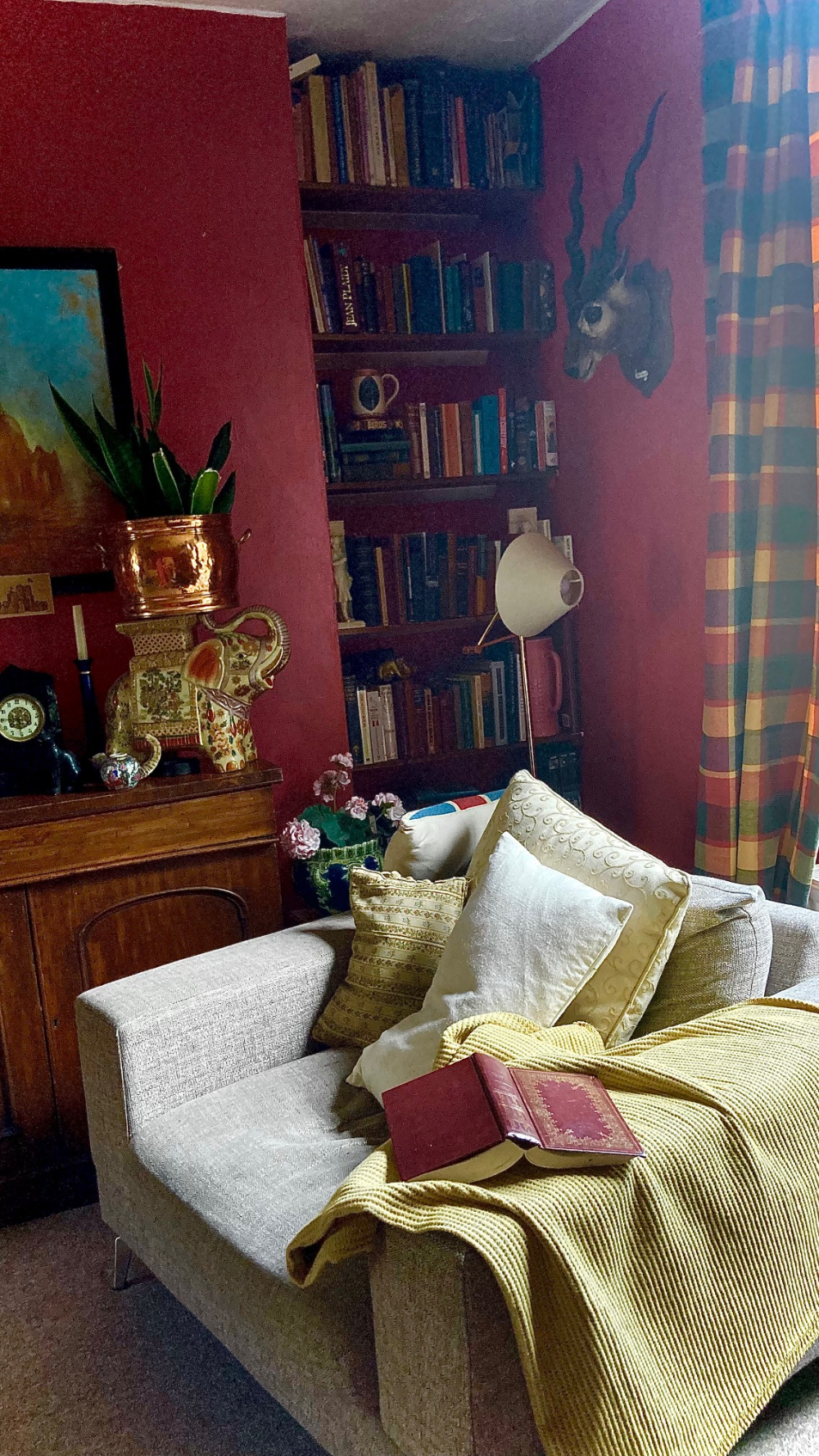
If you were lucky enough to be able to afford textiles, blankets, and heavy drapes well it was easy. Bringing a bit of the warmth outside into your home gives you comfort, and a feeling of ease from the hardship of the winter months which must have seemed a long time when living conditions (times without electric, gas, food storage and luxuries) were much harsher than they are now.
How colours affect our mood
We rarely notice it happening, but the visual spectrum actively shapes how we feel, focus, and react every single day. Long before modern branding and interior design optimized shades for productivity or relaxation, our ancestors were mapping powerful emotional and spiritual meanings onto the pigments around them.
Colour psychology isn’t a modern invention. Ancient civilisations understood that colour was a powerful sensory lever, using it to evoke awe, authority, or peace.
Early humans used red and yellow ochre pigments in cave art and burial rituals, linking warm earth tones to life, vitality, and connection to the spirit world.
Ancient Egyptians built sunlit rooms with coloured glass lenses, using green to encourage growth and healing, and blue to calm inflammation and induce tranquil reflection.
Extracted from thousands of sea snails, purple dye was so prohibitively expensive that it became synonymous with royalty, divine status, and immediate reverence.
Johann Wolfgang von Goethe challenged Newton’s purely physical view of light, arguing that colours trigger specific human psychological responses—laying the groundwork for modern colour psychology.
Today, neuroscience and psychological research confirm that light wavelengths alter our neurological state.
- Red (High Wavelength) Triggers the sympathetic nervous system, slightly increasing heart rate and alertness. It evokes urgency, passion, and excitement, but can induce stress in excess.
- Blue (Short Wavelength) Stimulates the production of calming neurotransmitters. It lowers heart rate and enhances focus, making it the most trusted color for productive environments.
- Yellow & Orange Associated with warmth and dopamine production, driving optimism, energy, and social engagement.
- Green Easiest for the human eye to process. It reduces visual fatigue and creates an immediate sense of safety and equilibrium grounded in natural environments.
Most of us are completely unaware of how deeply colour dictates our mood until we consciously step back and pay attention. Something we could all benefit from now and again.
Our evolutionary brain processes colour on autopilot. You don’t consciously decide to feel alert when you see red or calm when you see blue; your autonomic nervous system responds before your brain even finishes forming a thought.
By bringing this sub-conscious response into your awareness, you can transform colour from something that happens to you into an intentional tool for self-soothing, focus, and emotional regulation.

Shift Your Nervous System Out of “Fight or Flight”
If you are experiencing high anxiety, sensory overload, or racing thoughts, your system is over-stimulated.
Simple changes are easy – Change your phone background to a simple, dark-blue or forest-green gradient. Move your workspace so you are facing a window with a view of natural greenery—research shows even a 20-second glance at natural green colour lowers physical stress markers.
Blue light wavelengths (like those from screens or cool-white LED bulbs) trick the pineal gland into thinking it’s mid-afternoon, suppressing melatonin production. Swap harsh overhead white bulbs for warm, low-kelvin amber lamps. Red light wavelengths do not disrupt sleep architecture, making them ideal for night-time wind-down rituals.
When feeling lethargic, unmotivated, or stuck in a creative slump, cool, neutral colours won’t give your brain the push it needs. You don’t need to paint a wall – micro-dose these warm colours using a notebook on your desk, a coffee mug, or desktop wallpaper. Yellow and orange trigger small dopamine releases that foster optimism and mental momentum.
I think deep down, we’ve always instinctively known which colours and elements nurture us. Exploring the traditions and celebrations of the past serves as a gentle reminder—almost like a soft call from our ancestors telling us to slow down. While these natural rhythms are especially clear in Autumn, taking care of ourselves is something we need to prioritise across every season of the year.
Find your favourite holiday here
And as centuries pass, our response to the changing seasons remains unchanged. When the low autumn sun strikes a freshly cut field, it still signals an instinctual desire to draw close to the fire, pull a heavy blanket across our laps, and gather with those we love.

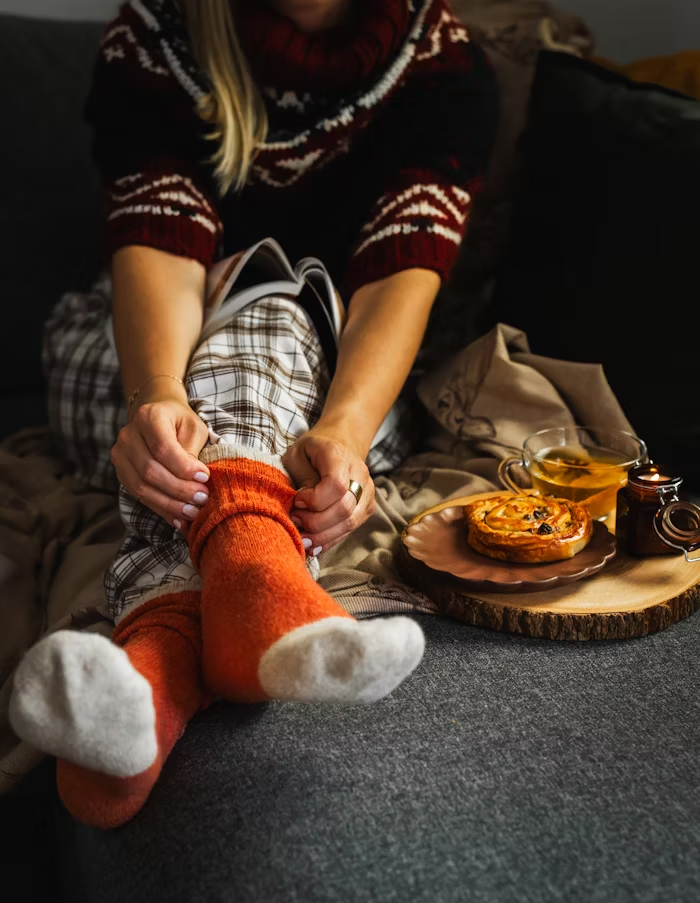
By layering your home with substantial textiles, historical colours, and sensory warmth, you aren’t just decorating for autumn—you are continuing a tradition of sanctuary that has kept the British home warm for generations. So the next time you snuggle up with a wool blanket, draw those colourful curtains or fabulous bedspread over you as you shield from the weather give a thought for all those people gone by in history that did just the same, nothing has changed too much has it? Just we know much more now.
Until next time dear friends x