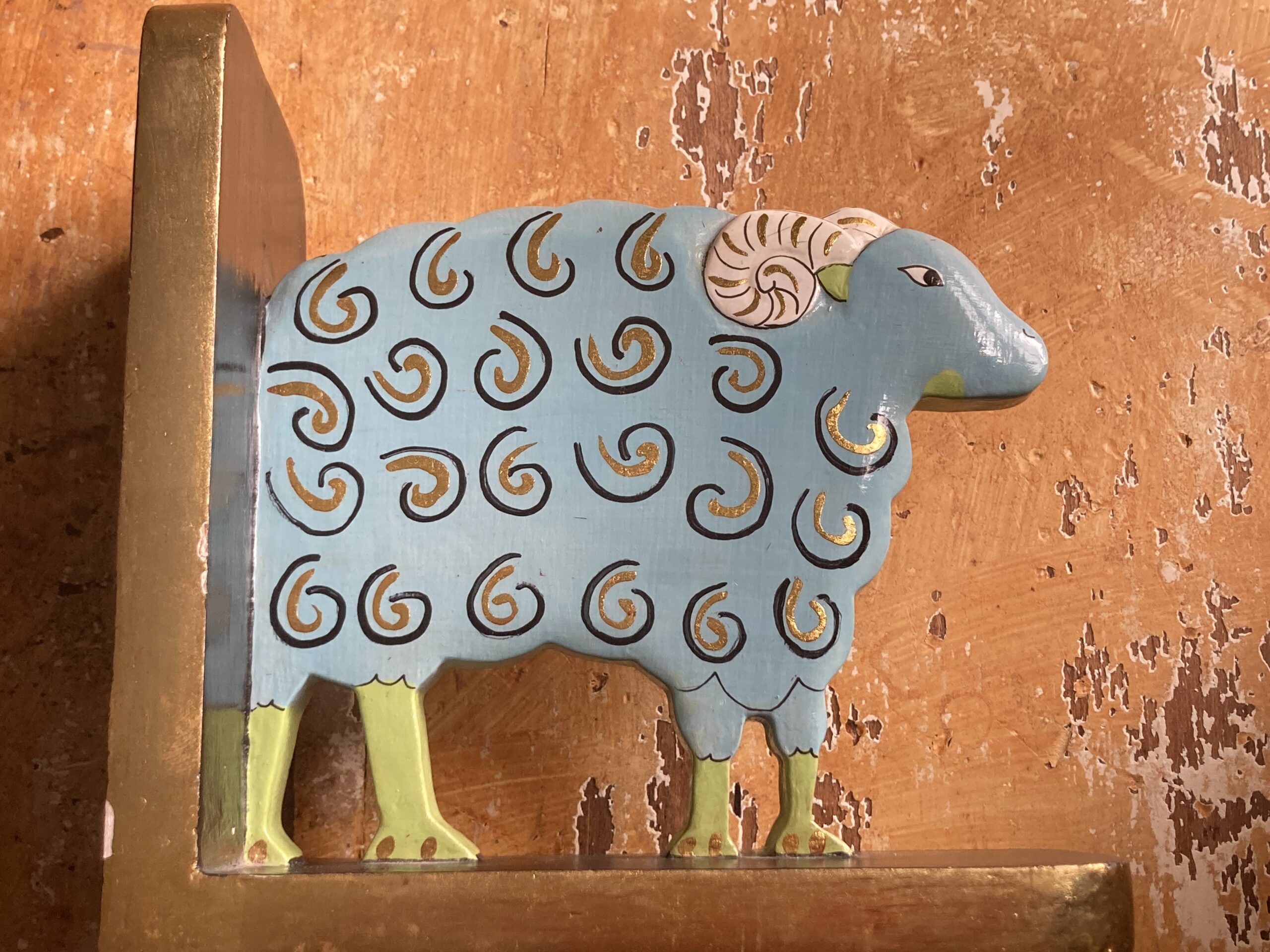
The story and wealth of the United Kingdom is inextricably linked with the unassuming fluffy little sheep you see in the lovely hills or lush fields of the island (s) and the extraordinary commodity it yields – Wool, or – the UK’s foundations of power.
A quick guide to England’s history of wool and how it shaped the land. I have also provided you with 5 great ‘Wool Churches’ for you to visit.
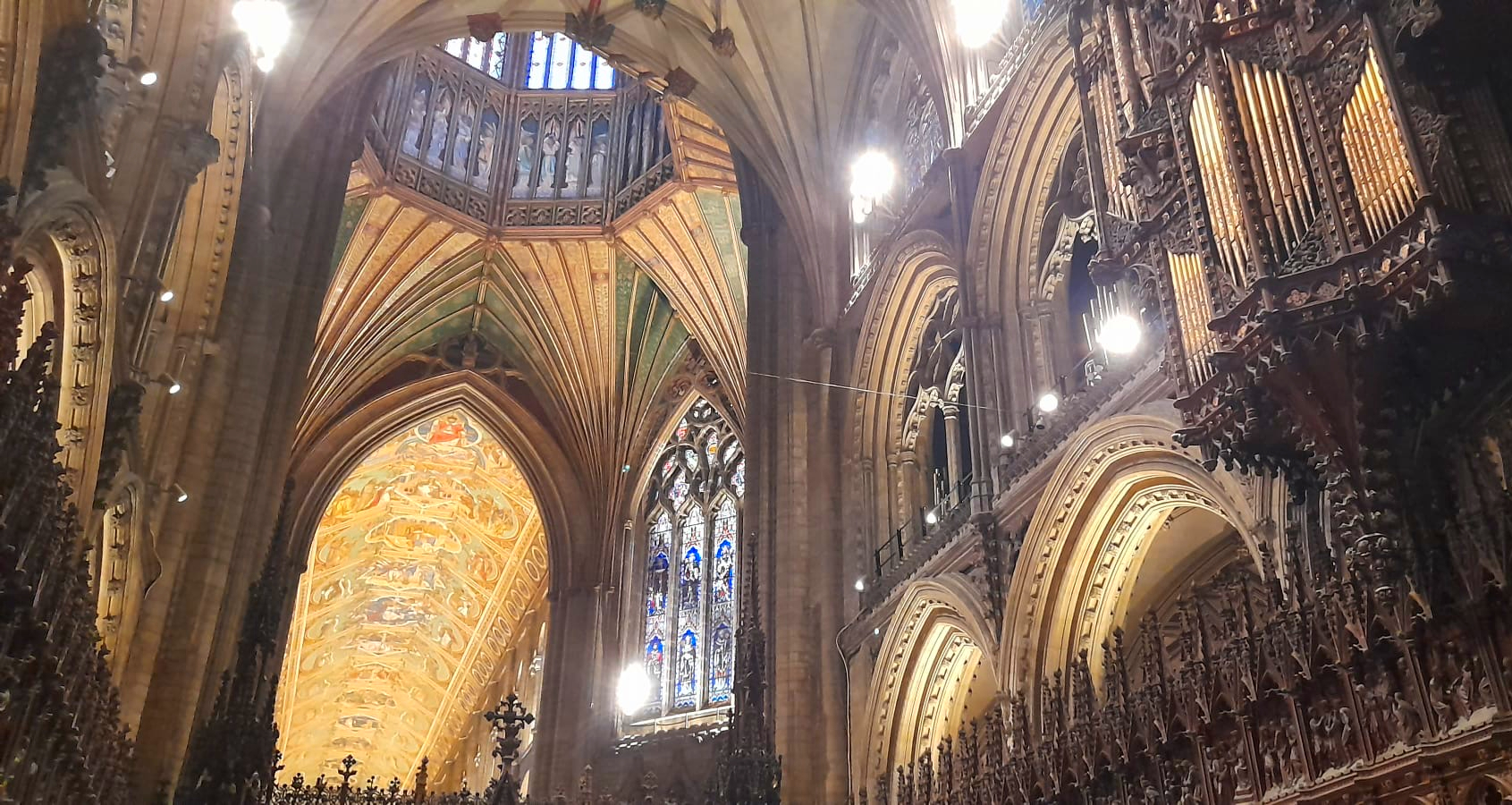
Characterised by their immense size, grand scale, and elaborate decoration, the phenomenon known as the Wool Church is truly unique to England. Although sheep farming and wool production heavily supported the economies of Scotland, Ireland, and Wales as well, it is England alone that holds this architectural distinction.

Sheep and Men
For centuries, before the age of coal, steam, or silicon, wool was the engine of the nation’s economy and the foundation of its global power. People didn’t just turn raw fleece into fine cloth; they transformed this ‘old wool’ into national wealth, using it to bolster the country’s finances and establish its influence around the world.
This itchy stuff was the silent partner in countless geopolitical manoeuvres. To trace the history of British wool is to peel back the layers of monarchy, war, architecture, and the social structure itself.

The story begins with the Roman occupation, which introduced refined techniques and large-scale sheep rearing, but it was in the medieval period that wool truly became “the jewel in the realm.” By the 12th and 13th centuries, England’s coarse, dense wool was considered the finest in Europe, a precious commodity eagerly sought by the master weavers of Flanders and Italy. At this time, England was not a great manufacturing nation; rather, it was a primary resource exporter, effectively providing the raw material for the Continent’s textile industry.
The sheer volume of this trade was staggering. Wool sacks were the common currency, the measure of value, and the tax base for the Crown. Kings like Edward I and Edward III who quickly realised that the fleece offered the most reliable source of revenue. They imposed heavy export taxes, effectively funding their expensive wars—most notably the Hundred Years’ War (1337-1443).
This strategic use of the wool tax was a double-edged sword; it filled the royal coffers, but it also cemented the power of the ‘Wool Merchants’ — a powerful elite (the new entrepreneurs)who controlled the trade routes and prices. The wealth generated by these merchants and their Guild Halls (we’ll look at some of these in later posts)can still be seen today, in these evocative magnificent Halls, which usually stand in ancient English villages, and “Wool Churches” scattered across the Cotswolds, East Anglia, and Yorkshire—architectural marvels built on the backs of sheep and standing just as hauntingly proud today.
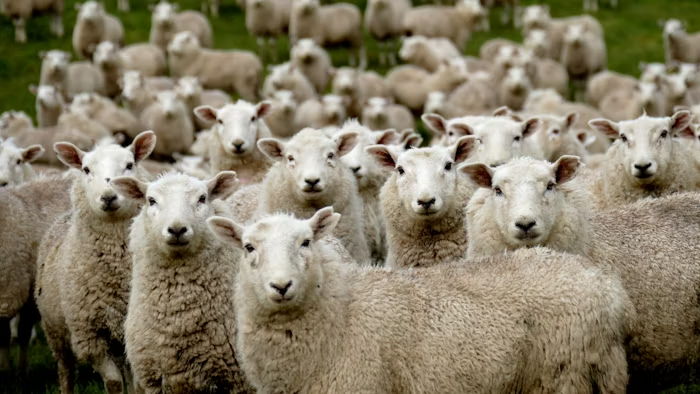
The Roman occupation, which introduced refined techniques, played a big part in its improvement. Then in the medieval period England’s coarse, dense wool was considered the finest in Europe, a precious commodity eagerly sought by the master weavers of Flanders and Italy. At this time, England was not a great manufacturing nation; rather, it was a primary resource exporter, effectively providing the raw material for the Continent’s textile industry.
The sheer volume of this trade was staggering. Wool sacks were the common currency,( a sack would sell for about about 4/5 pounds, which was equivalent pay a crafts person (builder, mason etc) would earn in about 6 months) and the measure of value, and the tax base for the Crown. Kings like Edward I quickly realised that the fleece offered a reliable source of revenue.

The Wool Policy That Built an Empire
The most crucial shift in the wool story—and one that set the UK on the path to global dominance—was the decision to stop simply exporting raw wool and begin manufacturing the finished cloth at home.
This strategic pivot was driven by a series of royal acts and economic pressures, most famously by Edward III, who, during the 14th century, actively encouraged skilled Flemish weavers to emigrate to England, offering them protection and favourable conditions.
The policy was simple – to keep the value-adding process within the country. To do this they cut off the supply of raw wool to the continental rivals and instead sold the finished textiles (like broadcloth and Worsted cloth).
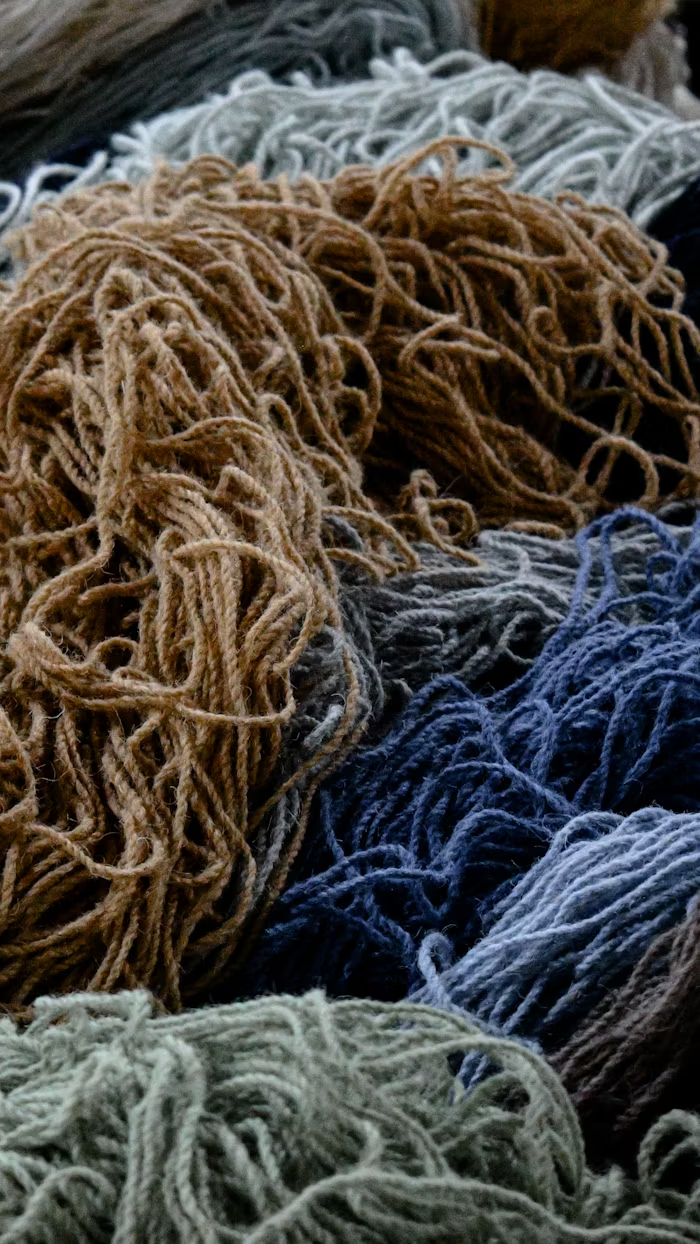
England captured the lion’s share of the profit. This move laid the groundwork for the future Industrial Revolution. The domestic industry flourished.
The impact was massive on the landscape and social fabric. The Enclosure movement, which accelerated from the 16th century onward, was largely driven by the profitability of wool. Common land, traditionally used for subsistence farming, was fenced off and converted to large, efficient sheep pastures. While economically beneficial for landowners, this process displaced countless tenant farmers and peasants, creating a landless labour force that would eventually turn into the factory system.

By the time of the Tudors and Stuarts, the wool trade was so central to the national identity and economy that its influence reached the highest halls of power. A stark symbol of this enduring legacy remains today, the Lord Speaker of the House of Lords would once have sat on the Woolsack, a large, cushion-like seat stuffed with wool. It was placed there in the 14th century to symbolise the source of the nation’s wealth and remains a constant reminder that the power of the British state was built, quite literally, on a sack of fleece, which is still to be seen to this day.

By the 15th and 16th centuries, a new class of entrepreneurs, the Clothiers, emerged. These weren’t simple merchants; they were master organisers who controlled the entire process—buying the raw wool, sorting it, and putting it out to rural workers (spinners, weavers, fullers) across the countryside. This new “putting-out system” bypassed the old, restrictive urban guilds (overseen by the City of London’s Corporation Court)
By the mid-16th century, the transformation was complete. Raw wool was no longer England’s chief export. Woollen cloth, particularly the heavy broadcloths ( refined material and the name derived from the broad loom on which it was made)and the new, lighter worsted fabrics (like those from East Anglia), took over. England was now a manufacturing powerhouse, keeping the profit of the finished product for itself.
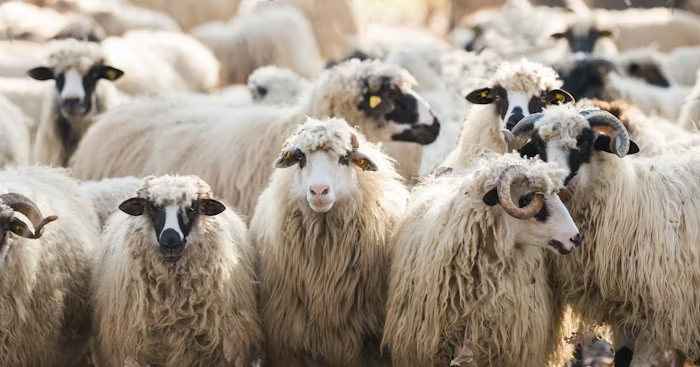
As the domestic demand for wool soared, great landowners realised they could make far more money by converting their tenants’ arable farmland into large, consolidated sheep pastures. To do this, they “enclosed” the land—fencing off the old communal open fields and commons.
From Rags to Riches
This movement was disastrous for the rural poor. The common lands, where peasants had historically grazed their few animals and gathered fuel, were lost. Tenants whose families had worked the land for centuries were ruthlessly evicted to make way for a few shepherds and countless sheep. The old medieval wool towns (like Norwich and Coventry) began to wane as the industry flowed to new, resource-rich locations.
Areas like Wiltshire and Gloucestershire became famed for their quality broadcloths, using their extensive sheep pastures and abundant soft water for washing and dyeing.This became the great centre of the woollen and worsted trade. Its hills were perfect for sheep, and the numerous fast-flowing streams provided the power for the fulling mills (which felted and shrunk the cloth). Yorkshire clothiers, often small-scale farmer-weavers operating the ‘domestic system’, grew into the dominant force. Cities like Leeds, Bradford, and Halifax became synonymous with wool.

By the 17th century, wool and wool textiles accounted for up to two-thirds of England’s foreign commerce. It was the economic engine of the nation, and its success paved the way for the ultimate step in its evolution.
The old medieval wool towns (like Norwich and Coventry) began to wane as the industry flowed to new, resource-rich locations
By the 17th century, wool and wool textiles accounted for up to two-thirds of England’s foreign commerce. It was the economic engine of the nation, and its success paved the way for the ultimate step in its evolution..
The accumulated wealth, the established international markets for finished cloth, the large network of rural workers, and the new centres of production in Yorkshire and the West Country provided the perfect storm for the Industrial Revolution in textiles.

When steam power and mechanisation arrived in the 18th century, it was first applied to cotton (a new, competing threat), but soon the mighty mills of Leeds and Bradford were revolutionising the production of woollen and worsted cloth.
The wool trade’s post-medieval evolution transformed England from a raw commodity exporter into a world-leading manufacturing economy, which fundamentally reshaped its landscape, its society, and its national identity—a heritage still visible in the Churches, Stone Mills and ancient field boundaries today.
5 grand medieval churches for You to Visit: Either Built or Expanded on by the profits of the Wool Trade
The huge, fancy medieval churches weren’t just built on faith—they were built on wool money.
These magnificent buildings were largely funded by the massive profits of the booming textile trade, with donations flooding in from rich merchants and prosperous farmers. For these wealthy folks, giving wasn’t just charity; it was a crucial spiritual investment. It was a public way to show faith, love, and sacrifice, proving their deep commitment to God.
Since the Church was seen as the only ticket to the afterlife, supporting it was essential for eternal salvation. Donors wanted to make sure they skipped Hell and minimised their time in the miserable holding-pen of Purgatory. By consistently paying their tithes and giving generously to the poor, they were basically buying insurance for their souls—earning God’s favour and ensuring they at least looked like good, deserving people.

5 Great Wool Churches
- Holy Trinity Church- Long Melford, Suffolk. The Broadcloth or Woad dyed blue broadcloth made near here in the town of Lavenham, Sufflok , played a big part in the wealth of this church. Since ancient times this natural dye (from the plant, Woad) had been used. It made the famous ‘Lavenham Blue’ colour of the fabric a very attractive commodity. Wealthy merchants exported to Russia and the Middle East. The cloth had a delicate, lightweight and smooth finish which was a very expensive finished product. The church itself is ginormous! it’s huge glass windows screaming wealth, it has an added Lady Chapel from in 1496; you can just imagine the craft and workmanship going into this beautiful building – the outer surface is mostly made from knapped flint and dazzles in the sunlight.

Holy Trinity Long Melford, Suffolk HERE You can also visit 2 other magnificent buildings while here in this small medieval village – Kentwell Hall ( Private)and just across the road Melford Hall ( National Trust)
2. Wymondham Abbey – Wymondham, Norfolk. A monastery was founded here in the 12th century but today this great, grand building with its huge twin towers that you can see for some miles around is something of a magnificent sight and a worshipping church. It has a wonderful rustic rural setting – this helped by a benefactor who purchased the land nearby; helping to maintain encroachment. In the 14th and 15th centuries it was enlarged to nearly double its size. As well as being one of the grandest religious buildings in East Anglia, it has a rather famous gilded alter screen.

Wymondham Abbey Church South Norfolk HERE Things to do while in Wymondham – why not visit the Heritage Centre?, it has a tearoom, courtyard gardens and canters for groups. Also see Kett’s Oak while in the area – A 500 year old Oak tree once used as a hanging gallows. Robert Kett (a wealthy landowner himself)addressed his rebels in 1549 at the Oak tree to protest against the Enclosure movement – having sympathies with the major population which depended on land to graze and grow their own food Robert and his brother William were eventually found guilty of treason and hung at Norwich Castle ( about 10 miles) and the West Tower at Wymondham Abbey respectively.
3. St. Mary’s the Virgin Tetbury, Gloucestershire. This handsome building stands on the possible site of a much earlier church which dates back to Ethelred, King of Mercia (681 AD) links with this site and the story of Ethelred having given 15 acres of land to Tette (a possible Abbess)and her monastery, right in this area. The spire was added in the 14th century to the old Saxon church already improved. It is regarded as one of the highest in England being around 57 metres high! The building is of Cotswold stone and a hipped (slopeing) slate roof.
St Mary’s the Virgin, Tetbury, Gloucestershire HERE Tetbury still have an annual Woolsack Race, this is held on May Bank holiday – and the tradition has been keep alive since medieval days when drovers would compete at their annual fayres running their bags of wool uphill. The race starts at Gumstool hill, which is the steepest and oldest of streets in Tetbury. The bags weigh about 60 pounds in weight and after the top of the hill is reached the runner must carry the sack down again ending at The Crown Pub,( now closed (writing 2025) used to be The Angel Grade 11 listed building) to a well deserved drink!
Other things to do in the area – If you like trees you could also visit Westonbirt, National Arboretum for a wonderful walk, it’s about 5 miles by car HERE

4. St Peters and St Pauls Church – Salle, Norfolk. In a rather small village lies this enormous 15th century church. Expensive Barnack stone from Peterborough ( about 70 miles) was brought here to use and build this fabulous monastic pile, between 1400 and 1450. Local families who prospered from the wool trade gave some of their wealth to create a place of worship and repentance. One of these patrons was Geoffery Boleyn who died in about 1440. The Boleyn family (of Queen Anne Boleyn, Geoffery being her great- grandfather) lived in Salle from as early as 1300 and later after gaining recognition from Henry Vlll ( Ann’s hubby) were able to buy nearby Blickling Hall (National Trust). Inside there are a pair of brasses dedicated to Geoffery and Alice Boleyn but here too is a riot of carvings, the font steps which has an inscription asking for prayers for the soles of John and Agnus Luce, a beautiful imaged Rood Screen, carved benches, curiosities, and blue glass that make your head whirl. This medieval church was a busy place,providing the sacraments, devotions and processions, so much so that at one time 7 full time priests were needed to daily pray for their patrons dead soles.
St Peters and St Pauls Salle, Norfolk HERE Popular visits include Gressingham Farm Workhouse Museum or something for the kids? A dinosaur themed fun park (nothing to do with churches!)About 6 miles away.

5. St Mary’s Church Fairford, Gloucestershire. What a lovely looking place! Well known for its complete set of medieval stained glass windows, telling the story of Christ, beginning at the churches organ and his birth and finishing at the Great West Window and the last judgement, There are 28 huge windows.The early medieval church was completely rebuild with money from a John Tame who was a wealthy wool merchant, he has a very fine tomb and brass in the lady chapel. He has relatives laid to rest here too and their tombs are just as impressive, he certainly hasn’t been forgotten, I bet he would be pleased.

St Mary’s Church Fairford, Gloucestershire HERE Coltswold Wildlife Park and Gardens is about 8 miles away HERE and Fairford itself is a lovely town to walk around with nice pubs, good shopping and pretty cafe’s HERE
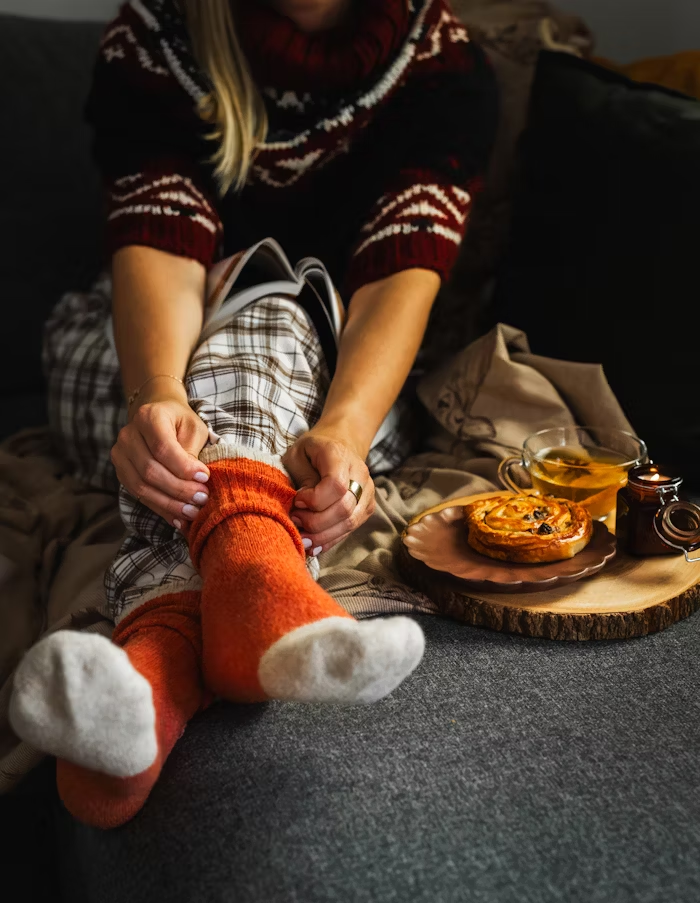
After all that walking about in cold churches, I can’t think of anything better than popping on some warm whoolly socks (thanks sheep!)and having a cup of tea.
Until next time dear friends x