Iconic UK Treasures and the Stories they can still tell you
These six treasures, whether glittering gold or enduring stone, offer compelling glimpses into the diverse and fascinating past of the UK, each telling a story that continues to resonate today.
The British landscape is a vast, silent library, where centuries of history and treasure lie buried beneath rolling hills and windswept shores, waiting for a chance discovery to rewrite everything we think we know about our ancestors.
I’ve been fascinated to see these UK treasures and want to share them and some of their stories with you.
1. The Sutton Hoo Ship Burial (Suffolk, England)
More than just a treasure, Sutton Hoo is an entire window into Anglo-Saxon England, a period once dismissed as the “Dark Ages.” Discovered in 1939, this astonishing burial mound contained the ghostly imprint of a 27-meter-long ship and an astonishing array of grave goods for an unknown king or powerful warlord (often speculated to be King Rædwald of East Anglia) from the early 7th century.
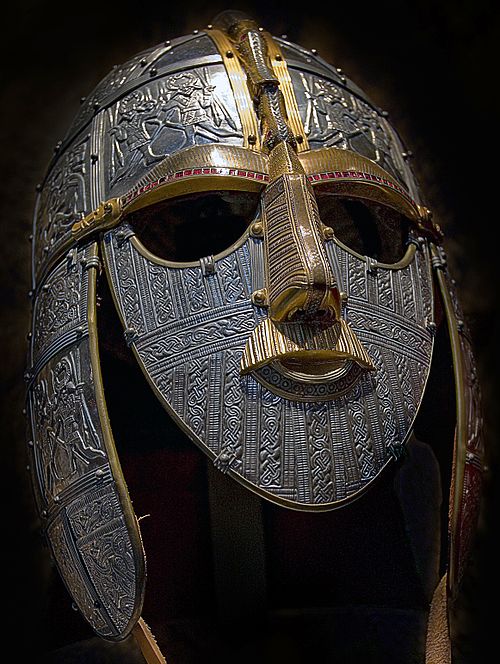
The amazing opulence and craftsmanship of the finds are breathtaking. The iconic Sutton Hoo Helmet, painstakingly reassembled from hundreds of fragments, is a masterpiece of early medieval metalwork, adorned with intricate scenes and fierce animal motifs.
Beyond the helmet, there’s gold jewellery, ceremonial shields, a lyre (an early musical instrument), and even a silver plate from the Byzantine Empire, demonstrating the incredible international connections of this supposedly “dark” era.

The Sutton Hoo Helmet – thought to have belonged to the Anglo-Saxon King Raedwald of East Anglia
2. The Staffordshire Hoard (Staffordshire, England)
Discovered by a metal detectorist in 2009, the Staffordshire Hoard. The location at the time was in an Anglo-Saxon Kingdom of Mercia and is the largest collection of Anglo-Saxon gold and silver ever found. Comprising over 4,000 pieces, mostly exquisite military fittings (sword pommels, hilt plates, helmet fragments) from the 7th century, it’s a warrior’s treasure.

A gold sword hilt – studded with garnets from the Staffordshire hoard find
The detail and artistry are phenomenal. Many pieces are crafted from gold and adorned with intricate filigree work and shimmering garnet inlays.
What makes it unusual is its composition: predominantly war gear. This suggests it might have been battle loot, an offering to pagan gods, or perhaps a collection of prestigious items buried during a time of immense turmoil in the Anglo-Saxon Kingdom of Mercia. Its sheer size and the quality of its craftsmanship speak volumes about the wealth and skill of the Anglo-Saxons.
3. The Lewis Chessmen (Isle of Lewis, Scotland)
These wonderfully expressive medieval chess pieces, carved from walrus ivory and whale teeth, were discovered in 1831 on the Isle of Lewis in the Outer Hebrides. Dating from the late 12th or early 13th century, they represent a complete, fantastical medieval society in miniature.
Their distinct, almost cartoonish characters – grumpy queens, fierce berserker rooks biting their shields, solemn bishops – have captivated audiences for centuries. They offer a unique glimpse into Norse culture and daily life, as the Isle of Lewis was then part of the Kingdom of Norway. The chessmen highlight the sophisticated games and intellectual pursuits of the medieval elite, and their sheer artistry makes them beloved cultural icons, even making appearances in pop culture (like the Harry Potter films!).

The Lewis Chessman – A 12th century collection of walrus ivory and whale tooth carved pieces
4. Skara Brae (Orkney, Scotland)
This isn’t a buried treasure, but an entire, remarkably preserved Neolithic village, older than Stonehenge and the Egyptian pyramids! Uncovered by a storm in 1850, Skara Brae offers an unparalleled look at life around 5,000 years ago.
Skara Brae is really extraordinary in its state of preservation. Because trees were scarce on Orkney, the inhabitants built their homes and even their furniture from stone. You can walk through the houses and see stone beds, dressers, cupboards, and hearths, giving a vivid sense of domestic life in the late Stone Age. We find they were a highly organised community with sophisticated building techniques and a distinct material culture, proving that complex societies thrived in Britain long before the Romans arrived.
5. The Mildenhall Treasure (Suffolk, England)
Discover for yourself the Mildenhall Treasure, it is a magnificent hoard of 34 pieces of Roman silver tableware from the 4th century AD. I’ve read It’s the most valuable Roman hoard artistically and by weight of bullion ever found in Britain!
The centerpiece is the “Great Dish,” a colossal silver platter weighing over 8kg, is decorated with mythological scenes of Bacchus and Hercules (Gods of Roman mythology) The collection also includes serving dishes, bowls, spoons, and ladles, all of exquisite craftsmanship.

A Bacchus image – A Roman fresco about 30 BC
The Mildenhall Treasure offers a glimpse into the luxurious lifestyle of a wealthy Roman family living in Britain during the late Empire. Its quality initially made some doubt it could have come from Roman Britain, proving just how sophisticated and well-connected the province was even in its later years.
6. Glastonbury Tor (Somerset, England)
Glastonbury Tor is an ancient and mystical hill that embodies centuries of British folklore and spiritual history, making it a unique “treasure of the past.”
This iconic hill, with the solitary St. Michael’s Tower, has been a sacred site since pre-Christian times. It’s heavily associated with Celtic mythology, believed by some to be the mythical Isle of Avalon and the burial place of King Arthur.

Grave site of King Arthur? – Glastonbury Abbey, Somerset
Its winding paths, said to form a labyrinth, attract pilgrims and spiritual seekers from across the globe. Archaeological digs have revealed evidence of early settlement and religious activity dating back to the Neolithic period. The Tor is like a living monument to the enduring power of myth, legend, and the spiritual connection humans have felt to the land for millennia.

The Tor – Glastonbury, from the north side of the Tor we can see terraces – still mystery surrounds how they were formed and for what purpose
Whether pulled from the depths of the earth or standing tall against the horizon, these six treasures remind us that the past is never truly gone; it is simply waiting to be rediscovered, continuing to spark our imagination and ground our identity in the mysteries of the British Isles.
Until next time dear friends x