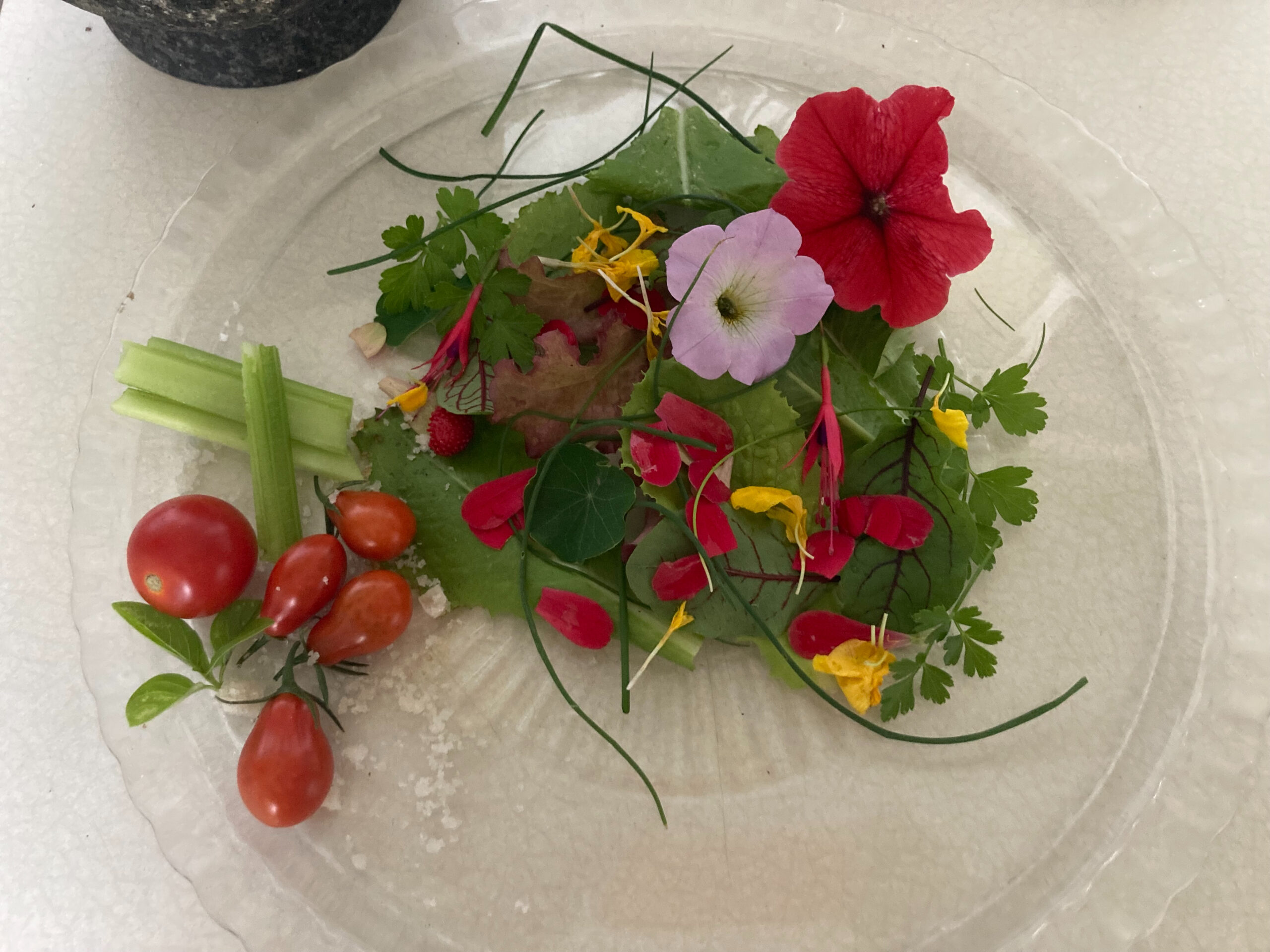
Take a taste into the past with this fascinating history of edible flowers and discover how they are making a comeback, and how to use edible flowers of the UK, as well what to eat, what not to eat, and how to prepare them.
We will look at the rules around picking wild flowers and where to find them as well as of course some folklore around edible flowers.
Have you ever looked at a beautiful flower and wondered if you could eat it? This taste of the past might surprise you, these little edible flowers can be rather delicious, make summer drinks look cool and add a bit of sparkle to a salad.
For centuries, people in the UK didn’t just admire flowers—they ate them! From vibrant garnishes to subtle flavourings, the history of edible flowers is a delicious journey back in time, and it’s a trend that’s making a big comeback today.
Here we will look at the history and mystery of some of the flowers throughout the land in which you can make drinks with, use as a garnish and make for yourself a beautiful salad as well as a handy guide that tells you of some of the flowers you may definitely not be eating. The history of the flower is long and man has been making use of these pretty little things since well before the Romans came to Briton, these colourful petals also have tales to tell in our ancient stories of folklore, tales of enchantment, dark magic, and love.
When I was a kid I remember simple pleasures like picking little flowers from the lawn and making daisy chains – this was always a very time consuming pursuit but well worth the effort if you could get to about a foot long without it breaking, you were the winner! I don’t think the kids of today would not appreciate such ‘entertainment’ and prefer maybe to pick a load of them, put them in a basket and throw them in the air; that was fun too though!
Little did I know or never really imagined that you could eat a daisy or any other flower really,

From Roman Feasts to Victorian Delights
The use of flowers in British cuisine isn’t a modern invention. It goes all the way back to the Romans, who introduced the practice of eating roses and violets in their salads and wines. In the Middle Ages, flowers were a vital way to add flavour to a limited diet. Monks would use pot marigolds (also known as calendula) to add a golden colour to their stews and soups, earning them the nickname “poor man’s saffron.”

The Elizabethan and Victorian eras were the golden age of floral cuisine. Shakespeare’s plays are filled with references to flowers and herbs, and his audiences would have understood their culinary significance. Candied violets and rose petals became a popular sweet treat, and primroses were a common ingredient in salads and teas. This wasn’t just about flavour; it was about beauty and elegance, a way to make a dish look as good as it tasted.
What’s Safe and What’s a No
Before you start picking, it’s crucial to know your stuff. This is the most important part of foraging: a mistake can be dangerous remember. I have listed some of the more dangerous/poisonous flowers below, but this list is in no way exhaustive. There are plenty of good guide books and courses out there, so if you are not sure, make certain you have a bit of knowledge before you start – or just get some supermarket Tea bags!
The “Absolutely Yes” List (Common and Safe UK Edible Flowers)
- Nasturtium: These are a fantastic starter flower. The petals have a peppery, slightly spicy flavour, much like rocket, and are perfect for salads.
- Courgette Flowers: A culinary delicacy! They have a mild, squash-like flavour and are often stuffed with cheese and herbs, then fried or baked. Use the male flowers to ensure the plant still produces courgettes.
- Roses: All roses are edible, but the more fragrant they are, the better they’ll taste. Rose petals are wonderful in jams, teas, desserts, and even crystallised to decorate cakes.
- Dandelions: The bright yellow flowers are edible and can be used to make wine, or you can fry the buds for a mushroom-like taste.
- Violets & Pansies: These delicate flowers have a sweet, subtle flavour. They are perfect for garnishes on cakes, or you can freeze them in ice cubes for a beautiful touch to summer drinks.
- Chive Flowers: The purple blossoms of chive plants have a mild onion flavour and are excellent for sprinkling on salads or in potato dishes.
- Elderflower: The tiny, creamy blossoms of the elder tree are a UK classic, used to make cordials, wine, and fritters. A real taste of the past.

The “Never, Ever” List (Highly Poisonous UK Flowers)
This is not a complete list, but these are some of the most common and dangerous flowers to avoid at all costs. If you are ever in doubt, leave it alone.
- Foxglove (Digitalis purpurea)
- Deadly Nightshade (Atropa belladonna)
- Lily of the Valley (Convallaria majalis)
- Daffodil (Narcissus spp.)
- Monkshood (Aconitum napellus)
- Buttercup (Ranunculus spp.)
- Poppy (Papaver somniferum)
- Oleander (Oleander Nerium)
- Clematis (Ranunculaceae)
- Rhododendron (Rhododendron Ponticum)
- Hydrangea (Macrophylla)
Remember, to also avoid any flowers that have been treated with pesticides or are growing in areas with car fumes, like busy roadsides.
The Law of the Land: Foraging in the UK
Foraging for wild food is a wonderful pastime, but doing it responsibly and legally, is best. In the UK, the law can be a bit tricky, but here are the key things you need to know:
- The “Four Fs” Rule: Under the Theft Act 1978, it is generally legal to pick the “Four Fs” for personal use from common land: flowers, fruit, foliage, and fungi.
- Get Permission: You must have the landowner’s permission to pick anything for commercial purposes (to sell it).
- No Uprooting: It is illegal to uproot any wild plant without the landowner’s permission. This is to protect the species for future growth.
- Protected Areas: Do not forage in protected areas like National Nature Reserves (NNRs) or Sites of Special Scientific Interest (SSSIs). These areas are marked with signs.
- Respect the Environment: The Countryside Code is a great guide. Only take what you need, leave plenty for wildlife, and don’t damage the plants or their surroundings.
Where to Find Your Floral Feast
The best place to start is your own garden! Growing your own edible flowers is the safest way to ensure they are free from chemicals and pesticides.
Foraging for wild flowers is a beautiful way to connect with nature, but always follow the “golden rule”: if you can’t identify it with 100% certainty, do not eat it. Consider joining a guided foraging walk with an expert, who can teach you how to identify plants and where to find them safely.
So, next time you’re in the garden or on a country walk, take a moment to look at the flowers in a new light. You might just discover that a beautiful blossom is also a delicious ingredient, with a history as rich as the UK itself.


Zinnias, Carnations, and Sunflowers are all perfect in a salad, just nip pull the petals away from the back of the plant to avoid bitterness
How to Prepare You Edible Flowers for Eating
Edible flowers are always best when picked fresh from the garden (without pesticides) . They taste even better if you can pick them early in the morning before they have had too much sun on them.
If you need to wait to use them – pick, wash the little bugs or dirt off by rinsing them gently in a bowl of water then shake excess water off before putting into a plastic bag or tub, they will keep fresh for you in the fridge for up to a couple of days.
The petals are the best part of many flowers so remove the heel at the base of the petal (it can be bitter to taste) and also remove the pistol, calyx and stamens. Some flowers though like nasturtiums and pansy’s you can eat whole.

The wild flowers of the UK are rich with folklore and ancient stories. White blossom particularly was special to the Celtic folk. You can only imagine how wonderful a sight this must have been – Having gotten through a winter, getting to the end of supplies and suddenly the Hawthorn tree covered in a mass of fluffy white flowers (used in tinctures and herbal medicines for heart conditions amongst other virtues) the flowers too can be pink or red and the Celts would have made very good use of them. They are said to guard the fairy world. And remember before picking to ask the tree’s guardian spirit first, as the fairies (faeries) are very protective of their sacred trees!
The Blackthorn(associated with the Morrigan -the triple Goddess of War)and the Rowan Tree (Protecting against Witchcraft and Enchantments)in Celtic folklore, are very special trees. Both full too of White flowers in the springtime which would have been used as tonics to cleanse the blood, being seen as life -giving, a period of renewal and hope bringing light into the darkness.

The Bluebell and the Fairy Folk
Bluebells are one of the most enchanting sights in the UK, carpeting woodlands in a beautiful shade of violet. Legend says that a bluebell wood is a place of powerful enchantment, The bluebell synbolises renewal, peace, harmony and enchantment as the flowers are believed to be used by fairies. The tiny, bell-shaped flowers are thought to be actual bells that fairies ring to summon their gatherings. Hearing a bluebell ring is a sign that the fey are near, but it was also considered a dangerous omen for a human, and it was said that children who picked them might be led astray by the fairies and never return.

The Foxglove and Its Dark Magic
The tall, majestic foxglove is a common sight in British hedgerows, but it has a dark reputation in folklore. Its name is thought to come from “folks’ glove,” a name given by ancient people for the fairy folk. The beautiful, bell-shaped flowers are said to be the gloves of fairies, and the distinctive spots inside the petals are said to be the footprints left by the fairies as they moved in and out of the blossoms. Despite their beauty, foxgloves are highly poisonous, and this duality is central to their myth—they are a sign of the supernatural, but also a warning of the dangers of the otherworld. Foxgloves have a medicinal use but also very toxic to humans and animals, consuming it can cause serious illness or even death, something the ancients were obviously aware of!

3. The Forget-Me-Not and Eternal Love
The tiny, delicate forget-me-not is the subject of a beautiful and tragic legend of love and loss. According to the tale, a medieval knight and his lady were walking along a riverbank when he saw a beautiful cluster of these flowers. He reached down to pick them for her, but his heavy armour caused him to lose his balance and fall into the fast-flowing water.
As the current swept him away, he managed to toss the flowers to his beloved, crying out, “Forget me not!” before he disappeared. The tiny flower has since become a powerful symbol of undying love and cherished memories.The fascinating history of flowers and edible flowers in the UK is filled with mystery, symbolism, and love.
I’m off to have a warm bath, which I love, with gorgeous fresh flowers floating amongst the bubbles, trying to relax remembering medieval knights and the days of chivalry.
Until next time dear friends…………..