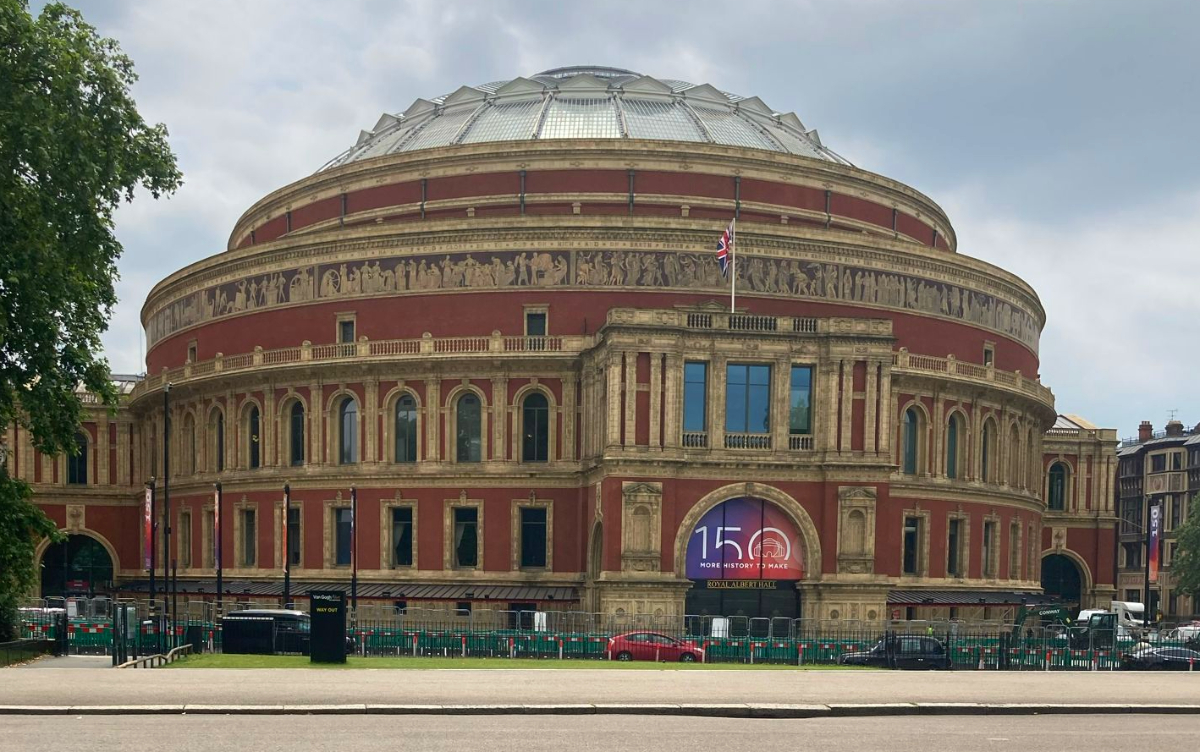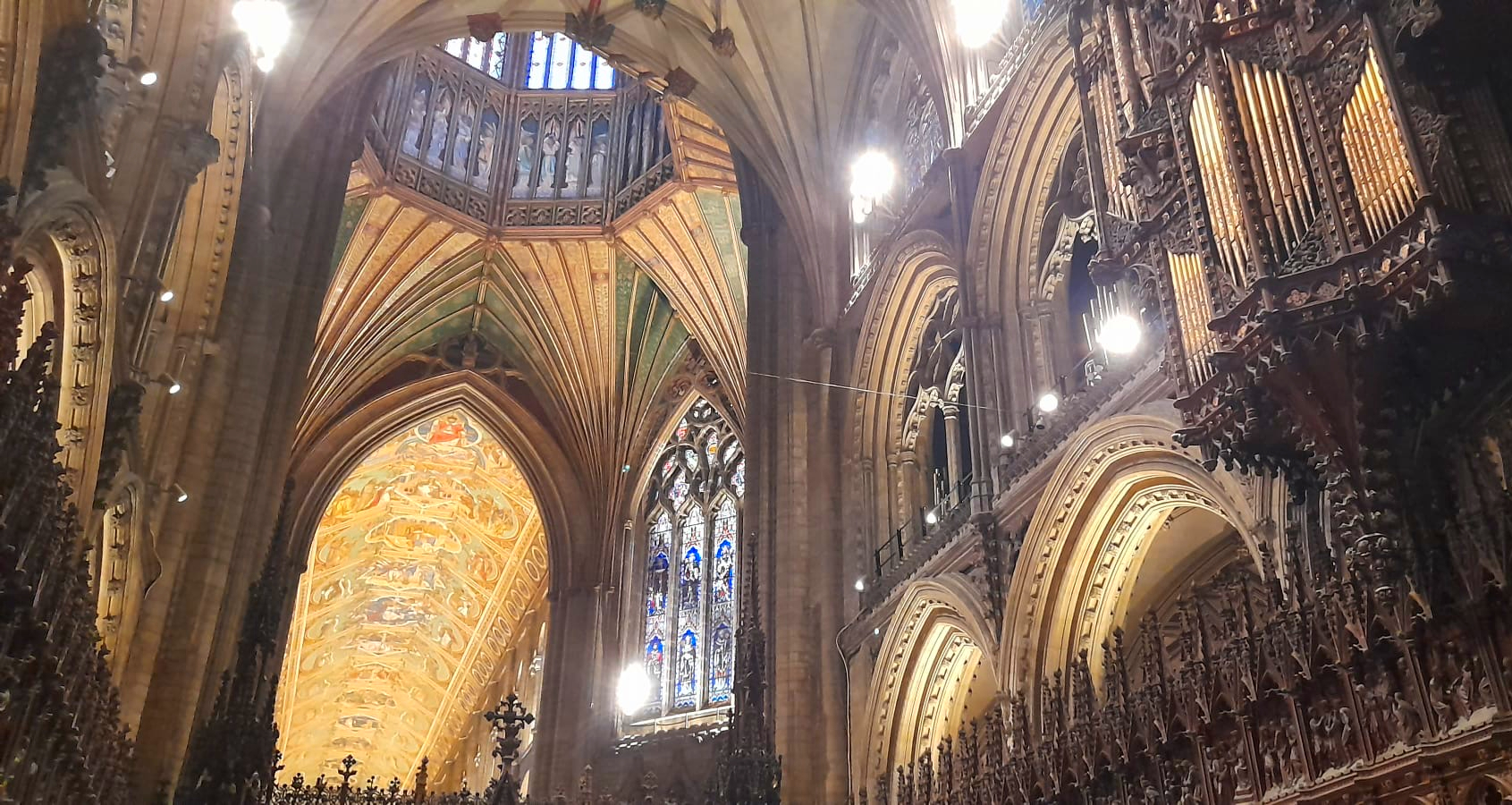
Visiting cathedrals in the UK offers a profound journey through history, art, and architecture. These “mother churches” are often the most significant landmarks in their cities, serving as enduring testaments to human craftsmanship and spiritual heritage, even with that said – why visit a UK Cathedral? We’ll also talk about how to visit these marvellous buildings for maximum effect.
Cathedrals – Masterpieces of Architecture and Art
If you are into a bit of history British cathedrals showcase a timeline of architectural evolution, from the sturdy Romanesque arches of the Norman era to the intricate soaring spires of the Gothic period.
Beyond their religious functions, many cathedrals offer unique attractions, from world-class music to unexpected wildlife. Many cathedrals, such as those in Salisbury , Ely and Norwich, are home to nesting peregrine falcons, with some having daily web-cams on their social media pages so we can keep an eye on their progress. So you not only get stories of the past but wildlife too. Not only that but they are usually filled with concert dates, after dark tours, fayres – such as community events like food, market, art displays and event gatherings.
More here on wild life in monastic buildings

To walk into a British cathedral is to step out of the linear timeline of the 21st century. These structures were designed to connect the earthly to the eternal, and that intent has left a unique psychic residue, which anyone on any day of the week can walk right into.

Sometimes for the modern traveller, a cathedral is often viewed as a static monument to a bygone era—a place of quiet contemplation, dusty pews, and soaring arches. But stop and take a minute and remember back hundreds of years ago when these great hulks were filled with people singing, praying, dancing, selling things, the only thing missing really today is the colour. Nearly every bit of the cathedral would have been brightly painted, depicting saints and narratives from the bible, stories about death, redemption, and warnings would have covered the stone work inside and out. The sun would have streamed through its stained glass windows, bouncing off the painted and gilded statues, lighting up and sparkling what today looks drab in comparison.
This art work served a purpose and it allowed the church goer to follow the story of Christianity, the bible stories educated the people who generally could not read about the warnings and consequences of sin. People turned to saints for healing and safe travels so seeing these colourful images looming bold, showy and bright would have given them hope and encouragement in a hard, harsh, everyday life of an ordinary person or even a learned individual as religion pervaded every single aspect of medieval existence, offering a profound sense of certainty in a deeply uncertain world.
In the United Kingdom, cathedrals are the primary repositories of the nation’s DNA. They are time capsules where the layers of Roman, Saxon, Norman, and Victorian life are pressed together under the weight of centuries.
But beyond the dates and the architectural jargon lies a darker, more compelling allure: the atmosphere of the “thin place.” A “thin place” is an ancient Celtic concept describing a location where the distance between this world and the next is whisper-thin. UK cathedrals, with their deep crypts and centuries of intense human emotion, are the ultimate thin places.
If you are drawn to the intersection of history and the paranormal, these buildings offer a sensory experience that no museum can replicate.

How to Visit a Cathedral for the Maximum Experience
To truly appreciate the history and mystery of a cathedral, you must change your approach………….
- Attend Evensong – This is a free, daily service where the cathedral choir sings. The sound of human voices rising into the 80-foot vaults as the sun sets through the stained glass is a transcendent, almost supernatural experience.
- The Dusk Walk – Visit during the final hour before closing. As the crowds thin and the lights dim, the “thinness” of the place becomes palpable.
- Look Up and Down – The best mysteries aren’t at eye level. They are in the ceiling bosses 100 feet up, or in the worn-away brasses beneath your feet.

Visiting a UK cathedral is an act of time travel. For anyone interested in history, it is an unfiltered look at the evolution of British society and power. For the seeker of mystery, it is a chance to stand in a place where millions of lives have converged, leaving behind an atmospheric resonance that can be felt in the marrow of your bones.
A cathedral, any cathedral is an engineering marvel, but some are complete breath-takers, Salisbury Cathedral for instance has the highest spire in the country (how did they do that?!) being over 400 feet tall, just imagine that man-power and skill. If you visit York Minster you’re sure to see the most amazing Stained glass in the country – it’s got a huge collection of medieval glass including the Great East Window. And the stunning fan-vaulted cloisters of Gloucester Cathedral was used in the making of the Harry Potter films – so nothing made today even for these film-makers could rival what medieval craftsmen were doing over 600 years ago.
Durham Cathedral is celebrated as one of the finest examples of Norman architecture in Europe, featuring innovative ribbed vaulting and the shrine of St Cuthbert. St. David’s Cathedral in Pembrokshire in Wales is the spiritual heart of Wales. Built in a secluded hollow so it couldn’t easily be seen by Viking raiders from the sea, this massive medieval structure rests over a 6th-century monastery. It is shrouded in unusual and unsettling tales. According to intense local folklore, the patron saint of Wales (St David) and the Devil once engaged in a furious battle on top of the cathedral’s roof. St David eventually overpowered the Devil, casting him over the edge. Local legend claims that the imprint of the Devil’s footprints can still be seen permanently scorched into the stone near one of the cathedral’s doors.
The cathedral’s 14th-century bell tower hides a lapidarium at St. David’s and a former medieval oubliette—a dungeon designed so that prisoners were lowered through a hatch in the ceiling and completely forgotten about.
And while there are beautiful, intact cathedrals in Scotland (like Glasgow Cathedral), the most chilling and historically haunting site is the sprawling, wind-swept ruin of St Andrews Cathedral on the Fife coast. Once the largest church in Scotland, it was violently stripped and abandoned during the Scottish Reformation, leaving a skeletal shell facing the North Sea. It is considered one of the most haunted ecclesiastical sites in the world.
The White Lady of the Haunted Tower – For over two hundred years, fishermen and townspeople have reported seeing a luminous, beautiful woman in a flowing white dress and white gloves walking along the cathedral walls. She always retreats toward a specific square tower.
The White Lady legend was treated as mere folklore until 1868, when stonemasons repairing the cathedral wall broke through a sealed crypt inside that exact tower. Inside, they found several perfectly mummified bodies. Most shockingly, one of the corpses was a young, dark-haired woman dressed in a white dress and wearing white leather gloves. Local daredevils claim that if you put your hand through the gun-loop at the bottom chamber of the tower, the ghost will try to grab or shake your hand!
Unlike museums where history is kept behind glass, cathedrals let you physically step into it. The flagstones you walk on are often the literal lids of ancient tombs. In Canterbury Cathedral you stand right next to the spot where Thomas à Beckett was killed in 1170. Here too you can still see the black plate armour characterised by The Black Prince, Edward of Woodstock, son of Edward lll amazing……………………….
See our Chronicles Guide to Caterbury here
Salisbury Cathedral holds one of the four surviving original copies of the 1215 Magna Carta, one of the most important documents in world history. And St. Paul’s Cathedral in London stands as an iconic symbol of British resilience, famously surviving the Blitz during World War II. Liverpool Cathedral is the largest cathedral in the UK, offering modern Gothic grandeur and panoramic views of the city from its massive tower.
For those drawn to the macabre and the unexplained, cathedrals are what ancient Celts called “thin places”—locations where the boundary between this world and the next feels incredibly faint.
- Subterranean Crypts – Descending into the damp, dimly lit crypts of cathedrals like York or Canterbury feels like entering an underworld. These spaces are often built directly over ancient Saxon or Roman ruins.
- Ghostly Legends – Many cathedrals carry centuries of ghost stories. Peterborough Cathedral is famous for its cloaked “Black Monk” sighting, while Winchester Cathedral has chilling folklore about medieval monks whose whispers are said to echo through the stone.
- Hidden Code – If you look closely at the walls, you can hunt for “Mason’s Marks” (geometric codes carved by medieval builders) or pagan “Green Men” hidden in the Christian woodwork. Or even Apotropaic marks or witches marks made by people long ago to ward off evil.
Cathedral in the past have fallen on hard times and just the very upkeep of the buildings have put them into jeopardy throughout history, well even now really it is estimated that a cathedral needs about £10,000 everyday just to keep on top of things, and it was no different long ago – so one way of getting the dollar in was to sell relics to parishioners – often in the form of trinkets or souvenirs.
Long before cathedrals had gift shops selling tea towels, magnets, and guidebooks, they were running the world’s very first mass-production souvenir industry. During the Middle Ages, millions of ordinary people went on pilgrimages to cathedrals. To the medieval mind, a holy site or a saint’s relic held physical, miracle-working power. Originally, tourists tried to break off pieces of the cathedral walls or statues to take home, causing serious damage. To protect the buildings and generate massive revenue, cathedrals started manufacturing and selling specific, affordable souvenirs.
Pendants, Bells, and Tokens
Cathedrals would sell small metal crucifixes, bells that jingled on walking sticks as the traveller walked home, a bit like a lucky charm bracelet today. Blessed objects in the form of Thomas à Beckett as a badge or a bust shape,or even a small shape of the sword that killed him.
People believed that anything that physically touched a saint’s shrine absorbed its holy power.
Cathedrals capitalised on this by selling strips of cloth, ribbons, or small cords that had been pressed against the relic or tomb. Monks also sold the wax drippings from the giant, expensive candles that burned around the shrines. Holy water was popular too, before flat badges became the norm, cathedrals sold ampullae—tiny, cast-metal flasks attached to a cord to be worn around the neck. These flasks were filled with holy water or sacred oil from the site.

The Sensory Experience (Evensong)
You don’t have to be religious to appreciate the acoustic power of these buildings. Attending Choral Evensong—a free, daily service held in most cathedrals—allows you to sit in ancient wooden quire stalls and listen to world-class choirs.
Whether you enjoy the history, the art, the gift shop or the cafe in any of the over 120 cathedrals in the UK, you are sure to be inspired in some way.
Until next time dear friends x