Ireland,the Emerald Isle, is a land rich in amazing green landscapes, lyrical folklore, and a history often stained with struggle and sorrow. It is full of eerie landmarks and ghostly tales, from famine ghosts to rebel spirits.
Ghostly tales where history truly haunts in Ireland eerie landmarks
This deep, poignant past has left an indelible mark, not only on its people but also in its very stones. From ancient battlefields to grand famine workhouses, Ireland’s most iconic landmarks are often infused with the lingering echoes of former inhabitants, creating a tapestry of ghostly tales where history truly haunts. For those brave enough to listen, these sites whisper stories of famine ghosts and rebel spirits, offering a chilling glimpse into Ireland’s often tragic, yet always resilient, heart.

One of the most profoundly unsettling landmarks is Loftus Hall in County Wexford, a grand mansion with a truly dark history. The legend tells of a mysterious stranger who arrived during a storm in the mid-18th century. Invited in by The Tottenham family, this chap was playing cards when the lady of the house, Anne Tottenham, bent down to retrieve a dropped card, only to see a cloven hoof beneath the stranger’s table. The devil himself, it was believed. Anne reportedly went insane from the shock and was locked away in a room until her death. Her tormented spirit is said to still roam the house, particularly the Tapestry Room, where she was confined. Visitors report strange whispers, disembodied footsteps, and the overwhelming feeling of a melancholic presence.
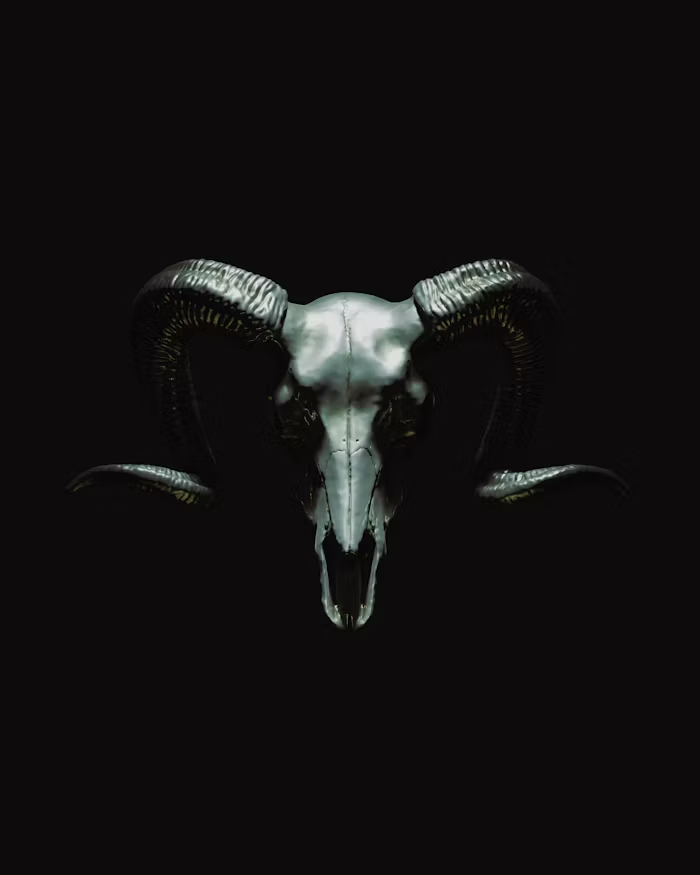
A Visual representation of EVIL ~ The hoof of the Ram originates from Pagan Imagery, Jewish Folklore, and Greek Mythology.
The Hall’s extensive history, dating back to the Norman invasion, has seen numerous families and countless events, but it is the spectral legacy of the “cloven hoof” incident that truly defines its eerie reputation. Unfortunately it seems no one can stay here long and currently (2026) this magnificent mansion house is up for sale. Have you got the cash? and are you happy enough to ask the devil himself to leave?

Another site steeped in both history and supernatural dread is Kilmainham Gaol in Dublin. This former prison, operational from 1796 to 1924, held some of Ireland’s most famous political and military leaders during its darkest hours, including rebels from the 1798 rebellion, the 1803 rebellion, the Fenian Rising, and especially the leaders of the 1916 Easter Rising, many of whom were executed here.
The gaol’s cold, stark walls witnessed immense suffering, starvation, and death. Today, visitors and staff frequently report intense paranormal activity. Guards have described seeing shadowy figures and hearing unexplained footsteps and cell doors clanging shut. Others have reported a crushing sense of despair and the feeling of unseen presences, particularly in the wings where executions took place. The spirits of those who fought and died for Irish independence are said to linger, their defiant energy and tragic ends etched into the very fabric of this imposing structure, making it a poignant and terrifying monument to Ireland’s struggle for freedom.
The goal was closed in 1924 but preserved as a National Monument in the 60’s, handed over to the State in the 80’s and currently run by the Office of Public Works.
Access to the goal is by guided tour only these days; just as well you don’t want to be wondering about here alone! Open all year round apart from Christmas week. Car Park across the road – but can be accessed by tram too.

The Vagrancy Act (Ireland) in the 1800 contributed to mass overcrowding at the goal and cells meant for 1 person would often hold 5 or more for months on end while waiting for transportation to Australia. Beggars, people with mental disabilities and those who indulged in counterfeiting money as well as women with their children were all held here – deep, dark despair must have been their daily torture as well as starvation, disease and misery.
The harrowing tales associated with the Great Famine (An Gorta Mór) and the Strokestown Park House Famine Museum in County Roscommon. While the house itself is a beautiful Georgian mansion, the museum documents the devastating impact of the famine, offering a stark reminder of the million people who died and another million who emigrated. The nearby workhouses, like those recreated at Strokestown, were places of unimaginable suffering, disease, and death. It is in these areas, and other famine-scarred landscapes across Ireland, that reports of famine ghosts are most prevalent. Witnesses speak of fleeting, emaciated figures, mournful cries carried on the wind, and an overwhelming sense of cold and hunger in certain desolate spots. These are not necessarily malevolent spirits, but rather the lingering echoes of profound human suffering, a collective memory of a national trauma that continues to resonate.
Audio guides are available and you can hear the stories and listen to the ‘voices’ of’ of the people whose lives were affected at Strokestown Park Estate – hunger, eviction and exhaustion.
“Our families are really and truly suffering in our presence and we cannot much longer withstand their cries for food. We have no food for them, our potatoes are rotten and we have no grain”.
Cloonahee Petition – 22nd August 1846
The Strokestown Park Estate and Museum HERE for online Booking.
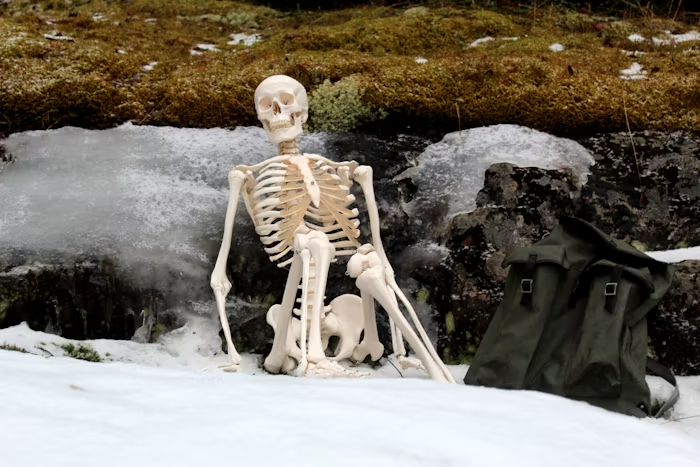
Between 1845 and 1852, Ireland endured one of the deadliest famines in world history. A potato blight, a fungal disease now known as Phytophthora infestans, destroyed the main food source for over a third of the population. While countless starving people died in their own homes, others perished on the roads, their skeletal remains used to be a grim and common sight. A million people died from starvation and related diseases like typhus and scurvy.
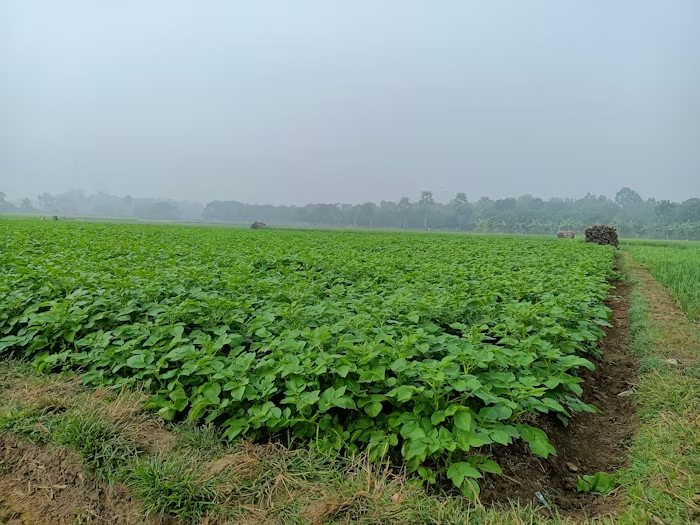
Another million and a half fled the country, often on overcrowded “coffin ships,” where disease ran rampant. The sheer scale of this human suffering left a deep psychic wound on the nation, and it is said that the mournful echoes of those who died, and the countless spirits of those who never made it across the ocean, still linger.
Ireland’s history is alive, not just in books and museums, but in the spectral inhabitants of its most famous landmarks. From the aristocratic tragedy of Loftus Hall to the defiant rebel spirits of Kilmainham Gaol and the lingering anguish of famine victims, these sites offer a profound and chilling connection to a past that refuses to be forgotten. A visit to these eerie landmarks is more than a historical tour; it’s an encounter with the haunting heart of Ireland itself.
Until next time dear friends x