There is visible light and invisible light. So why couldn’t there be ghosts?
The visible light is the light we see as humans; it is the small portion of the electromagnetic spectrum.

On the electromagnetic spectrum the small proportion of visible light we can see is perceived to us as different colours. We can see it as red, orange, yellow, green, blue, indigo, and violet, depending on each colour’s wavelength. These colours are measured in lightwaves.
Black and white are not colours as such according to physics because they are not present in the spectrum; they’re more sort of shades.
The whole electromagnetic radiation spectrum (EM Spectrum) is a fundamental property of space.
It is everywhere from gamma rays, x rays, microwaves, and radio waves. Visible light is just a small slice of the spectrum but it is our primary means of perceiving the world around us.
Contents
- A Fantastic Light Show
- Look beyond the Light to the Great Unseen
- Mysterious Dark Voids and Something Else Going On?
- Light and Dark, Black and White,Folklore and Magic
- These Islands are amongst the most Hunted in the World
- Ghostly Messengers of Death
- Ghostly Lights and Evil Spirits
The Fantastic Light Show
The (white) light from the sun travels through each of the colours on the EM spectrum, producing an interaction the colours themselves are travelling at their own wavelength and frequency, and it’s this which we can see as matter – atoms, molecules, or ions (particles), anything that takes up space and can be weighed.
This interaction with light happens in various ways:
- Emission – as in heat from a fire or light bulb
- Reflection – seen as light bouncing off a surface, such as a mirror
- Transmission – when light shines through, say a window
- Absorption – when light interacts with matter it can be absorbed, so the energy is taken up by the matter
- Refraction – bending of light – light as it passes through one medium to another for example distortion of underwater objects.
- Shadow formation – when light from a source, say the sun or a lamp encounters an opaque object, the light rays can not pass through it.
So light and all its complexities allow us to make sense of our world in a scientific sort of way but what about the empirical? – we’ll get there in a minute.
We (most of us, and in varying degrees) see the red colour of an apple (a solid matter, made of particles) as red because it reflects red light and absorbs the wavelengths of all the other light colours (absorption) Green grass the same way, etc.
Black on the other hand is black because of the absence of light. And White, white, because it reflects all the visible wavelengths of light evenly,rather than absorbing them.
The sun (a star) is our natural source of light energy, stars as well emit visible light, this is mostly seen as starlight, emitted by stars and mostly seen at night. Space itself appears black – it’s a vacuum with very few particles, so there is almost nothing to scatter or reflect the light to our eyes.
Look Beyond the Light To The Great Unseen
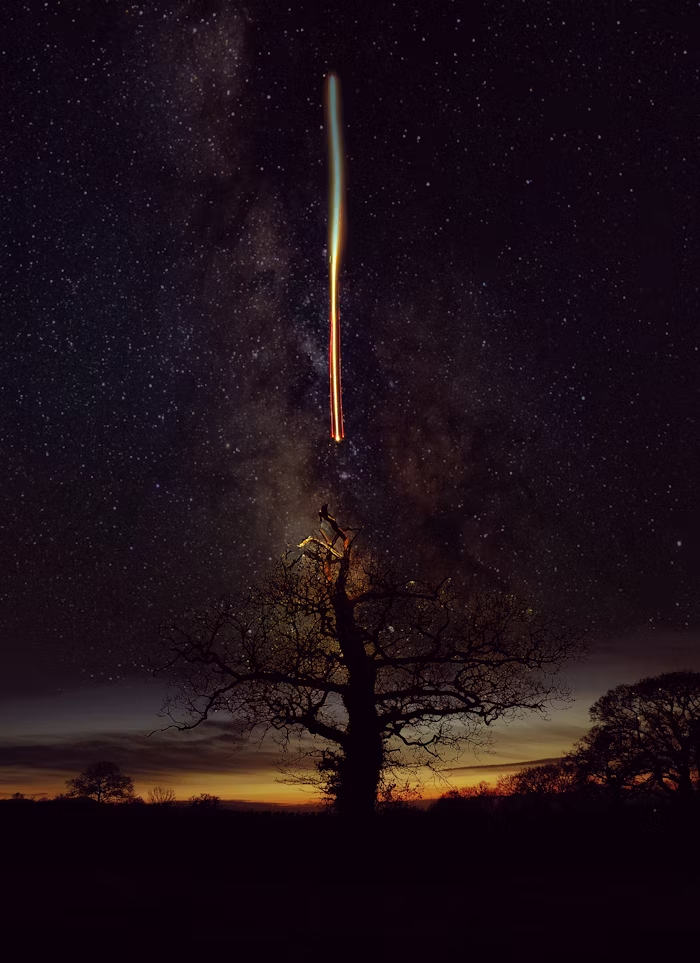
Is our reality just one layer of a much larger, more complex tapestry of existence?
The radio waves enabling communication over vast distances can not be seen, they can travel through walls, concrete and wood, we know they are there because we can hear them but we can’t see them.
Ultraviolet light enables us to absorb Vitamin D from the sun, we know it’s there but we can not see it. Many animal species see ultraviolet light, some infrared light, like spiders. Owls have night vision, other nocturnal animals like cats and foxes are able to tap into this wavelength naturally but we can’t.

Photosynthesis (when green plants turn light energy into chemical energy) happens but we can’t see it.
These hidden wavelengths and frequencies are not beyond our understanding and science allows us to make use of them. But might there be other vibrational realities of light and sound particles which can interact across the great unseen?
Mysterious Dark Voids And Something Else Going On?
We are all familiar with the colour (shade!) black. Black for centuries has been associated with oppression, evil, sadness, darkness, death, mourning and suffering.
Black to us is mysterious, dark and deep. Well it’s true, on the visible light spectrum it’s the ‘colour’ we know as having the absence of light. Black objects absorb all visible light waves, leaving no perceived reflected light. What else are they absorbing that we cant see?
Black, holds mystery and intrigue, and since the beginning of time we have been trying to find out what is going on around and above us. In the sky most of it is still beyond our understanding, like the vast dark voids in space, do they explain the accelerating expansion of the universe? Or is something else going on?
The sun, planets and stars have always been a fascination to us. The mysteries of the universe, its origins, formation, other galaxies, and possibility of life beyond, tap into our innate curiosity. And in the absence of being able to ‘see’ it all, we can try and make sense of it, or use it in ways that make sense to us here on earth.
Light And Dark, Black and White, Folklore And Magic
Stories have always been told to try and make sense of the world around us, fill us with fear, intrigue, knowledge and comfort. Before the written word the best way of communication was by telling a good story. I’m not saying these ‘stories’ were all made up, some of them were obviously based on fact. And these tales were told through the peer groups, so memories, thoughts, and knowledge could be handed down.

Medieval paintings in churches warned people about the dangers of not living a righteous life.
Relating a warning to your loved ones and your community would be very useful for generations to come. Advising them to the dangers of natural disaster and harmful elements to look out for perhaps to protect their crops or themselves from raiders or other dangers – dangers perhaps not fully understood, like ghosts, spirits or the devil.
Throughout the world and closer to home every county in England, Scotland, Ireland and Wales has its own traditional stories, and they are filled with cautionary tales from the light and the dark side. A belief in something else, something intangible, something not seen, but blind faith or an unquestionable belief that there is more to the world than we can see, and you had best beware.
These islands are filled with stories from the past that are captivating and mysterious.
We will start with some dark ones –
Everywhere in the land around us we can see the origins of a belief in something else ‘written’ in the landscape.
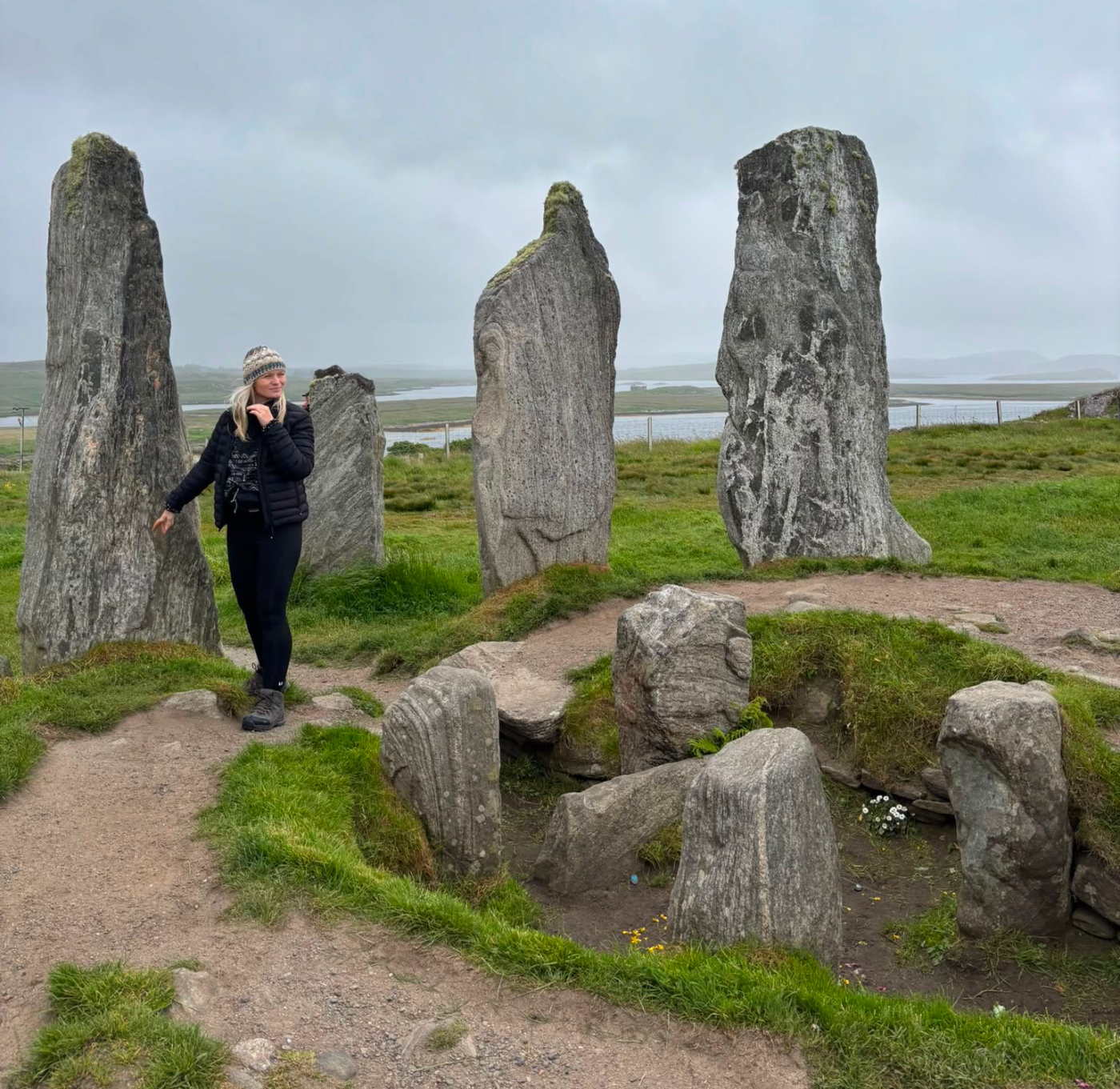
Standing stones from the Neolithic Period (around 2900 BC), Holy Wells, Barrows, Stone Circles and Earth Mounds, some being more than 5000 years old, tell the stories of our ancestors, how they lived and to some extent what they believed in.
Ancient sites like barrows, and burial mounds (or Cairns as they are generally known in Scotland) can be found all over the place from Silbury Hill in Wiltshire to the Grey Cairns of Camster in Caithness Scotland. There is also ancient land art to see from the Uffington Horse (a giant chalk hill figure) to the Hill of Tara (monuments and earthworks) at Skyne, County Meath.
Want to know more? Hill Of Tara
We do not know for certainty the tales and stories these people from so long ago told but we can still ‘feel’ the folklore in the landscape.
Up until the 17th century people didn’t pay much attention to the prehistoric landscapes. But likely through the passage of time things were not just ‘forgotten’ and every generation builds upon the bones and ashes of its predecessors. Each time period has believed in the existence of their own magical things.
Evil has always stalked the earth. The ‘Black’ stuff has always been here, if not plague and pestilence, it’s death, disease and illness. People would have needed hope, warnings, and help to fight against these everyday occurrences.
The Anglo Saxons (AD 410) believed in Orcs, demons, elves, and goblins (makes you think of J.R.R. Tolkien, doesn’t it?) The 5th century was a time of turmoil, the Romans had left the Islands and the ever present steady press of Northern European migrations struck fear into the ‘local’ people . A favourite story from these times was told to children, it’s about Beowulf (a Scandinavian hero), the heroic prince that battled the terrifying man-eating monster Grendel.

Beowulfs death – witnessed by Wiglaf –
Many practices of beliefs and legends by the Anglo Saxons were identical to those practised by the earlier inhabitants of the land, the Celts and the Romano British. They believed in Spirits, Gods and Fairies. Sometimes their rites included sacrifice of animals in key moments of the farming cycle, celebrating feasting and ritual.
Visit – A reconstructed Anglo-Saxon Village near Bury St Edmund’s in Suffolk, England
Want to know more? Here
These Islands Are Among The Most Haunted In The World
England, Scotland, Wales and Ireland are filled with magical landscapes, castles and buildings as we recognise them today, but they were built to defend the land and each one comes with tales and stories of their own, which in their time have seen blood-shed and cruelty, which can only add mystery and intrigue.
Haunted Lacock in Wiltshire –
The village of Lacock and in it the Abbey of Lacock is so beguiling a place you might have imagined you’d stepped back to the 16th century. The architecture of the village is built on medieval foundations, now standing on a quaint mixture of tudor, medieval and gothic styles of building and pretty houses.
This should not lull you into a false sense of security. There is black stuff everywhere. Watch out for the Abbey’s ghost – a poor creature, a hideous malformed hunch-back dwarf, who appears in a black cloak and catches you unaware. Then there’s the Black Dog who you will see running through the village at mid-night, if you happen to be out then, and he sees you, he will slow down and walk beside you.

Haunted East Anglia –
Malevolent and menacing The Black Dog and its ghostly apparitions has haunted many a county and each have a story to tell about their own ghastly phantom.
I have seen him with my own eyes while out travelling one night! It was after dusk but not quite full dark, the night was a little foggy and cold, as winter was drawing in. I was a passenger of a car in the front seat, we were driving through a village, so driving rather slowly, and suddenly from nowhere, bounding straight across the road right in front of the car was a massive blacker than black larger than large black dog.
With an emergency stop and gasps of surprise, it was all over within a second. Reasoning it out, just a dog? no, a deer, no, a person?, no. We know what we saw and it was definitely a large black dog bigger than a deer but looked like a dog and moved like a dog and disappeared like a ghost.
Having lived in the Fen Country for a while now, I have encountered the Black Shuck before. It was on this occasion however it was not the sight of it, but the sound of it that made me run for my life, but I will leave that story for another blog post.
The Black Shuck is a well known hound said to roam the countryside of East Anglia (Suffolk, Norfolk, and Cambridgeshire) There have been many sightings of the ‘Hateful thing’ (known as such in the Fenland).
It is said this spectral hound was once the faithful dog of an innocent child who chased from her a drunken, depraved Monk long ago; but was too late to save his mistress and he was found dead next to her body the next day. Has he come to our shores as Viking mythology?, being the Hound of Odin, the God of War, and the Lord of Valhalla. The earliest written mention of a giant black dog in the UK is in an entry from about 1127 in the Peterborough Chronicle, it warned people of huge black hounds belonging to the ‘wild hunt’ in what was at the time vast woodlands between Peterborough and Stamford.
Other Black dogs to watch out for –
Wales – the Gwyligi
Scotland – Mauthe Dog
Lincolnshire – Hairy Jack
Lancaster – Bogey Beast
Somerset – Gurt Dog
And Barghest in Yorkshire to name a few. There are other folklore tales around benevolent dogs roaming the countryside; these we will explore later.
Haunted Ireland – Ballycastle, County Antrim
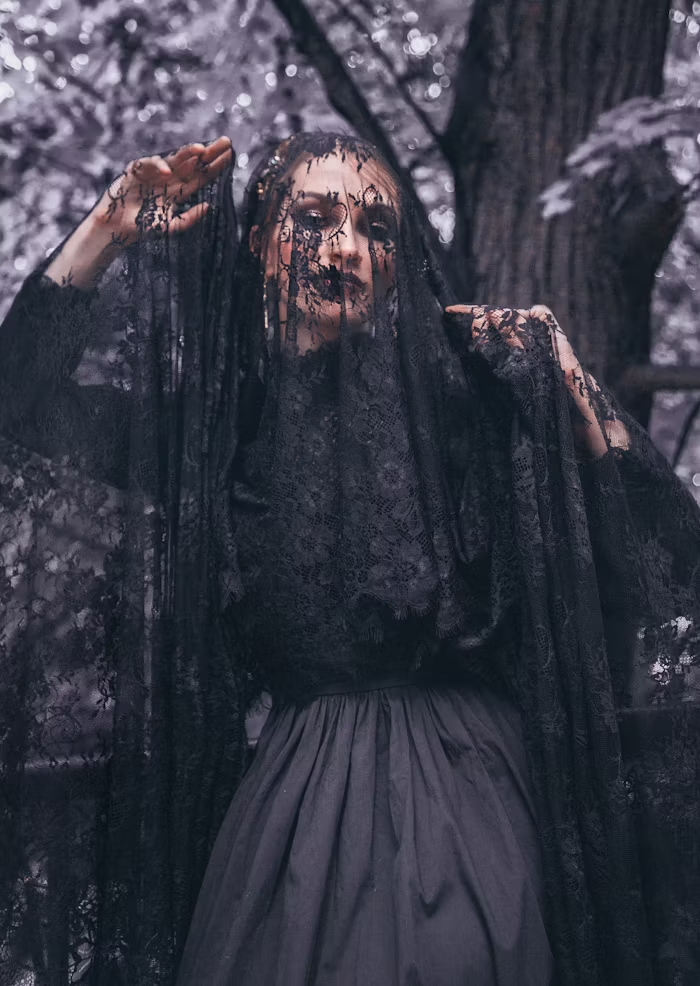
The Black Nun of Bonamary Friary was said to either have fallen or have been pushed from the 13th step of the priory and killed. Her ghost haunts the priory to this day. She was a legendary prophet and recluse and was said to have requested her body be buried in the front entrance so worshippers can tread on her grave by way of humility.
Ghostly Messengers of Death
Black magic and the bogey man, it’s got it all, Ireland is famous for superstitions, folklore and magic and the Irish are good at curses. Common themes in curses in Irish mythology include misfortune, death and hardship. ‘Go ndalladh an diabhal thu!’ – or – ‘May the devil choke you!’
Irish storytelling has long been popular among the generations, The Pooka also spelled Puca or Puck – these are mischievous spirits, often depicted as a horse with fiery eyes.This little mischievous goblin is obviously good at shape-shifting and has the potential for both good and bad, being respected in some places and feared in others.
Tied to the traditions of the Celts who did not have the written word, the Irish people are amongst the best storytellers of all. If you want to experience some dark and haunting folklore tales yourself, you’ll not be disappointed if you go to see ‘Darkland’, this is an adult only experience exploring Irish storytelling.
Want to know more?
Visit – The National Leprechaun Museum in Dublin
The crying woman or The Banshee is often said to take the form of a cloaked old woman, combing her long hair. One Irish tale is that you should never pick a comb up from the ground lest it belong to her. She is known for her sorrowful wail in an unearthly voice, which portrays death. The person who is going to die doesn’t hear this but a member of their family is warned by it. It is said both Lady Jane Wilde and Charlotte Thornley Stoker, mothers of Oscar and Bram respectively, heard The Banshee right before the death of family members.
The White Lady and Moonlight.
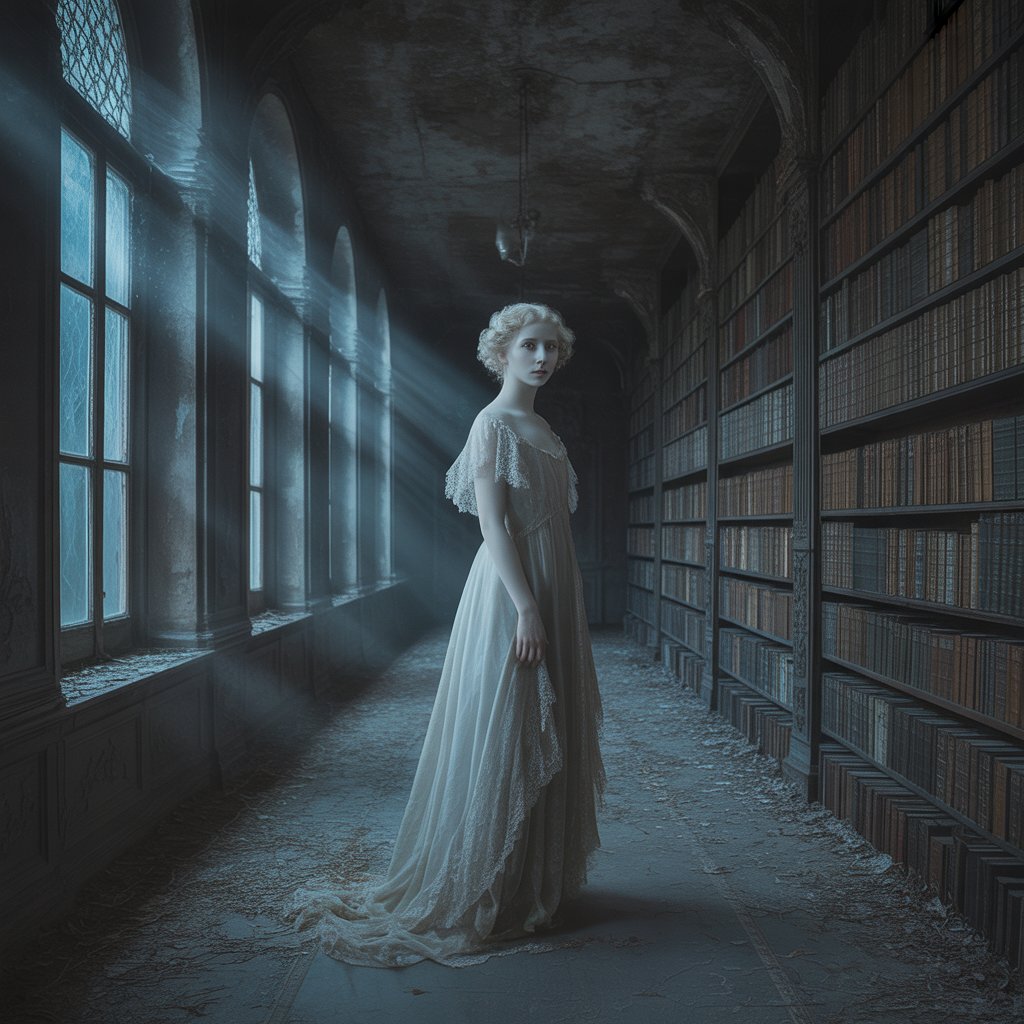
Ghosts ‘come back’ to tell us of their sorrow, loss or unresolved grief. The white ghost is a grieving new bride, a tormented lady in white with a flowing gown, spirits, orbs, mist. The white appearance of pale skin on a dead body, the shroud at burial, in many cultures white is associated with the afterlife, innocents and purity. But the ‘colour’ white can be just as terrifying as black!
Until very recently we all would have lived by natural light, not until the invention of electricity; fires and candle light were our main ways of seeing in the dark.
It would have been a world filled with stinky dripping tallow (animal fat) candles which would not have given much light anyway. Most work had to be finished by sun down and early rising would have been necessary in order to finish tasks and get a day’s chores done.

Light was seen as a very special thing, the Bronze age (about 3300 BC) people we know decorated some of their artefacts, with celestial symbols, moonlight too was worshipped and Deities, Gods, and Goddesses made praise to the moon throughout its cyclical process. The mythology of the Moon held a fascination in legends and myths especially emphasised in periods when it disappeared. Moon-bathing (exposing oneself to moonlight) even today is said to enhance well-being, relaxation and reduce stress as well as improve openness to spiritual energies and help us connect more deeply to our inner wisdom and intuition.
By the light of the fire folk have always told stories and I have found a few white light stories you will be interested to hear.

Ghostly Lights and Evil Spirits
In East Anglia, more over the Fenland there is a tale about the Lantern Men or ‘Will O’ the Wisp’ These ghost lights are evil spirits that lure their victims to their deaths to the reed bed (abundant in the fens before drainage of the land) and marches of the fen.
These atmospheric spirits can be seen as flickering lights over wetlands in the black of the night. Travellers and children would be warned not to be taken in by their dancing shimmering ‘pretty’ light. Once gotten a certain death would become you.
Can you imagine terrified locals having to get home on an eerily spooky dark night not only navigating the boggy dangerous wetland but also dodging these nasty little fellows with their mesmerising light? It was said if you got caught by a Lantern Man and you were on your own it was advised you lay down flat and bury your head in the mud. Remember too if walking in the Fen today not to whistle as this will draw them to you. The ghoul will follow you and chase you down!
Pluckley in Kent is reputed to be the most haunted village in England. There are several ghosts associated with Pluckley, a real place of paranormal events -including the White Dog of Pluckley.
A ghostly dog that haunts the churchyard of St. Nicholas. This small white dog has been seen by many and heard by more. A visiting vicar staying near to the churchyard once reported having been bored to death on his visit if ‘it wasn’t for the friendly little white dog’. It seems he had spent some time playing with the ghost dog then learning locally no one owned a little white dog. Locals though know the story of the White Dog of Pluckley and it can be heard playfully yapping in the churchyard when there is no dog there. Most reports of white dogs emanate from the UK and are on the whole connected with guarding and protecting.
So ghosts can be white and black in their garb, The White Lady being synonymous with tragedy, lost love and remorse. The Black Lady portrays and lets us know she is dark and mysterious and perhaps looking for revenge.

Light and dark forces are at play everywhere. We live in a world of opposing views. We know light isn’t everything positive and black isn’t everything gloom-ridden (think of that little black dress) and that’s what has always made the world interesting and challenging; The UK and Ireland have some of the best places to visit and see these hauntingly historic places and hear their stories for yourself.
We know there is visible light and invisible light. We know there is good and bad. And if light travels at 186,000 miles a second, we can’t know for sure there isn’t something we are missing!
Until next time dear friends x